
Arch Linux is known for being one of the most robust and customizable operating systems, earning a place in the hearts of experienced GNU/Linux users thanks to its philosophy of simplicity. One of its cornerstones is the Arch User Repository (AUR), a place where the community shares its own installation recipes for software not available through official channels. However, this same freedom comes at a price: as it's a software marketplace where anyone can participate, security depends heavily on the vigilance of the downloader.
In recent days, alarm bells rang when it was discovered that the community repository was the target of a coordinated attack of unprecedented scale. The project maintainers have been forced to work against the clock to reverse the damage , removing traces of malicious code and immediately suspending accounts that had been compromised or created specifically to wreak havoc on the system.

An attack of unprecedented scale in the community
While it's not the first time someone has tried to slip a poisoned gift into the AUR, the scale of this campaign has left many speechless. According to reports appearing on specialized platforms and mailing lists, it's estimated that over 400 different packages have been infected , representing a direct blow to supply chain trust. The attack wasn't improvised; the perpetrators went to the trouble of spoofing the names and email addresses of legitimate developers so that a quick glance at the change log would make everything appear legitimate.
Among the affected applications are well-known tools for managing cryptocurrency wallets and AppImage applications, suggesting that the attackers were targeting sites that could yield substantial profits. It has been detected that in many cases, suspicious npm dependencies or subtle changes to installation scripts were used, changes that went unnoticed unless you scrutinized every line of code. These tactics demonstrate that cybercriminals are honing their skills to infiltrate environments we typically consider secure simply because they are open.
Technical sophistication: rootkits and information theft
What has most concerned security experts is not just the number of packages, but what they did once installed on the victim's computer. Some of the hijacked packages were used to inject a rootkit based on eBPF technology directly into the Linux kernel. This is a whole different ballgame, since this type of malware is extremely difficult to detect with conventional security tools because it operates at such a deep level of the system, allowing attackers to hide processes and files at will.

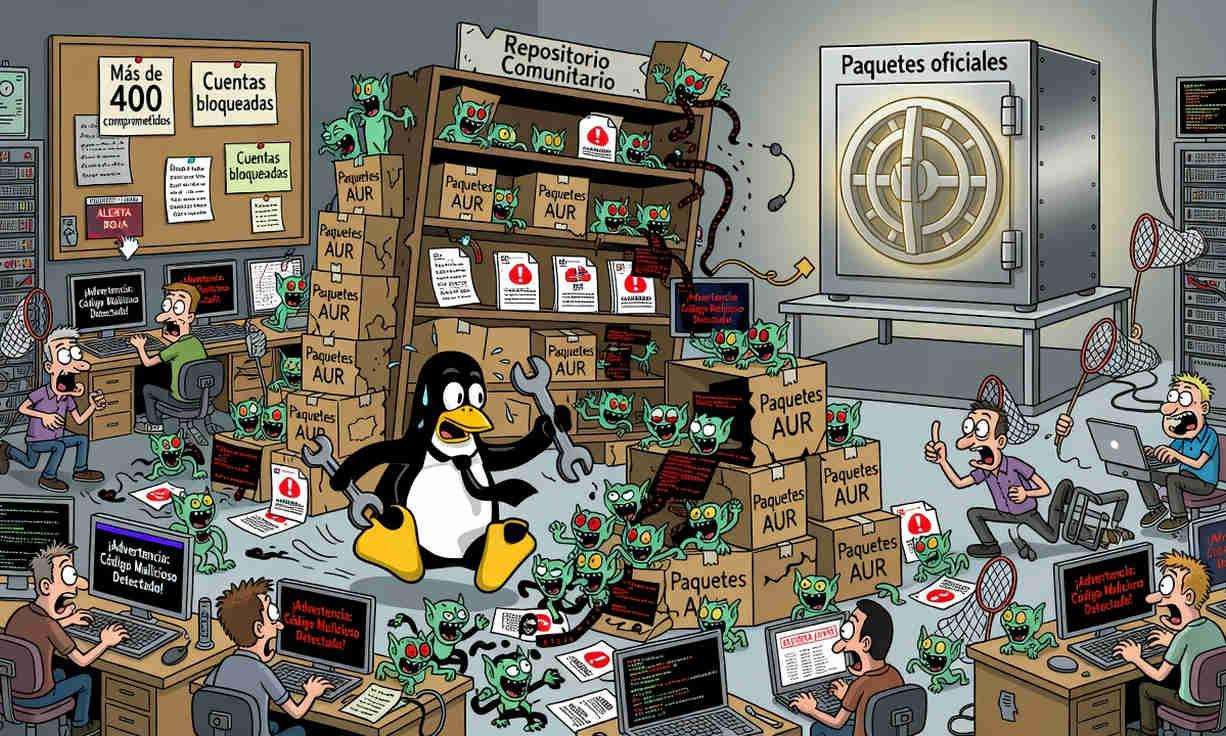
Besides remaining hidden, the main objective of this campaign appears to have been the collection of sensitive data. Once the user ran the installation without suspecting anything, the malicious code got to work stealing credentials and SSH keys , which could grant access to remote servers and other critical services. It's a rather stark reminder that, in the world of free software, blindly trusting can be a risky business if we don't take basic precautions before clicking the update button.
How to act and protect our system
If you're one of those people who habitually updates the AUR indiscriminately, it's best to take a moment to check what you have installed. Derivative distributions like CachyOS have already taken action by publishing scripts to help their users identify if they have compromised packages on their system, although they warn that it's not a magic bullet and that a manual check is always preferable. Ideally, you should use commands like `pacman -Qm` to list what's coming from the community repository and check if any of those names appear on the blacklists circulating on the official forums.
The golden rule for the future remains the same as always, but now it's more important than ever: always check the PKGBUILD. You don't need to be a programming genius to see if an installation script is trying to download files from suspicious sources or requesting unnecessary permissions, especially if it involves the root user in Linux and its privileges . Furthermore, it's highly recommended to wait a few days before installing updates for non-critical packages, allowing the community and maintainers time to review and remove any potential threats that may have slipped through the initial filters.
This situation highlights that Linux security is not invulnerable and that community repositories are a tempting target for those seeking to exploit users' good faith. Although the Arch Linux team acted quickly to mitigate the impact, this incident will be remembered as a turning point that will force a rethink of access controls on these types of platforms. Ultimately, the best defense remains common sense and remembering that, outside of official repositories, we are responsible for what we allow into our digital home.

Table of Contents