
Sensors are no longer those almost invisible components found only in workshops or factories. Today, they're behind projects ranging from public housing to overcrowded beaches, armored vehicles, and nursing homes. The key is that they allow us to observe reality almost instantly and, with the help of software, draw conclusions before problems arise.
In Spain and Europe, networks of connected devices, data platforms, and artificial intelligence are being tested for a wide variety of tasks. Sometimes the goal is to anticipate a breakdown, other times to monitor pollution, identify birds by their song, or improve vehicle safety. The technological mix is always the same: the Internet of Things, automated analysis, and dashboards , although it's not always easy to translate millions of measurements into actionable decisions.
Buildings, cities and outdoor spaces
Madrid has launched Scamia, a project by the Municipal Housing and Land Company (EMVS) that will be implemented in fifteen buildings by 2027. Thirteen are public housing developments, in addition to the EMVS headquarters and a building belonging to the Rey Juan Carlos University. The budget is around €5,2 million, co-financed by the European Regional Development Fund, and the project's core element is a digital twin that replicates each building on a computer.
The installations are placed on top of this virtual copy, and data from approximately two hundred sensors per building is analyzed. The sensors are connected via Wi-Fi and IoT technology and are distributed throughout apartments, hallways, and common areas. They monitor temperature, relative humidity, and CO2 levels, among other parameters, with the aim of detecting anomalies before residents notice them. Privacy is ensured with anonymized data , linked to households rather than individuals, and with an app for residents to access the information.

Project leaders estimate that the system could cut maintenance costs for equipment such as heat pumps, boilers, and water tanks by 15% to 20%, and energy consumption by 5% to 10%. The National Association of Energy Service Companies (ANSES) considers these figures reasonable targets for a pilot program. A 5% to 10% saving equates to approximately €40 to €100 per year per household, while maintenance costs would be around €15 to €35 annually. The true value becomes apparent when considering many households and the avoidance of costly repairs.
In Cartagena, the City Council is preparing another network of smart sensors for the northern neighborhoods. The contract, valued at €130.258 including VAT, is part of the EDIL RE-CREA Plan and the RE-CREA Un Barrio Vivo project, within the Smart City for All initiative. The project covers areas such as Los Barreros, Vereda de San Félix, Barrio Peral, Barriada Cuatro Santos, Ciudad Jardín, San Antón, and Urbanización Mediterráneo, as well as connections to the rest of the municipality. The plan is to install approximately fifteen main sensor units that will upload data to the municipal platform and the future digital twin.

The devices will measure nitrogen dioxide, nitrogen monoxide, sulfur dioxide, carbon monoxide, and ozone, as well as PM1, PM2.5, and PM10 particles. They will also collect data on noise, temperature, humidity, wind, precipitation, and solar radiation. In addition, sensors will count pedestrian traffic and analyze pedestrian routes. The technical budget includes five IoT air quality monitoring devices, five weather stations, and five pedestrian counting units, along with batteries, communications equipment, and installation. The platform is based on FIWARE and will enable real-time alarms, dashboards, graphs, and maps.
The information will also be integrated into the municipal GIS and the digital model created with the BeatTheHeat project, with a specific allocation of €30.000. In total, the document allocates €38.565 to environmental sensors, €7.915 to pedestrian flow systems, €13.230 to integration and development, and €30.000 to incorporation into the GIS and the digital twin. The contract may be co-financed up to 60% with ERDF funds and will have a six-month execution period from its formalization. Bids can be submitted until October 15 , and the opening of financial bids is scheduled for October 21.
Outside of public spaces, bioclimatic pergolas have also incorporated sensors to adapt to the weather. GRUPO AYUSO presents these solutions as transitional spaces between interior and exterior, featuring 250 mm adjustable louvers, motorization, and rain, wind, or snow sensors. The idea is to regulate solar radiation and promote natural ventilation. Home automation allows the installation to react automatically to weather changes, making it a prominent feature on terraces, in hotels, restaurants, offices, and other public facilities.
Environment, biodiversity and tourism
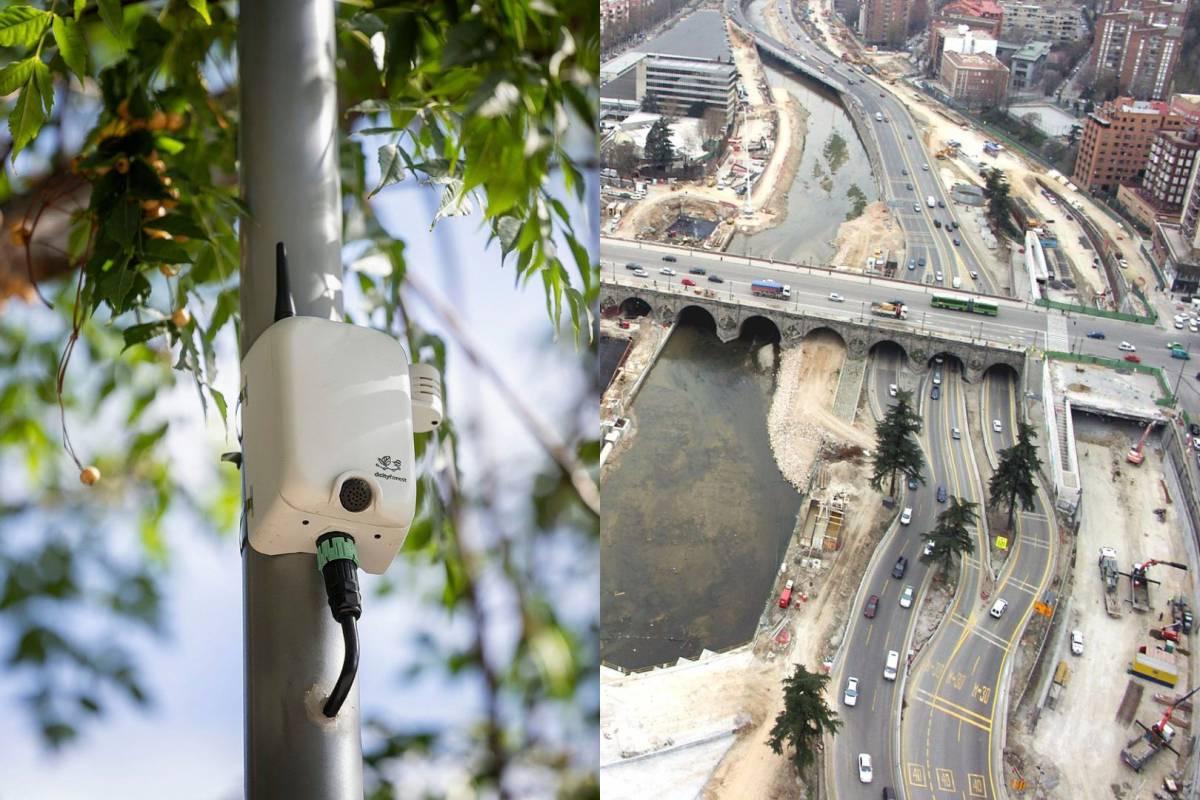
Madrid Río has become a testing ground for measuring biodiversity using smart sensors to monitor acoustic biodiversity . The Madrid City Council has installed fifteen devices—seven in Madrid Río and eight in the Valdebebas-Felipe VI forest park—capable of recognizing bird songs and bat calls in real time. Initial results have identified 66 bird species and 13 bat species in Madrid Río, and 103 bird species and 23 bat species in Valdebebas. The devices do not record or store sounds : artificial intelligence analyzes the signal instantly, identifies the species, and discards the audio.
In addition to sound, these sensors collect temperature, humidity, and the time of each detection. The data feeds into a digital platform that allows researchers to study how wildlife is evolving and plan its conservation. The Manzanares River's recovery began to take shape when the dams that had kept the water stagnant along its course through Madrid Río were opened, a measure that improved water quality and encouraged the return of native species. In just five years, more than 90 species were recorded, including fish such as the barbel and the goby, and otters were sighted again after more than half a century. Technology is now being added to this process to closely monitor what is happening in the parks.
In the Balearic Islands, the focus is on the beaches. The Balearic government has explained that it invested €150.000 to transform mobile phone coverage antennas and satellite data into occupancy sensors on 150 beaches across the islands. This data, along with information provided by lifeguards and historical data from previous years, has been used to generate a predictive model within the beach app. The idea is to offer an estimate of the number of people expected over the next six days. The system doesn't limit capacity itself , but rather provides information so that each person can decide whether to go or look for another option.
The regional government announced at Fitur a four-million-euro, two-year plan to monitor beaches, with a planned start in the second quarter of 2026. However, a pilot program had already been discussed for 2024. According to Vice President Antoni Costa, three projects were tested to determine which technology worked best, and it was found that some solutions were not mature enough for the natural environment due to coverage issues, salinity problems, and even vandalism. These technologies did not improve upon the data from cell towers or lifeguards. The government maintains its intention to invest in sensors, while the opposition criticizes the fact that not enough data has been collected to manage tourist overcrowding.

What Madrid, Cartagena, and the Balearic Islands share is a commitment to transforming scattered data into useful information for public management. It's not just about accumulating devices, but about connecting sensors with platforms, dashboards, and predictive models that help inform decisions about mobility, conservation, services, and tourism pressure. The challenge lies in correctly interpreting the data and ensuring that the technology doesn't become just a fleeting announcement without lasting impact.
Industry, defense, automotive and health
In Galicia, two companies supported by the regional government's Ticket Innova program are exploring very different applications. Raiola, in A Coruña, is studying sensors to identify falls, prolonged absences from bed, or changes in the sleep patterns of elderly residents. Its manager, Marcos Núñez Regueira, maintains that these could prevent complications and hospital admissions, although he insists that there is no single solution and that the devices must be chosen according to each individual. They are not considering installing cameras inside the rooms.
Enxenia, based in Vigo, has developed a system using cameras and artificial intelligence to detect workplace hazards in industrial environments. It is already implementing a solution in the metalworking sector that boasts over 97% accuracy and sends alerts in less than a second. CEO Lorena Rosende explains that the goal is to enhance safety through the automatic detection of risk situations and rapid communication. The company sees potential in other industrial sectors as well. Ticket Innova has helped transform specific needs into sustainable technological projects.
In the defense sector, Santa Bárbara Sistemas has awarded Ficosa a contract to jointly develop advanced vision and driver assistance technologies for armored vehicles. The agreement combines Ficosa's expertise in electro-optical equipment, surveillance, environmental perception, and driver assistance with Santa Bárbara's capabilities in designing and integrating military systems. The aim is to adapt mature civilian technology to the needs of land-based platforms.
The project aims to improve the acquisition, processing, and visualization of environmental information so that crews can better understand the operational situation. Ficosa routinely works with cameras, radars, infrared sensors, and data fusion systems, as well as intelligent sensor cleaning. Santa Bárbara emphasizes the automotive sector's strong industrialization capacity and Catalonia's status as one of Europe's leading hubs for the industry. The collaboration seeks to expand the network of national suppliers and strengthen the value chain of the Spanish defense industry.

In the automotive and energy sectors, the global market for hydrogen leak detection sensors for fuel cell vehicles is experiencing a period of expansion. These components are safety-critical and subject to stringent standards such as ISO 26262, AEC-Q, and UN Regulation R134. The IndexBox report forecasts a compound annual growth rate of 18,5% between 2026 and 2035, with a market index of 450 in 2035. Asia-Pacific is leading the way, followed by Europe, which accounts for approximately 25%. The aftermarket and fleet retrofitting sectors will gain importance as vehicles age.
In the aftermarket for cars, parking sensor kits remain a popular choice. There are models with four sensors and an audible alert, and others with an LCD screen and up to eight sensors. One of the best-selling kits from a specialized brand has garnered over 1.700 reviews and an average rating of 4,3 stars. Users highlight its reliable performance and the fact that the kit includes all necessary accessories. Its quality and competitive price explain why it continues to be a popular alternative to factory-installed sensors.

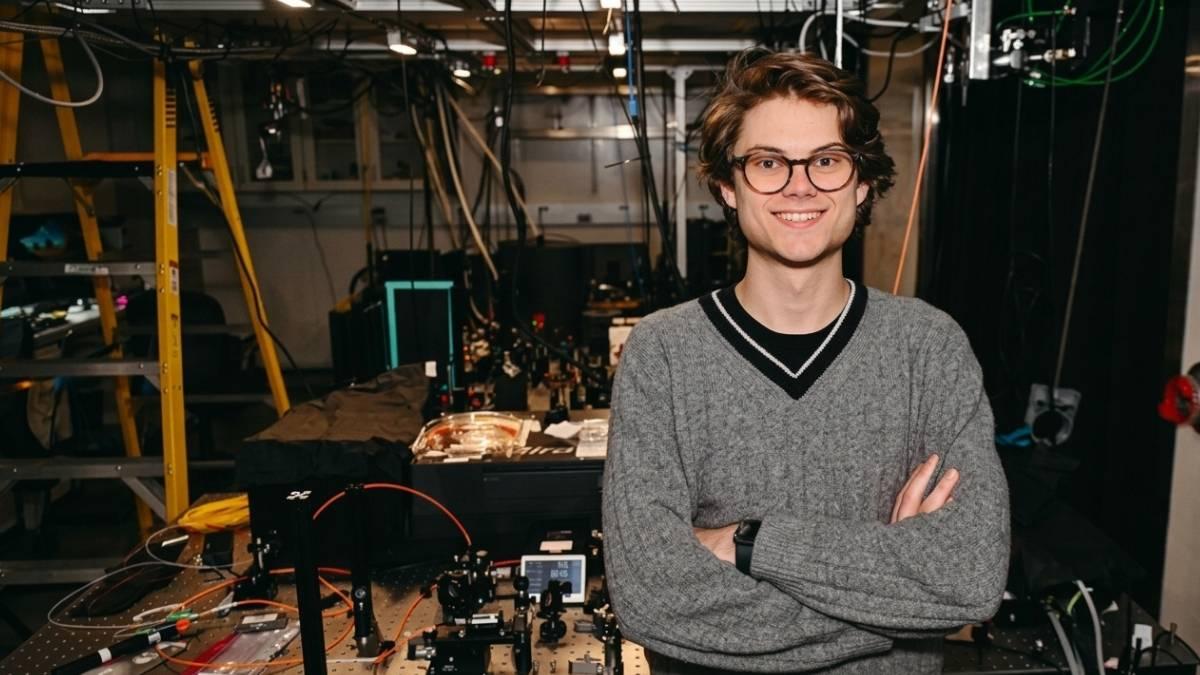
The research also extends to health. The Pritzker School of Molecular Engineering at the University of Chicago is leading the development of quantum sensors with applications in medicine, including precision neurological monitoring in comatose patients. The team uses thin films of synthesized diamond with nitrogen vacancy centers—imperfections that function as extremely sensitive diamond sensors . By integrating these into an optical fiber, they have created a prototype for insertion into brain tissue to record physiological signals in real time. The goal is to detect biomolecules in locations inaccessible to conventional devices.
The picture painted by all these initiatives is one of technology expanding into very different sectors. In some cases, it's used to predict building failures; in others, to monitor pollution, study biodiversity, control beach capacity, protect workers, or improve armored vehicle safety. There's also room for consumer goods, the automotive industry, and cutting-edge medicine. The big question is no longer whether there will be sensors everywhere , but how their data will be managed, who will interpret it, and with what safeguards it will be used.

Table of Contents