
Environmental monitoring is undergoing a quiet transformation thanks to the proliferation of increasingly sophisticated sensors. From urban parks to remote Arctic waters, these devices are providing crucial data for understanding and protecting our environment. Two recent projects, one in Madrid and the other in Greenland, perfectly illustrate this trend.
The Madrid City Council has launched a pilot program using a network of AI-powered sensors to monitor birds and bats and audit biodiversity in two of the city's green spaces. Simultaneously, an international team of scientists has used narwhals as "collaborators" to gather oceanographic data in eastern Greenland. Both initiatives share a common thread: the use of sensors to obtain environmental data continuously and non-invasively.
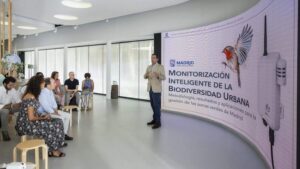
Acoustic sensors in Madrid: a window into urban wildlife
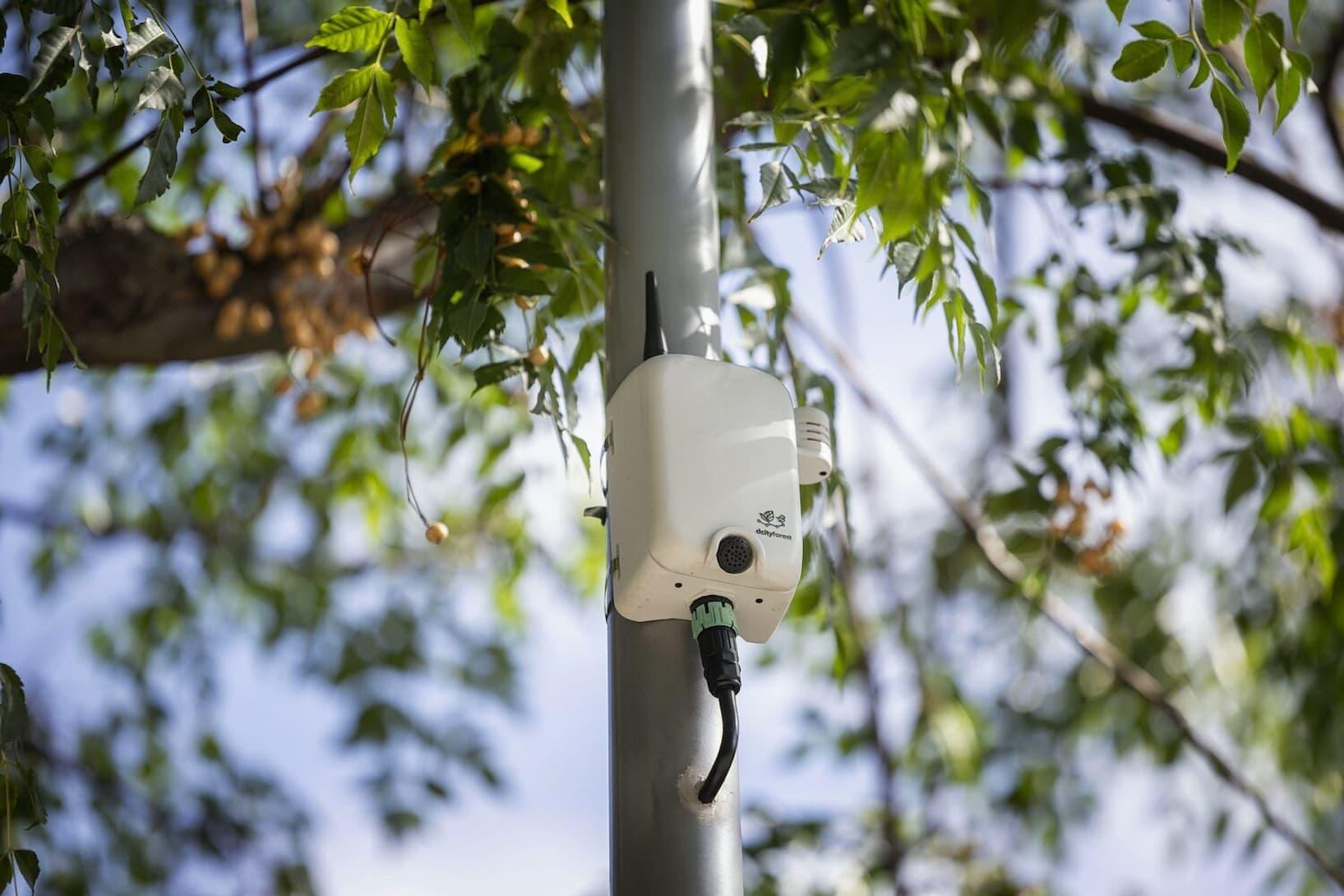
The Spanish capital has installed seven sensors in Madrid Río and eight in the Valdebebas-Felipe VI Forest Park. These devices, which are solar-powered in the latter case, capture bird calls and ultrasound, process the data, and instantly identify the species without storing recordings , thus protecting citizens' privacy. They also collect environmental data such as temperature, humidity, and atmospheric pressure.
In its first few weeks, the network has recorded more than 12.200 observations. In Madrid Río, 66 bird species and 13 bat species have been counted, while in Valdebebas the diversity is even greater: 103 bird species and 23 bat species. Among the findings are unique specimens such as the kingfisher and the common noctule bat. The presence of bats is vital for the natural control of pests , and these sensors allow them to be studied without disturbing their roosts.
The data also reveals adaptation patterns of urban birds. Species such as sparrows and serins are more common in busy areas, while birds of prey prefer quieter zones. This information allows the City Council to make preventative decisions, such as rescheduling pruning if nesting is detected, and to comply with the EU Nature Restoration Act.
Narwhals with sensors: the unwitting oceanographers
At the other end of the continent, a study published in Science Advances has shown how six narwhals equipped with satellite transmitters collected more than 2.000 temperature and salinity observations in the fjords of East Greenland between 2017 and 2020. These cetaceans dive to depths of more than 1.500 meters , providing data on entire water columns that ships cannot easily obtain, similar to how the AI-powered robotic turtle operates to analyze the marine environment.
The researchers, led by Mads Peter Heide-Jørgensen, used this data to calculate the water's density and determine its origin. They discovered that warm Atlantic water is penetrating deep beneath the glaciers, intensifying melting. This phenomenon, known as "Atlanticization," has direct consequences for the Atlantic Meridional Overturning Circulation (AMOC), a system of currents that regulates Europe's climate. If the AMOC were to collapse, Europe could experience much colder winters.
The technique is innovative because the narwhals return to the same locations, allowing for repeated measurements over time. Although the animals do not enjoy interacting with humans, the tags detach on their own, minimizing stress. The authors emphasize that this approach “revolutionizes oceanographic research” and opens new avenues for studying remote regions.
A promising future for environmental monitoring
Both projects demonstrate that sensors, whether fixed or mobile, are changing how we understand ecosystems. In Madrid, the network of acoustic sensors will be expanded to another 82 green spaces if the results are positive, and patterns will be added to detect amphibians, reptiles, and other mammals. In Greenland, researchers plan to continue using narwhals and other marine mammals to obtain long-term data.
The combination of artificial intelligence, low-power sensors, and satellite connectivity is enabling continuous, low-cost environmental monitoring . This not only facilitates conservation decision-making but also helps meet international commitments to nature protection. Technology is thus becoming a bridge between engineering and ecology, offering objective tools to measure human impact and design mitigation strategies.
In short, these examples show that sensor innovation is not limited to industry or smart cities, but is also revolutionizing environmental science. The ability to obtain accurate and continuous data without disturbing ecosystems is a key advance in addressing the challenges of climate change and biodiversity loss. Both Madrid and Greenland are just the beginning of a new era in which nature and technology work together.