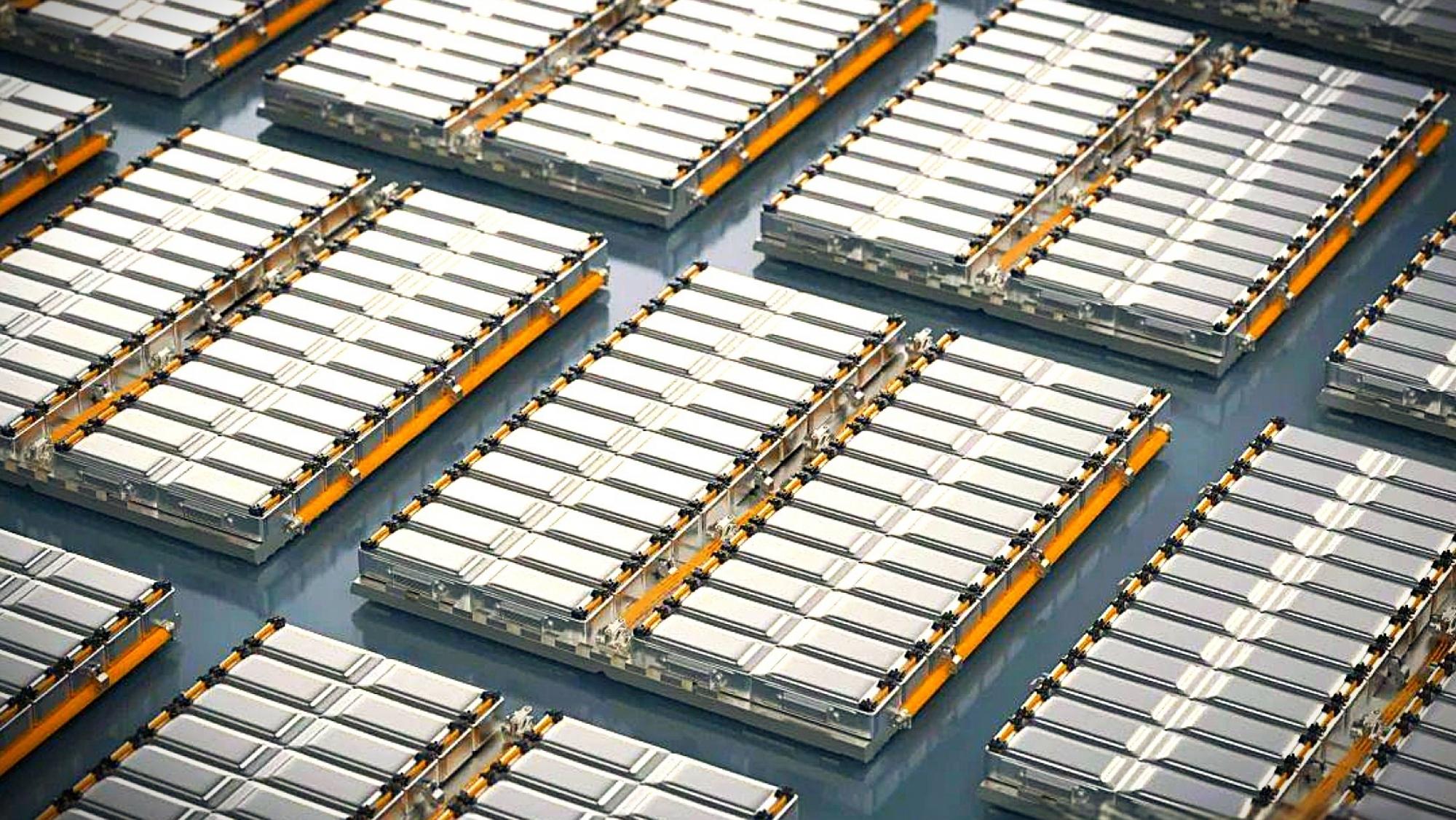
The solid-state battery industry is experiencing a mix of technical announcements, corporate activity, and considerable caution. The agreement between Gotion and Volkswagen for a 49% stake in the Sagunto plant has once again put Spain in the spotlight, just as the Chinese manufacturer presents new targets for its Jinshi cells and promises advancements in safety and energy density.
At the same time, ProLogium, Mercedes-Benz's technology partner, is starting to make moves with initial production of its ceramic fuel cell and acknowledges that electric cars alone cannot sustain the business . Its focus is on data centers, light aviation, and drones—applications where the extra performance is better compensated than in a mid-range passenger car.
Technical advances with the goal of 400 Wh/kg
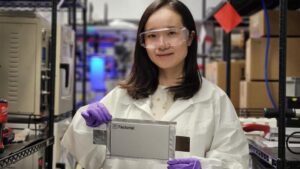
During the World Manufacturing Convention held in Hefei, Gotion High-Tech explained that its solid-state fuel cells, named Jinshi, use a sulfur-based solid electrolyte . The company claims that it has passed extreme tests, including puncture and high-temperature exposure tests, without generating smoke or flames. This reinforces the idea that safety and density can go hand in hand.
In terms of figures, Gotion has raised its forecast to 400 Wh/kg , compared to the 350 Wh/kg it had previously mentioned. It also mentions a reference cost of 1 yuan per Wh, equivalent to about $150 per kWh, an ambitious target when compared to the much lower prices of LFP cells in Asia. What it has not yet specified are the dates for mass production.
Changan, for its part, has unveiled its Golden Bell battery with a claimed energy density of 400 Wh/kg, a theoretical range of over 1.500 kilometers per charge, more than 5.000 cycles, and minimal degradation during the first 600.000 kilometers. The company maintains that its cells will be 70% safer than competing alternatives and supports this claim with remote diagnostics using artificial intelligence.
ProLogium has also made a significant leap forward with its 3.5 generation 185,4 Ah battery cell, achieving 381 Wh/kg and 903 Wh/L . The company has received UL Solutions certification under the Chinese standard GB/T 43568-2026 after six hours of no-load testing at 120 degrees Celsius, with a mass loss of less than 0,05%. Its Logithium architecture combines a ceramic separator and a sealed bag to maintain insulation and containment without sacrificing volume.
The industrial sector: China tightens its grip and Europe recovers
Gotion isn't starting from scratch. Founded in Hefei, it has around twenty manufacturing facilities and maintains a close relationship with Volkswagen, its main shareholder. In August, it installed 4,61 GWh, a figure that puts it behind second-tier rivals like EVE Energy and CALB and pushes it to fifth place among Chinese manufacturers. The solid-state race is, for Gotion, an opportunity to regain ground.
CATL and Changan are expanding their alliance with an investment of nearly 5.000 billion yuan (approximately €672 million) to increase their combined capacity from 50 to 75 GWh . The plan includes new facilities covering 700.000 square meters between Chongqing and Sichuan, scheduled to begin operations in 2027, adding 25 GWh over three years, creating 2.500 jobs, and generating estimated annual revenues of 10.000 billion yuan.
China's leadership is undisputed in terms of volume. The country accounts for more than 80% of global lithium-ion cell production, according to the International Energy Agency, and CATL and BYD together control more than half the market. BloombergNEF placed the average global price of lithium-ion batteries at $108 per kWh, with China at $84 per kWh , a difference that explains its competitive advantage. In the first half of the year, CATL installed 242,7 GWh, reaching 39,9% of global production, while BYD installed 87,7 GWh, capturing 14,4%.
Europe is trying to rebuild its industry after the Northvolt debacle. ACC and PowerCo's factories are progressing, but much of the capacity remains in the hands of Asian companies. The Sagunto plant in Spain and the Dunkirk plant in France are seen as visible indicators of whether this reconstruction will be successful.
ProLogium: from cars to AI and aviation
ProLogium aims to generate approximately half of its future revenue from non-automotive applications. Its CEO has made it clear that the automotive business is no longer sufficient to sustain investments in a technology that has yet to fully take off. The other half will remain linked to electric vehicles, but will no longer be the sole focus.
Data centers require backup power solutions with less thermal risk and a smaller footprint. Light aviation, drones, and urban air mobility pay for every kilogram saved in terms of payload or range. In stationary storage, wear and tear per cycle outweighs the purchase price. These are less cost-sensitive niches than the buyer of a passenger car.
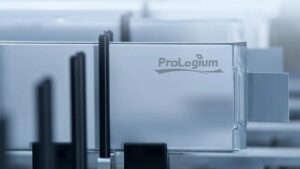
The Taiwanese company is already producing its lithium ceramic cell in Taoyuan with an initial capacity of just 0,5 GWh per year, expandable to 1 or 2 GWh. That volume would barely cover about 6.250 packs of 80 kWh per year, insufficient for large-scale programs. In parallel, it is planning a plant in Dunkirk with an initial capacity of 4 GWh and up to 44 GWh by 2030.
Mercedes and ProLogium have already tested an EQS capable of traveling over 1.200 kilometers on a single charge, although that result corresponds to a single cell and not an affordable production model. The cost barrier remains: in the Asian market, LFP cells cost between 300 and 400 yuan per kWh, roughly 38 to 51 euros, and ceramic electrolyte batteries compete at those prices while China and Japan explore sulfur electrolytes. Not all solid-state batteries are the same : there are oxide, sulfide, and polymer families, and each behaves differently depending on temperature and usage.
Beyond Earth, the SPEARS project is studying solid-state batteries capable of withstanding lunar nights, using localized heaters instead of continuous heating. The idea is to reduce the mass and power consumption of tools, instruments, emergency systems, and rovers exploring permanently shadowed craters. Terrestrial applications could later extend to vehicles, mobile devices, communications equipment, and drones, although it must first demonstrate reliability under real-world conditions.
What does this mean for Spain and for the European buyer?
Spain views this phenomenon with twofold interest. On the one hand, it wants to consolidate its position in European battery manufacturing; on the other, those considering buying an electric car wonder when this technology will reach a mid-range vehicle. The most honest answer is that it will take longer than promised : affordable cars will continue to rely on conventional lithium batteries for years to come.
The slowdown in vehicle registrations in several European markets has forced a review of schedules and capacities. When demand cools, investment is directed to where there are already customers with urgent needs, and today that's not the dealership. That's why ProLogium prioritizes aviation and servers, and why solid-state drives are being reorganized: first, high-performance applications ; then, when costs decrease, high-volume applications.
In the scientific field, the Basque center CIC energiGUNE reviewed more than five decades of advances in energy storage, focusing on Michel Armand, a pioneer of solid-state polymer electrolytes. This line of research remains key to improving energy density and safety, and connects laboratory fundamentals with the industrial challenges facing the next generations of batteries.
For drivers, the practical advice is not to wait for solid-state batteries if you need a car now. A modern battery, properly maintained, can last for years. It's wise to check the warranty, cell chemistry, and charging curve before being dazzled by a brochure's stated range. Ultimately, the best long-lasting battery is the one that's well cared for.
In the coming years, several timelines intersect. Samsung SDI aims to begin mass production in Ulsan in the second half of 2027 with a sulfur-coated electrolyte cell exceeding 900 Wh/L. Toyota and Idemitsu are touting targets of 1.000 to 1.200 km range and charging in about ten minutes, though these dates have been revised several times. QuantumScape, with Volkswagen's support, has launched a pilot line but doesn't anticipate commercial availability in the automotive sector before 2029. Promises coexist with flexible timelines.
Meanwhile, not everything will be solid-state. China is already showcasing sodium and semi-solid-state cells for entry-level models, promising greater autonomy and better performance in cold weather at a lower cost. CATL's fully solid-state cell, however, remains in the laboratory with no date set for mass production. Conventional lithium will continue to dominate the Spanish market for years to come.
The resulting landscape is one of technology with real progress in the lab and ongoing industrial projects, but with timelines and costs yet to be determined. Gotion, ProLogium, CATL, Changan, Samsung SDI, Toyota, and QuantumScape are pushing in different directions, while China maintains its lead in volume and Europe tries to gain ground with factories like Sagunto and Dunkirk. Solid-state technology will arrive, yes, but sooner in premium niches, data centers, and aircraft than in affordable electric vehicles. For Spain, the key will be converting announcements into real capacity and sustained demand.
Table of Contents