
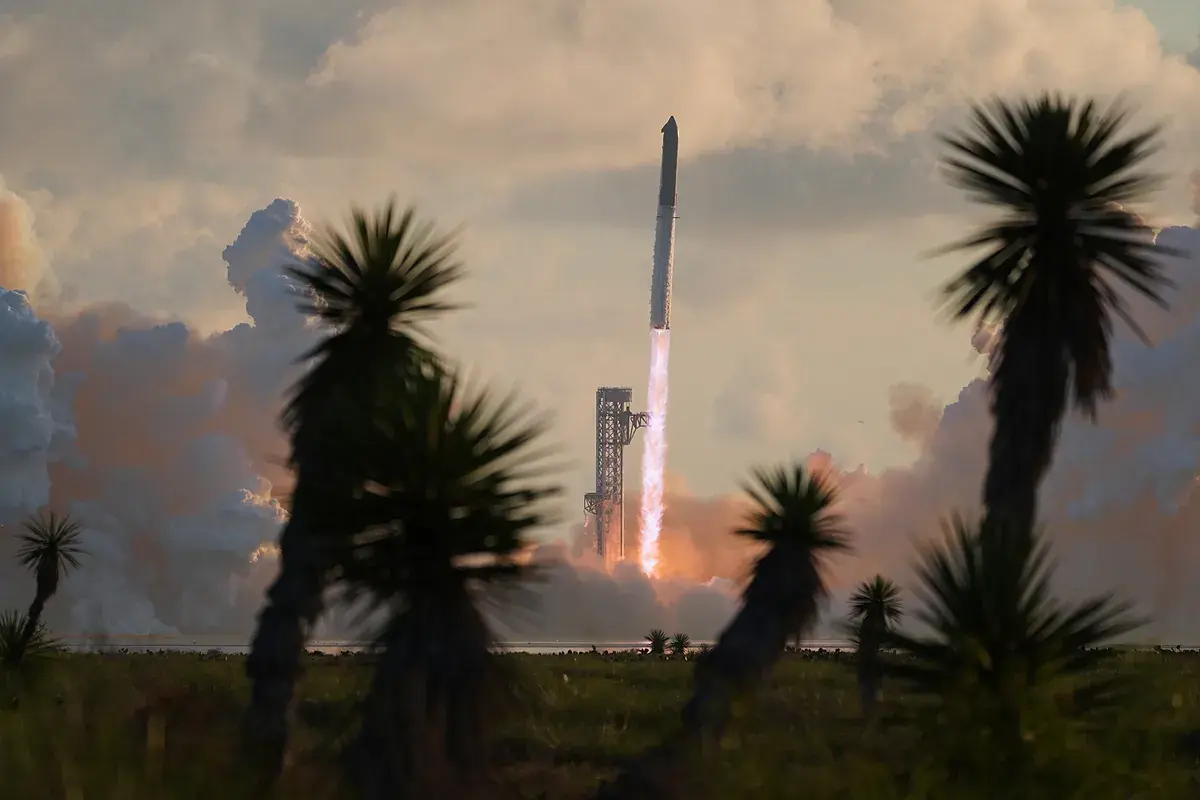
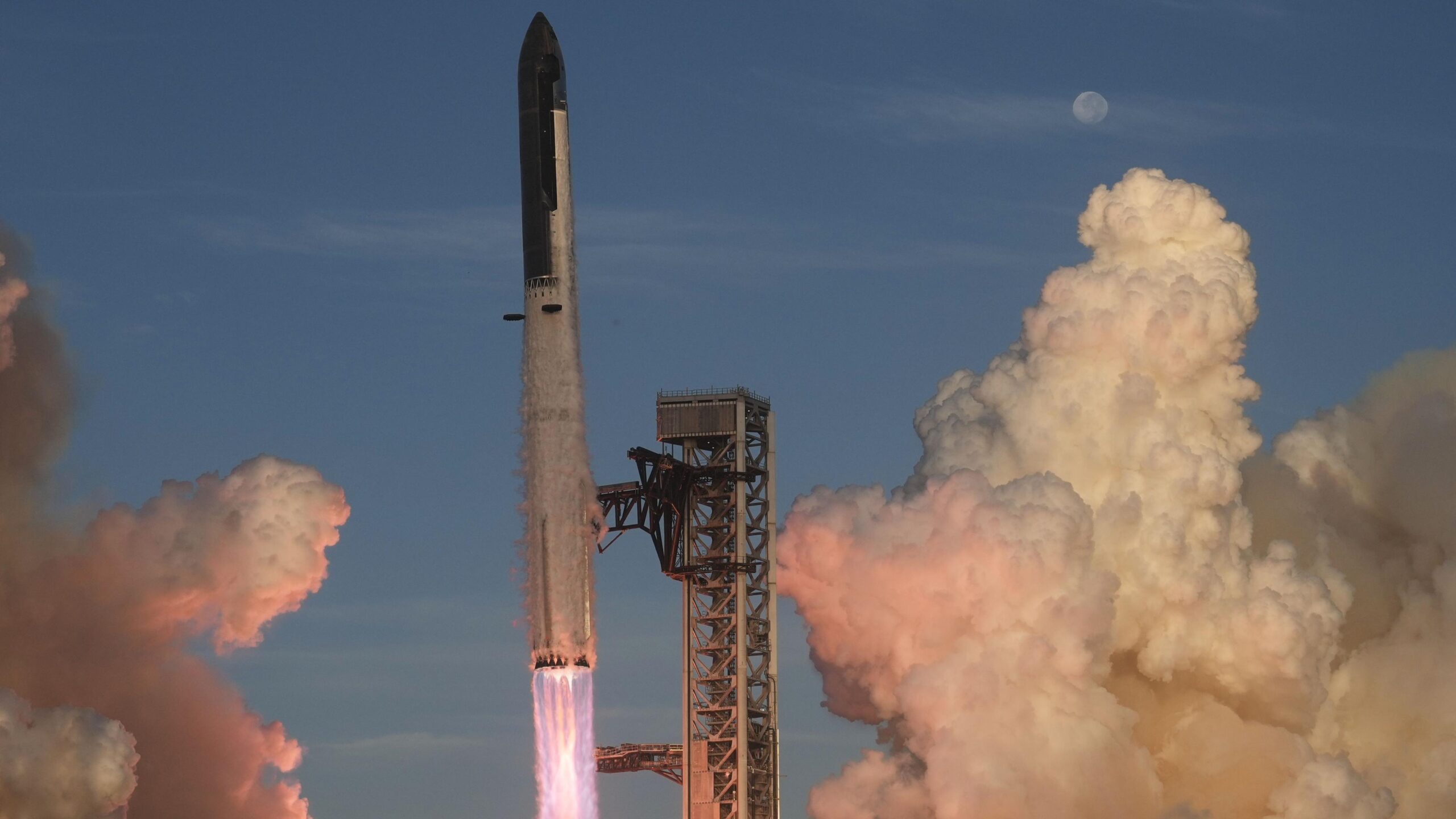
SpaceX's giant spacecraft has taken a step that had eluded it for several attempts. In its fourteenth test, the Super Heavy booster and Starship upper stage lifted off from Starbase in Texas, and for the first time, the upper stage successfully maintained Earth orbit. This milestone makes Starship the most powerful orbital launch vehicle to have flown to date and brings SpaceX closer to its goal of a reusable system.
The test, however, wasn't perfect. The company had planned a ten-hour journey with six orbits of the planet, but ended up shortening the plan to around three hours after several engine problems. Even so, the spacecraft managed to deploy 26 Starlink V3 satellites and complete a splashdown in the North Pacific before being destroyed upon impact with the water. SpaceX calls the mission a huge step forward, although it admits that some issues remain to be resolved.
A takeoff marked by uncertainty
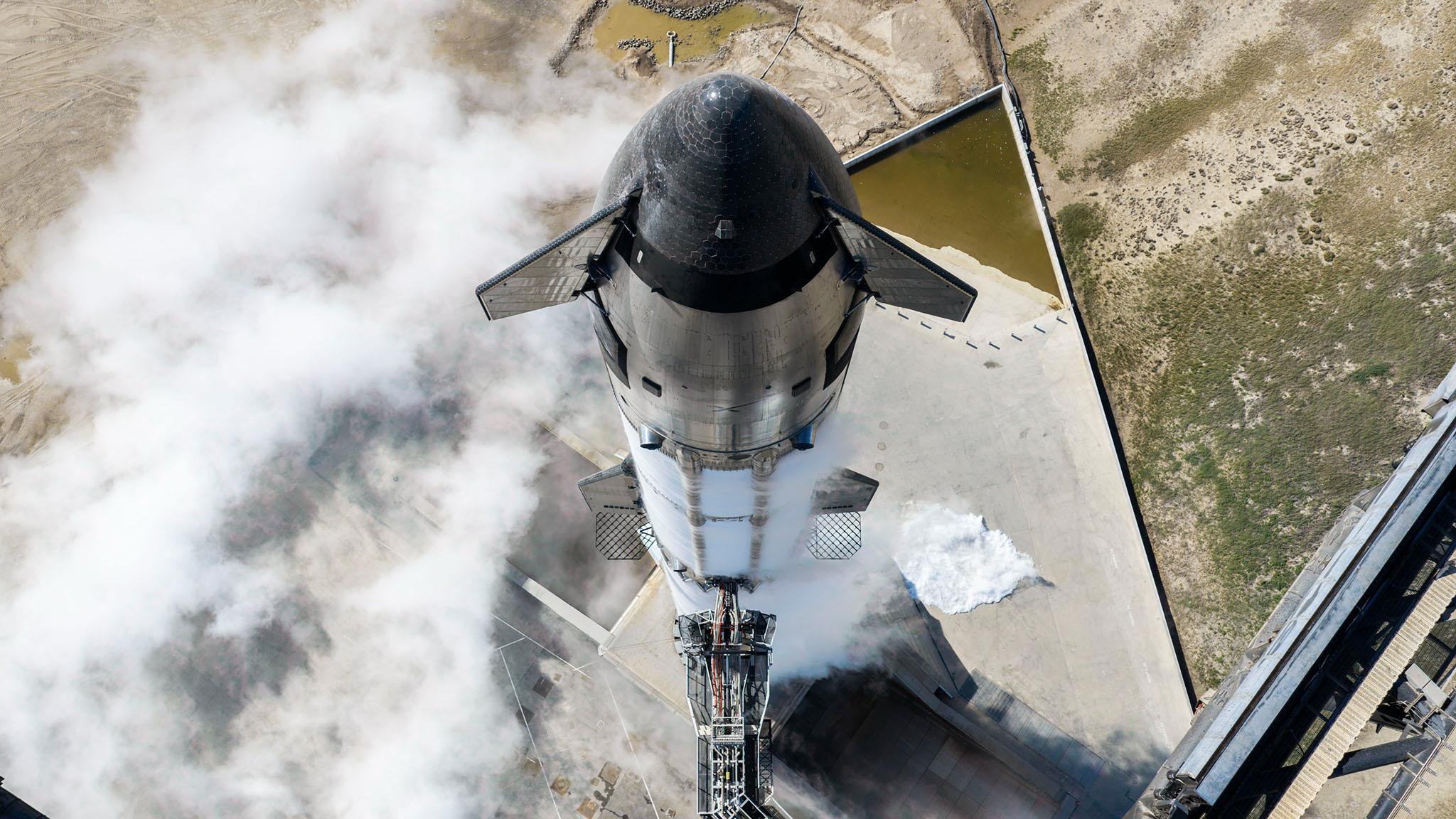
The launch took place on September 28 from the Boca Chica base on the Texas Gulf Coast, at approximately 14:48 PM Spanish Peninsular Time, according to the most frequently cited references. The launch window had opened slightly earlier, and attention was focused on whether the upper stage could perform the orbital burn. One of the upper stage's Raptor engines shut down prematurely during ascent , leading controllers to consider a suborbital trajectory.
Minutes later, the team verified that the core engines were still functioning and authorized the burn that propelled Ship 41 into orbit. The maneuver occurred about 25 minutes after liftoff and placed the spacecraft on a trajectory with an apogee of approximately 275-277 kilometers. The key difference from previous flights is that this time the spacecraft did not re-enter the atmosphere immediately , but instead remained orbiting the Earth.
Engines failing and a plan that's being cut short
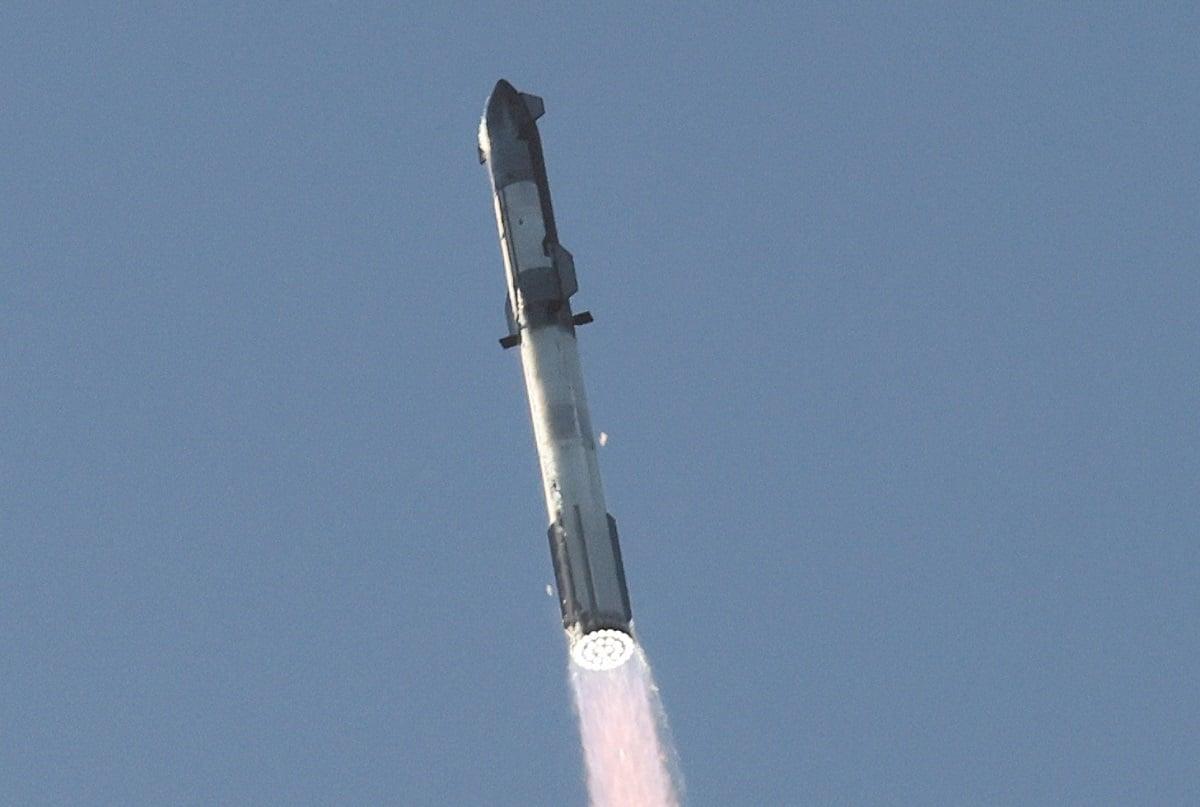
The Super Heavy also showed signs that the Raptor engines are not yet performing with the desired reliability. During the return maneuver, two of its 33 engines failed to reignite, and the booster had to rely on the remaining engines to complete a soft splashdown in the Gulf of Mexico. The maneuver mimicked the capture SpaceX intends to perform with the launch tower , a step prior to recovering the booster on land.
The Starship stage, meanwhile, was scheduled to complete six orbits and a nearly ten-hour flight, with a planned splashdown west of Chile. However, after some initial problems and with the spacecraft already in orbit, the company decided to accelerate the braking and bring it back. The return occurred in the North Pacific, near Hawaii, and not in the area initially planned . The total flight time was reduced to approximately three hours and eight minutes.
The deorbit burn lasted only a few seconds, and reentry proceeded without serious incident. Ship 41 splashed down vertically, but exploded upon impact, something that had already occurred in other tests. The previous spacecraft, Ship 40, remained floating intact in the Indian Ocean , demonstrating the variability of these tests.
Starlink V3, the most payload to date
The deployment of the 26 Starlink V3 satellites was one of the highlights of the day. Once in orbit, the satellites were launched from the payload bay and established contact via radio frequency and laser links. Each V3 unit can add approximately 1 Tbps of bandwidth , totaling about 26 Tbps in a single mission, equivalent to roughly ten V2 mini satellite missions using Falcon 9 rockets.
These satellites incorporate solar panels and antennas that will deploy after separating from the spacecraft. They are designed to offer faster speeds to Starlink subscribers. They will then raise their orbit using their own propulsion systems and, after testing, could begin providing service within a few weeks. This is the first time a Starlink V3 payload has been deployed from a Starship flight.
Three of the 26 satellites carry cameras to photograph the spacecraft's heat shield from the outside. SpaceX wants to test how well the tiles withstand the heat of reentry, which can reach very high temperatures in some areas. Two tiles from Ship 40 were reused in this mission , and additional fastenings and curved designs were also tested to reduce wear.
The race to the Moon and Mars
Orbital flight was a prerequisite for Starship to advance toward more ambitious missions. NASA selected SpaceX to develop a lunar version of the spacecraft, intended to serve as a lunar lander within the Artemis program. Artemis III is planned for 2027 and will test operations in Earth orbit with Orion and the test modules , while the first crewed lunar landing since 1972 is envisioned for Artemis IV in 2028.
The Starship delay has led the US agency to keep the door open for Blue Origin, Jeff Bezos's company, which is also developing a lunar lander. This competition adds pressure to SpaceX, which needs to demonstrate that it can meet its deadlines. Elon Musk's ultimate goal remains Mars , but first he must ensure that the system is reliable and reusable.
SpaceX is now working to recover both the Super Heavy booster and the Starship upper stage from the launch pad. The company has already captured the booster several times, but has not yet attempted to do the same with the spacecraft. Reaching orbit finally allows them to consider this recovery phase , which is key to reducing flight costs.
The fourteenth test flight yielded a mix of progress and unfinished business. Starship demonstrated its ability to reach orbit and deploy Starlink V3 satellites, but the Raptor engine failures and the shortened flight path serve as a reminder that the system is still not fully mature. The next challenge will be to fly with fewer incidents and recover both stages , a crucial step for Artemis, SpaceX's internet network, and Musk's Martian ambitions.