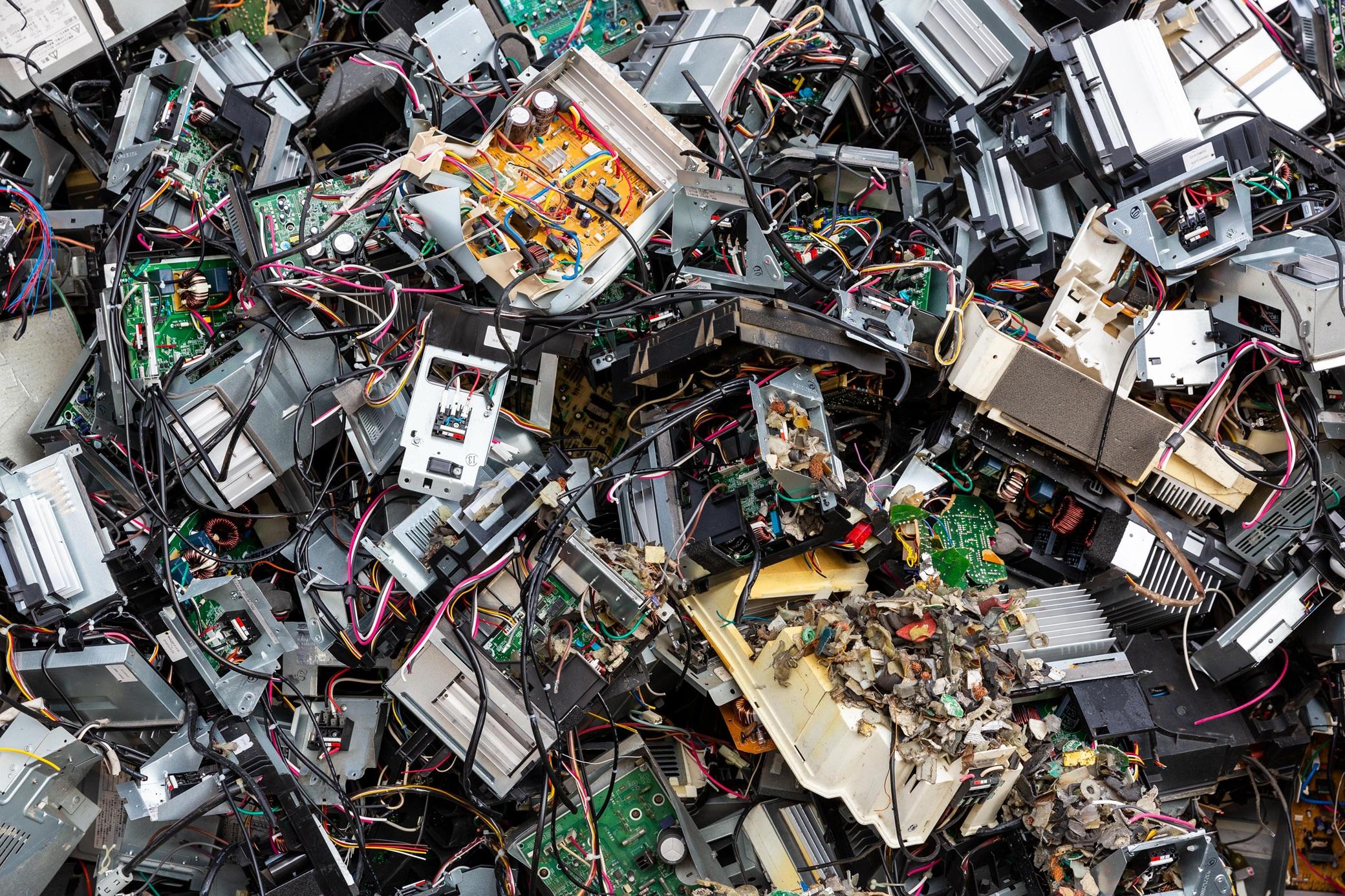
The agreement between Temu and Recyclia has brought attention to an issue that is often overlooked when buying a connected device: what happens to it when it breaks down or is no longer useful. The e-commerce platform and the organization that manages the Ecoasimelec and Ecopilas collective systems have formed a partnership to enable sellers on their marketplace to comply with their environmental obligations regarding WEEE (Waste Electrical and Electronic Equipment), batteries, and accumulators in Spain. The aim is to connect online sales with official collection and recycling channels , including at the end of the product's life cycle.
The announcement, released at the end of October, includes support for sellers with registration, reporting, and payment of environmental management fees. In addition, buyers will be able to locate official collection points for equipment, batteries, and accumulators purchased on Temu. With this approach, the marketplace joins a framework of shared responsibility involving manufacturers, distributors, public administrations, and consumers—a logic also found in other electronic waste management initiatives.
What changes for sellers and buyers
For retailers, the agreement aims to simplify procedures that are not always straightforward, especially for those operating in multiple countries. Recyclia will assist them in complying with extended producer responsibility , a principle that obliges those who place a product on the market to manage its disposal once it becomes waste. The collaboration is supported by the Ecoasimelec and Ecopilas systems, which specialize in electrical and electronic equipment, on the one hand, and batteries, on the other.
For buyers, the most visible benefit is the option to return used appliances to authorized collection points instead of leaving them in a drawer, with household waste, or on the street. This is important because improperly managed WEEE (Waste Electrical and Electronic Equipment) loses valuable materials and can release hazardous substances . The platform notes that it has already signed agreements with more than sixty authorized extended producer responsibility schemes in Europe, in categories such as packaging, batteries, and electronic waste.
Temu entered Spain in 2023 and opened its marketplace to European sellers in 2024. Its agreement with Recyclia is presented as a way to streamline regulatory compliance for those selling through the platform, without making sustainability a mere formality. The company asserts that these partnerships help sellers comply with Spanish and European regulations and strengthen local collection and recycling systems.
Why WEEE shouldn't end up in the regular trash
WEEE includes mobile phones, computers, chargers, cables, televisions, small household appliances, and also large appliances such as washing machines or refrigerators. Many contain iron, copper, aluminum, plastics, glass, and small amounts of precious metals that can be reused as raw materials. At the same time, they may contain heavy metals, flame retardants, or refrigerants that require technical treatment.
When these devices are burned, buried, or dismantled without proper precautions, their components can be released into the soil, water, or air. Collection through authorized channels reduces pollution and improves the traceability of each device. It also prevents repairs or recycling from being carried out under unsafe conditions, which can occur when waste enters informal channels.
Leaving an old device stored at home doesn't solve the problem either. Storing damaged equipment for years delays the recovery of materials and increases the risk of them ending up in the wrong place. That's why local campaigns, recycling centers, and collection systems from manufacturers and distributors are useful: they bring the solution closer to the public and prevent the final step from depending on improvisation.
Repair, reuse and recycle: a chain with several links
Before getting rid of an appliance, it's worth considering whether it's worth repairing. Preventive maintenance and qualified technical assistance can extend the lifespan of many devices , especially when the fault is temporary. The decision shouldn't depend solely on the repair cost: the old appliance's energy consumption, its safety, and the availability of spare parts are also important factors.
When equipment reaches the end of its useful life, the priority is ensuring it follows a safe disposal process. Devices that still function or can be repaired are given a second life through reuse ; the rest must go through authorized waste management companies that separate components, recover materials, and send hazardous parts for specific treatment. In some cases, this work is supported by cooperatives and social economy entities, which adds a labor dimension to the recycling process.
- Before you buyConsider whether the new device replaces one that can still be repaired.
- During useFollow the manufacturer's instructions and do not force equipment that already has safety flaws.
- At the end of its useful lifeTake it to an authorized service center and avoid disassembling it at home.
- If you shop onlineCheck what collection options the platform or seller offers.
A shared responsibility that also affects online commerce
Managing WEEE (Waste Electrical and Electronic Equipment) is not solely the responsibility of government agencies. Manufacturers, distributors, platforms, and consumers are all part of the chain that determines whether an old mobile phone becomes raw material or simply discarded waste. The agreement between Temu and Recyclia fits this logic: it shifts part of the responsibility for compliance to sellers and offers buyers a way to close the loop.
The underlying challenge remains enormous. In Argentina, an estimated 517.000 tons of WEEE are generated annually, and only 3% are recovered through formal channels . In Costa Rica, only 9% of this waste passes through compliance units and authorized managers; 37% is collected by the informal sector, 29% remains in storage, 18% has an unknown destination, and 7% ends up in landfills. These are different realities from Spain's, but they illustrate why the gap between devices sold and waste collected is a global challenge.
The collaboration between the e-commerce platform and Recyclia doesn't solve the electronic waste problem on its own, but it does add another piece to the puzzle. Registering sellers, informing them of their obligations, and providing drop-off points helps ensure that online purchases don't become detached from what happens afterward. The key is for consumers to use these channels, for devices to arrive complete, and for reuse and recycling to be carried out with guarantees. In this way, a simple act like changing your mobile phone or washing machine can cease to be an environmental problem and become part of a more organized system.
Table of Contents