
The promise of autonomous vehicles has always revolved around the same message: removing humans from the wheel to reduce accidents . However, the first official data on Tesla's robotaxis in the United States points in the opposite direction and suggests a much more challenging scenario for Elon Musk's company and for the future of this technology.
Public records from the U.S. highway safety authority show that Tesla's fleet of robotaxis in Austin, Texas, is involved in accidents significantly more frequently than the average driver. After just a few months in service, the vehicles have accumulated 14 recorded accidents and a collision rate that, according to the company's own parameters, is four times higher than the risk associated with a car driven by a person.
A worrying tally: 14 accidents in just a few months of service

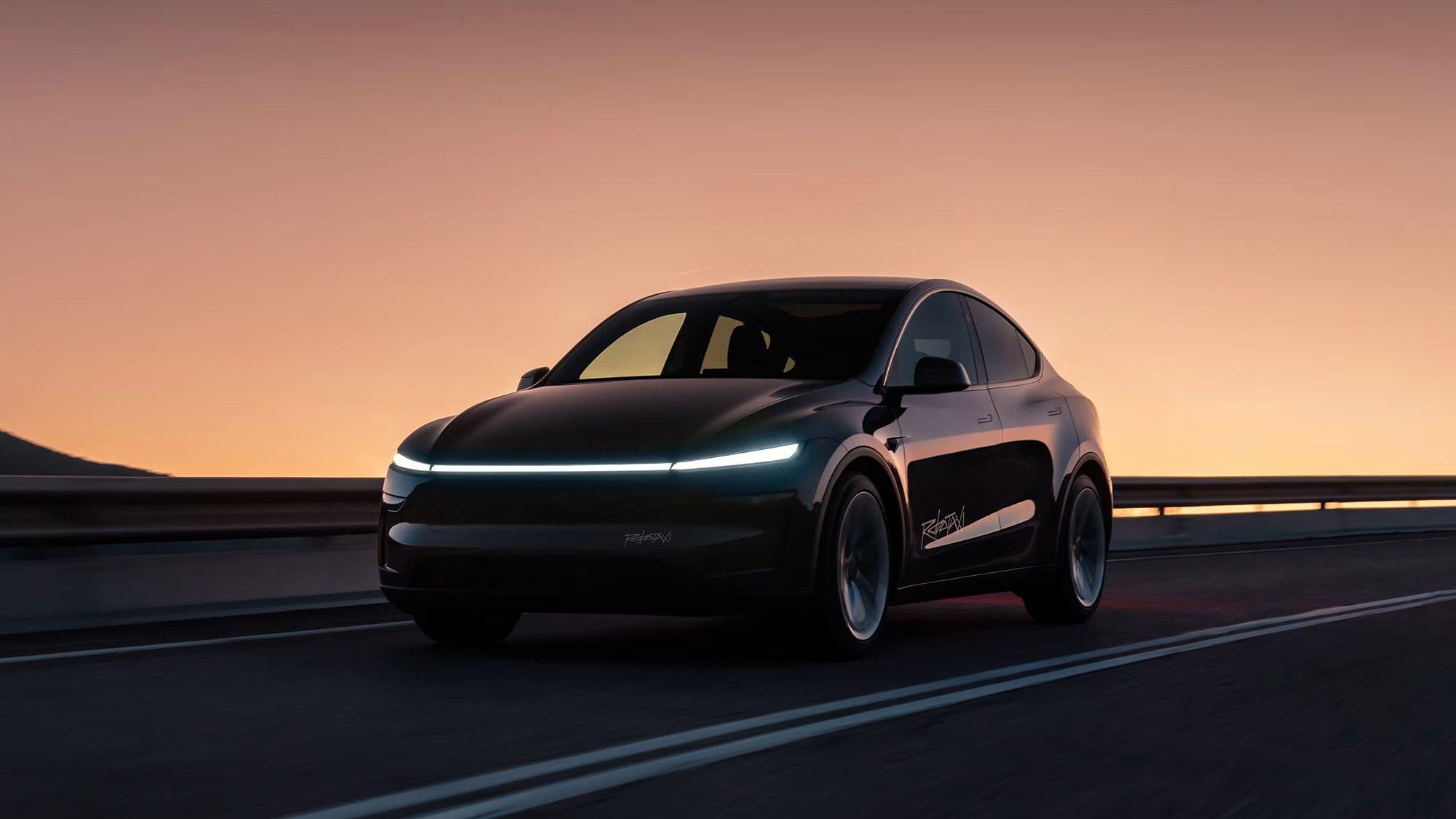
Tesla's experience with robotaxis in Austin began in June 2025, when the company put a small group of modified Model Ys into service to operate as autonomous taxis with a safety driver or a follower vehicle on board. From then until early 2026, records submitted to the National Highway Traffic Safety Administration (NHTSA) show 14 incidents involving these vehicles.
The last five accidents occurred between December 2025 and January 2026, a very short period that has raised serious concerns among regulators and analysts. Several of these were low-speed collisions with fixed objects , such as poles, trees, or road features, including reversing maneuvers where the car impacted at just a few kilometers per hour.
In another recent incident, a robotaxi collided with a bus while the Tesla vehicle was stationary , and on another occasion, a collision with a heavy truck was recorded at approximately 6 km/h. There was also a recorded impact with a stationary object at 27 km/h in a straight line. On paper, these appear to be minor collisions, but their recurrence reveals potential systemic flaws in the software's decision-making.
Exact mileage figures vary depending on the source, but data compiled by specialized media outlets such as Electrek and Futurism, based on Tesla documentation and the NHTSA database, places the fleet's total mileage between 800.000 and 1,2 million kilometers . Translated into accident rates, that equates to approximately one accident every 92.000 kilometers.
For comparison, Tesla's own safety reports state that the average American driver experiences a minor collision approximately every 368.000 kilometers, and other regulatory statistics place that interval between incidents even higher. Thus, robotaxis would have a four times greater risk of accident than a standard human driver , and even higher if more conservative metrics are used.
Musk versus Waymo: two very different models of autonomous driving
The contrast with Waymo, Alphabet's self-driving car subsidiary, is particularly striking. While Elon Musk has spent years arguing that his camera- and computer vision-based approach is sufficient for full automation, Waymo has opted for a more traditional system combining cameras, radar, and LiDAR , and has been gradually deploying it in cities like San Francisco, Phoenix, and Austin.
According to data cited in US media, Waymo has already surpassed 200 million kilometers traveled in fully autonomous mode , with an average of one accident every 157.000 kilometers. While not a perfect figure, the ratio is significantly more favorable than Tesla's , which, with far fewer kilometers accumulated, has a higher incident rate.
In Austin, the contrast is also reflected in usage volume. Reports indicate that Waymo has recorded 51 incidents in the city over a similar period, but with more than 6,3 million miles (approximately 10 million kilometers) completed without a human driver. Meanwhile, Tesla has reportedly traveled around 800.000 miles (approximately 1,2 million kilometers) with just 42 robotaxis operating intermittently , and yet has accumulated 14 crashes.
This difference in scale makes Waymo's relative accident rate per kilometer much lower. Furthermore, accident analyses indicate that its cars have 80% fewer accidents with injuries and 91% fewer incidents with serious injuries compared to human driving—exactly the kind of statistics one would expect from a technology designed to improve safety.
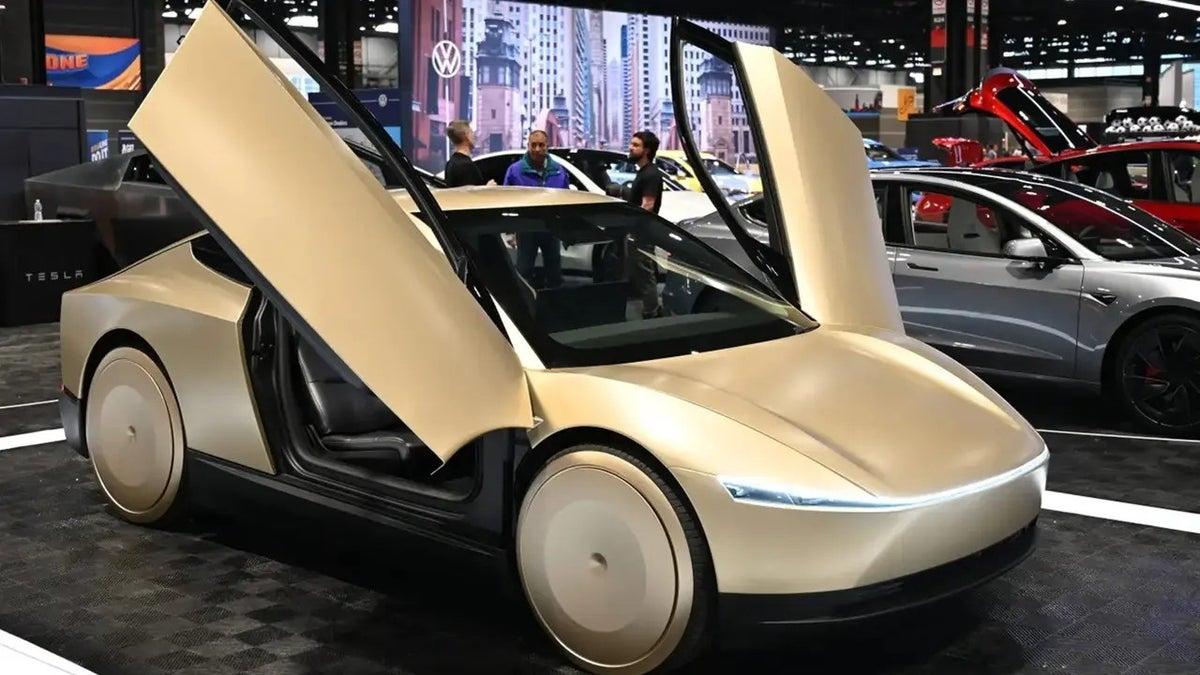
For Tesla, the comparison comes at a delicate time, because the company is heavily promoting the narrative that its Cybercabs, the first production robotaxis without steering wheels or pedals , are on the verge of starting commercial operations. In fact, the first production Cybercab has already rolled off the assembly line at the Gigafactory in Texas , although volume production won't begin for several months, and there are still doubts about even using the name due to branding issues.
On paper, Musk insists that his solution will be more scalable and efficient than that of his rivals, but the data from Austin paints a picture in which, at least for now, Waymo appears as a more solvent and transparent operator in terms of security and incident reporting.
Censored reports, version changes, and regulatory reprimands
Beyond the raw numbers, one of the aspects that most concerns regulators is how Tesla presents its accident data and the need for safety audits for connected cars . In the NHTSA database, many of the narratives associated with its robotaxis accidents are heavily redacted or marked as "confidential commercial information," making it impossible to know precisely what happened in each case.
This approach contrasts with that of other operators, such as Waymo or Zoox , which provide quite detailed descriptions of incidents, including road conditions, vehicle behavior, and possible causes of the crash. This transparency allows independent researchers and the public to better evaluate the technology's actual performance and identify problematic patterns.
In Tesla's case, at least one striking revision to the severity of an accident has been detected . An incident that occurred in July 2025 was initially reported as a collision with "only property damage" after a low-speed impact with an SUV. Months later, in December, the company updated the report and reclassified it as an incident with "minor injuries requiring hospitalization ." In other words, someone had to be treated at a medical facility, something that was not reflected in the initial report.
This delayed change has fueled suspicions that the company is not communicating the true impact of its testing with the necessary transparency . The NHTSA itself has opened investigations into Tesla's repeated delays in reporting some accidents and the company's tendency to conceal details under the guise of trade confidentiality.
From a regulatory point of view, these practices complicate the work of supervision and raise further doubts about the prudence of deploying a robotaxis service in complex urban environments with vulnerable users , such as pedestrians, cyclists or schoolchildren, without a clear and timely flow of information.
Another striking element in the reports is that all the recent incidents occurred during the day and in good weather conditions . In other words, they happened in a context that, in theory, should be the easiest for an autonomous driving system. This reinforces the criticism of Tesla's strategy of relying almost exclusively on cameras, without LiDAR and with very limited use of other sensors.
A deployment that arrives in Europe amid a heated debate on security
Although the incidents are occurring in the United States, the implications are directly felt in Europe. The Full Self-Driving (FSD) system is taking its first steps on the Old Continent—for now in very limited modes and under constant driver supervision—while the company speaks openly about future robotaxis services outside of North America as well.
In the EU, regulations on autonomous vehicles are stricter and more fragmented than in the United States. Each country maintains its own testing and authorization framework, and Brussels is working on common safety and liability standards. The data emerging from Austin therefore comes at a crucial time, as it fuels the skepticism of European regulators regarding the true maturity of Tesla's technology.
For markets like Spain, where the deployment of autonomous vehicles is still in a very preliminary stage, figures such as one accident every 92.000 kilometers and the fact that an operator is withholding details from its official reports can be significant factors in authorizing more ambitious tests in urban environments. The stated priority of the authorities is that automated systems must clearly demonstrate that they are safer than human drivers before allowing widespread commercial use.
Furthermore, the Tesla incidents are occurring alongside ongoing investigations into other robotaxi operators. The NHTSA, for example, has taken action in a case where a Waymo vehicle struck a child near a school in Santa Monica , and is studying whether these cars respond appropriately to school buses and other particularly sensitive situations. The implicit message is that no player in the sector is exempt from scrutiny.
In this context, the data from Austin could become a compelling argument for European regulators to demand more testing, greater transparency, and stricter safety protocols before allowing a fleet of driverless taxis to operate freely in their cities.
Transparency, reputation, and the challenge of convincing the public
Beyond the charts and graphs, the problem with Tesla's robotaxis is also one of public trust . When a technology is presented as safer than humans and the numbers show the exact opposite, the narrative suffers. And if, in addition, information about incidents arrives late, is incomplete, or has undergone significant changes afterward, that distrust multiplies.
In the United States, the controversy surrounding FSD and robotaxis is not new, but the accumulation of incidents in Austin and the way they have been reported has opened an additional front. Tesla argues that this data is part of a continuous learning process and that the system's performance improves with each software update, but so far the official records do not fully support that claim.
Other companies in the sector are aware that their image is at stake with every kilometer traveled. Waymo and Zoox, for example, have opted for a more open communication policy , providing researchers, the media, and the public with access to detailed crash descriptions. This strategy doesn't eliminate accidents, but it helps create the impression that there's less to hide.
For Tesla, the situation is even more delicate because its brand is closely tied to Elon Musk and its highly ambitious pronouncements about the immediate future of autonomous vehicles . When official data shows that its robotaxis are involved in four times more accidents than human drivers, the narrative of technological superiority loses steam, opening the door for regulators, competitors, and users to question the company's timeline and the way it is deploying its services.
Ultimately, the debate surrounding robotaxis in Austin has become a stress test for the entire industry. Real safety, transparency in reporting, and the ability to quickly correct errors will be the determining factors in whether driverless taxis become an everyday reality in Europe as well, or whether they remain in a monitored experimental phase for longer. For now, the data published by the NHTSA puts Tesla in an uncomfortable position: its autonomous vehicles are involved in more accidents than human drivers, and its reporting of incidents does little to dispel doubts.
