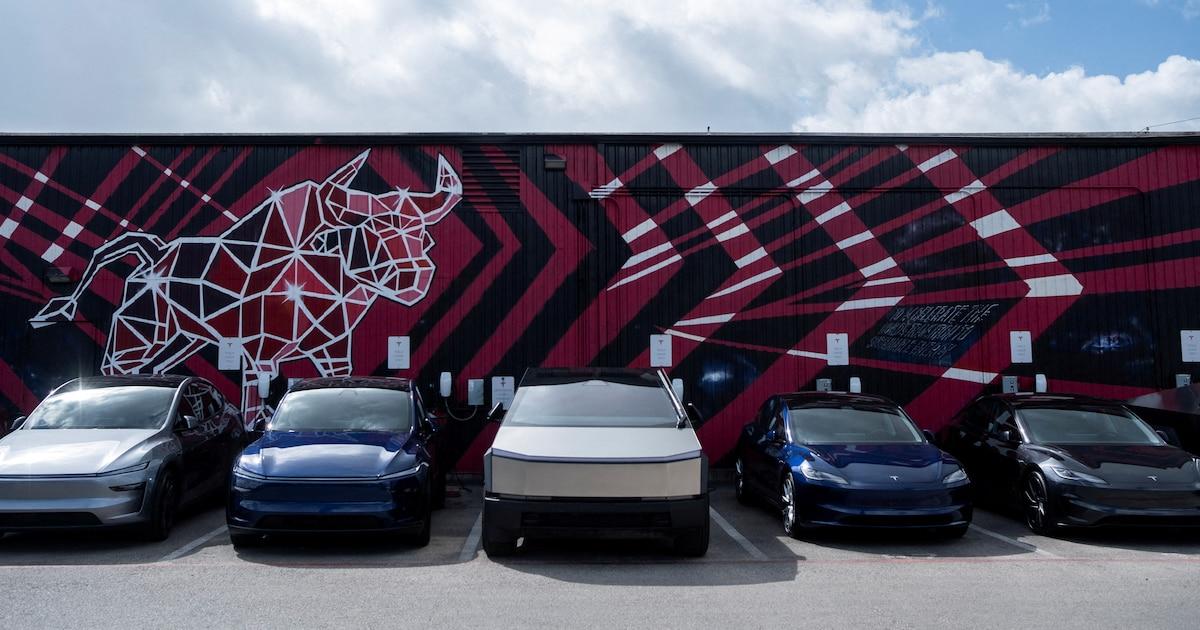
The race for driverless robots has become a key element in the future of mobility, and Tesla is poised to be at the heart of this transformation. Elon Musk's company is working to demonstrate that its autonomous driving technology can operate without direct driver supervision in real-world, large-scale urban environments.
As this strategy accelerates, investors are closely monitoring every move related to robotaxis , seeing them as a potential turning point for both Tesla's business model and its stock market value. The possibility of deploying commercial fleets in the United States and, later, in Europe, is beginning to shape a scenario in which the car ceases to be merely a means of transportation and becomes a recurring revenue stream.
The robotaxi as the engine of Tesla's value
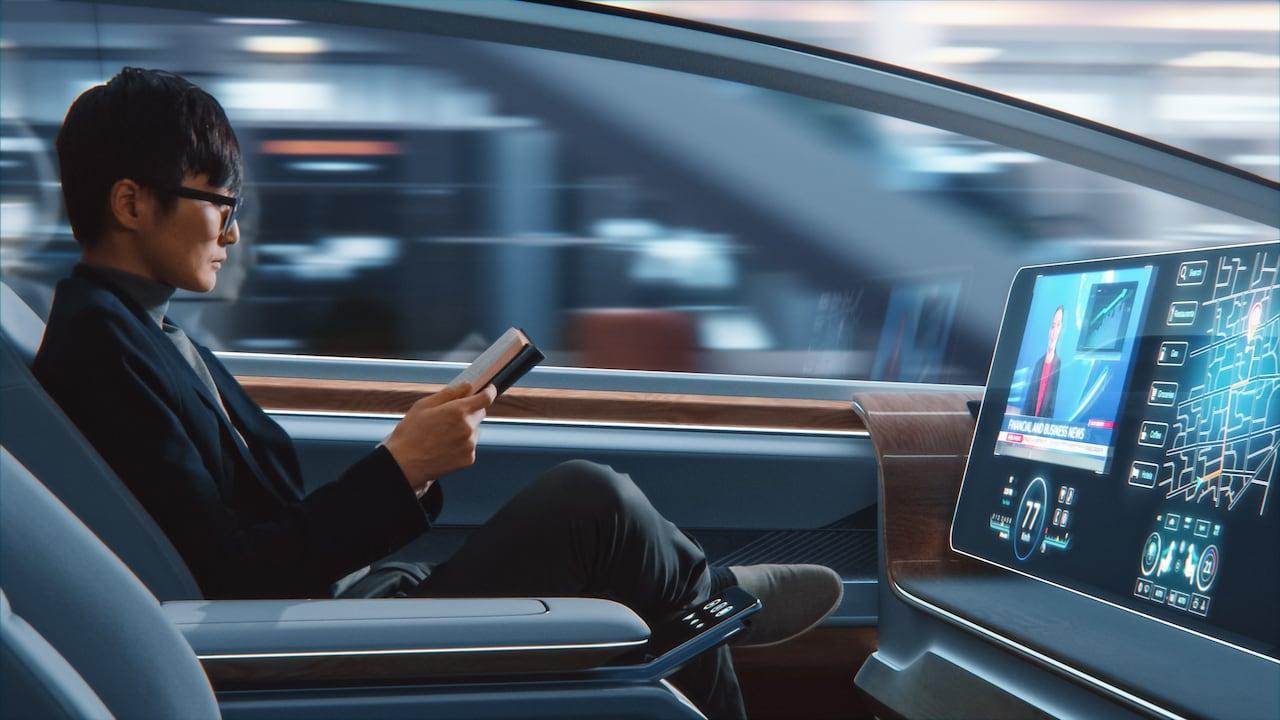
One of the analysts who has paid the most attention to this issue is Gary Black, managing partner of The Future Fund LLC , who sees fully autonomous robotaxis as a key catalyst for Tesla's stock. According to his calculations, a successful rollout of these services could push the stock price above $500, representing a significant increase from current levels.
Black argues that the real turning point would come when Tesla is able to operate “hundreds” of robotaxis without human supervision in cities like Austin, Texas. That scenario, in which the vehicles operate autonomously and generate revenue without a driver, would be interpreted by the market as solid validation of the technology and the associated business model.
In recent public comments, the investor has emphasized that driverless autonomous driving is not just an incremental improvement , but a step that could completely transform the market's perception of Tesla's potential. The key difference lies in the scale: from limited testing and driver assistance features to a commercial service with a real impact on urban traffic and the bottom line.
The stock market's reaction to these advances has been noticeable at certain times. Specialized media outlets like Benzinga have reported how, following renewed expectations regarding the development of robotaxis and the Full Self-Driving (FSD) system , Tesla's shares have seen increases in recent sessions, fueled by the idea that the business will not depend exclusively on vehicle sales.
For Black, the key lies not only in the revenue potential of each robotaxi, but also in the possibility of scaling a global autonomous mobility service . If Tesla can demonstrate that its technology can be replicated in other regions, the market could begin to value the company not only as an electric car manufacturer, but also as a transportation service platform based on software and artificial intelligence.
Driverless robotaxis: a new business model
Beyond the stock market aspect, Tesla envisions robotaxis as the foundation of a business model that breaks with the traditional automotive paradigm . Instead of simply selling vehicles, the company aims for its cars to operate as autonomous taxis when the owner isn't using them, generating additional revenue and creating a distributed transportation network.
In this approach, Full Self-Driving technology becomes the core of the proposal . The software, along with the hardware integrated into Teslas, would allow the vehicles to operate as part of an on-demand robotaxi fleet, managed from the cloud and accessible through an app. The car would become, in a way, a connected asset that generates revenue when it's in motion.
This approach pursues several goals: firstly, to monetize the investment in autonomous driving , and secondly, to diversify the company's revenue streams. In addition to vehicle sales and FSD subscriptions, Tesla could generate revenue from each trip taken via robotaxis, fully entering the mobility-as-a-service market.
However, for this scenario to materialize, the company will have to demonstrate very high levels of safety and reliability in its autonomous driving system. In complex urban environments, with pedestrians, cyclists, changing traffic signals, and shifting weather conditions, any incident can have a direct impact on public confidence and the response of regulators.
Elon Musk's company, like other players in the sector, is aware that social acceptance and regulatory compliance will be just as important as the technology itself . It's not enough for the car to be able to drive itself; it has to do so in a way that authorities feel comfortable authorizing its operation without a safety driver and that users perceive the service as safe.
A context of global competition in robotaxis
Tesla's move into robotaxis comes amidst a growing competition to lead in autonomous driving . Companies like Waymo , Uber, and the Chinese firm CaoCao are also developing their own robotaxis platforms, testing services in various cities, and pursuing diverse technological strategies.
Meanwhile, technology providers like Nvidia are developing specific solutions to facilitate the adoption of autonomous driving by manufacturers worldwide. Their Alpamayo platform, for example, aims to offer a hardware and software foundation that other brands can integrate, lowering the barrier to entry in the autonomous driving sector.
This scenario means that Tesla is no longer competing solely in the electric vehicle market, but in a much broader ecosystem that blends automotive, software, transportation services, and artificial intelligence . The race will not only be fought on the streets, but also in the offices of regulators and in the investment decisions that determine which technologies are adopted on a large scale.
Meanwhile, various robotaxis projects are incorporating phased deployment models. Some companies are opting for pilot phases with a safety driver , others are alternating mixed fleets with human-driven and autonomous vehicles, and only in highly controlled environments are fully driverless operations being tested.
This phased approach allows for the evaluation of technical stability and service acceptance before making the leap to mass deployment. For Tesla, which aims to operate "hundreds" of units in certain areas, this validation process will be essential if it wants to extend the robotaxis model globally, including in Europe.
Europe's role: regulation and possible deployment of Tesla's robotaxis
Europe appears in Tesla's plan as a strategic piece, but also one that is particularly demanding in regulatory terms . Elon Musk has indicated his intention to achieve approval for the Full Self-Driving system on the continent within a relatively short timeframe, mentioning February 2026 as the target date for obtaining the green light.
Currently, Tesla's FSD system is in the testing phase in the United States, where it enables advanced driver-assistance functions under human supervision . Although the software has been gaining capabilities, it is not yet considered a fully autonomous solution in which the driver can completely relinquish control of the vehicle.
In Europe, the situation is even stricter: regulations require the driver to remain attentive and ready to intervene at all times , even when the vehicle is performing maneuvers almost autonomously. This legal framework means that the leap to a driverless robotaxi, as envisioned by Tesla, requires profound regulatory changes and an extra degree of trust in the technology.
During his participation in the World Economic Forum in Davos, Musk expressed his willingness to collaborate closely with European authorities to move toward approval of the supervised FSD. The idea would be, first, to consolidate the system's validation with the driver still present and, later, to open the door to operations with less human intervention, thus paving the way for robotaxis.
If the timeline holds and Europe approves the widespread use of FSD in 2026 , the next logical step would be to explore pilot projects for autonomous mobility services in specific cities, likely with well-defined testing frameworks. For Tesla, this would mean beginning to build a foundation from which, in the medium term, the large-scale rollout of driverless robotaxis could be considered.
Potential impact on European cities and urban mobility
The prospect of seeing Tesla robotaxis operating in European cities has sparked numerous debates about how it would change urban mobility, traffic management, and private vehicle use . Services of this kind could complement public transportation, reduce the need for each person to own a car, and alter how we think about daily commutes.
In densely populated areas, driverless robotaxis could help optimize fleets by adjusting vehicle supply based on real-time demand. This could result in fewer parked cars sitting idle, faster vehicle turnover, and potentially a reduction in the space currently used for parking.
However, questions also remain: the impact on employment in the taxi and passenger transport sector , integration with existing public transport systems, user data management, and cybersecurity are issues that regulators and cities will have to address in detail.
Furthermore, the arrival of robotaxis would necessitate a rethinking of some urban infrastructure : dedicated loading and unloading zones for autonomous vehicles, waiting areas, communication systems with smart traffic lights, and control centers to monitor fleet operations. All of this would require investment and close coordination between government agencies and private operators.
In this context, Tesla's strategy of positioning itself as a leader in electric mobility and artificial intelligence applied to transportation aligns with European decarbonization and digitalization policies. If it manages to adapt to regulatory requirements and demonstrate that its robotaxis are safe and efficient, it could play a prominent role in the transformation of mobility on the continent.
Tesla's commitment to driverless robotaxis is thus moving forward on several fronts simultaneously: technological improvements to the FSD system, the pursuit of regulatory approval in the United States and Europe, and the crafting of a narrative for investors that presents this line of business as a central pillar of the company's future. It remains to be seen to what extent reality will live up to expectations, but the idea of fleets of Tesla autonomous vehicles circulating in cities no longer seems so far-fetched and is beginning to emerge as one of the key debates of the next decade.