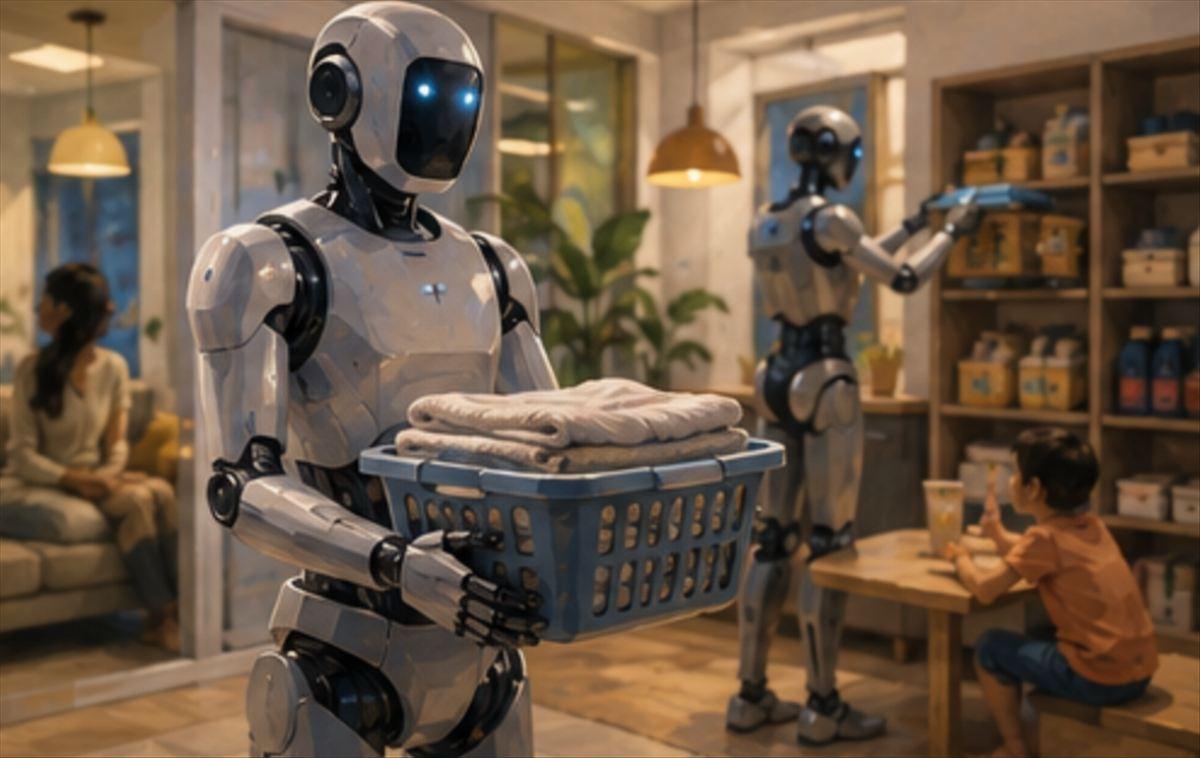
While much of the world remains glued to every viral video of Tesla and its humanoid robot Optimus , the Asian giant has been working hard to move from laboratory demonstrations to actual sales. It's not just about whether the machines walk better or worse; Chinese companies are already closing deals to place these humanoids in factories and stores. This technological race is gaining momentum that few anticipated, leaving behind the idea that robots are merely toys for tech fairs and transforming them into a strategic pillar of their current industrial policy.
In Spain and the rest of Europe, we tend to view these advances with a certain detachment, almost as if they were a science fiction film that doesn't directly affect us, but the impact on global logistics will eventually reach us. China is not only looking to manufacture more, but also to establish the standards for this new robotic era that promises to change how warehouses are managed for the products we buy online. The reality is that, while we debate its viability here, they are already training thousands of robots there for tasks ranging from moving boxes to interacting with customers at hotel receptions.

A market that is no longer science fiction
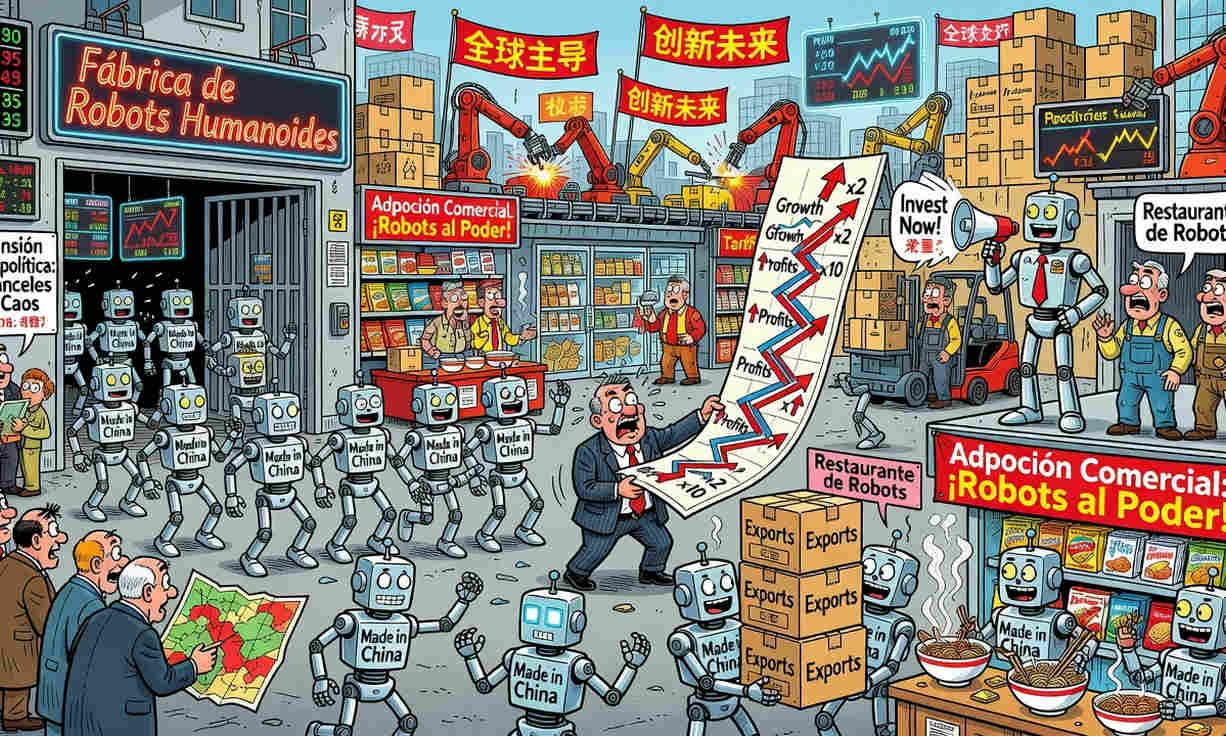
The figures used by financial institutions have changed dramatically in a matter of months. Morgan Stanley has had to revise its own reports to admit that the pace of shipments will be double what they predicted at the beginning of the year, reaching 50.000 units in a very short time. This adjustment is significant, as it reflects that the Chinese supply chain is capable of responding much faster than Western analysts initially thought possible.
The money involved in this sector is also substantial, with projections indicating billions of dollars in sales by the end of the decade. What makes this growth so robust is that it doesn't involve internal prototypes or laboratory testing, but focuses exclusively on external sales to actual customers. The sectors driving this growth are primarily logistics and high-tech component manufacturing, where the environment is highly controlled and robots can operate with ease.
From hard work to emotional support
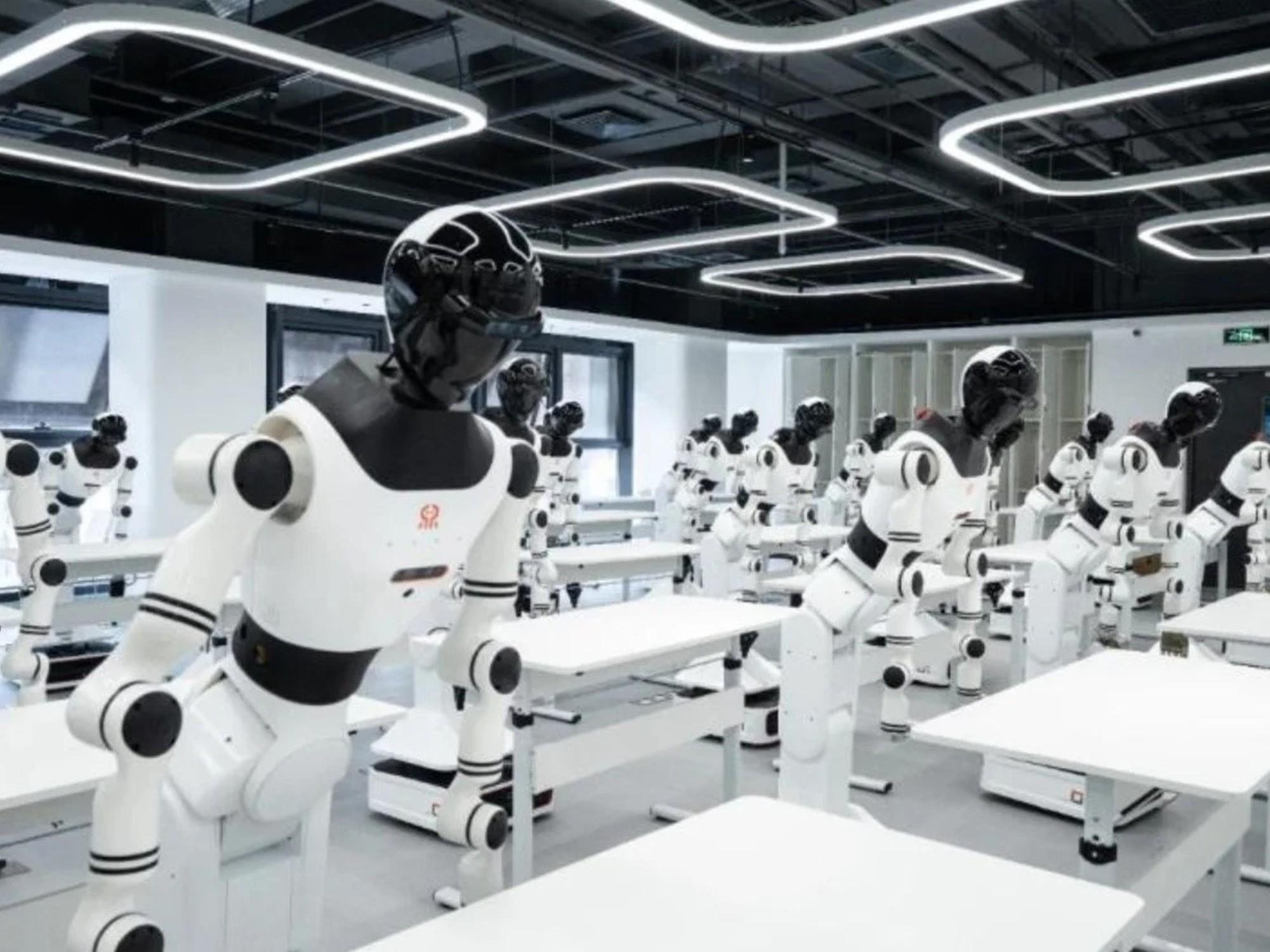
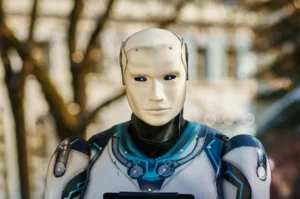
One of this season's surprises has been the shift towards consumer robotics focused on emotions. Companies like UBTECH have launched pre-sales of models like the U1, which isn't designed to mop floors or iron shirts, but rather to establish a bond with the user . With thousands of reservations already registered, these hyperbionic humanoids aim to be the ideal companion, capable of remembering past conversations and reacting with facial expressions that mimic human behavior in a rather surprising way.
However, all that glitters is not gold, and expectations still need to be tempered when it comes to domestic use. These AI-powered care robots have a significant limitation: their battery only lasts a maximum of four hours , which makes having a permanent companion at home a bit of a challenge. Even so, the success of pre-orders demonstrates that there is a market willing to pay for an anthropomorphic presence in their living room, even if, for now, it's only for adults and with somewhat limited interaction functions.
The challenge of learning to move in the physical world

Teaching a robot to think is relatively easy thanks to artificial intelligence, but teaching it to navigate a Madrid apartment full of furniture is a different story altogether. Chinese engineers are using what they call embodied or physical artificial intelligence to enable machines to learn through constant repetition. It's no longer just about programming lines of code, but about the robot observing humans performing tasks and registering every tiny angle and force required to avoid making mistakes.
The problem with the home is that it's a chaotic environment where objects move around and pets appear out of nowhere. That's why the most realistic predictions suggest that the fully functional domestic robot will take another decade to reach mass markets like Spain. Meanwhile, learning is focusing on the machine's "cerebrum," that is, on improving balance and motor coordination so that a simple step doesn't spell the end of the day for the humanoid.
Logistics and large-scale labor replacement

The news that has set off alarm bells in the service sector comes from giants like JD.com, whose founder has hinted that robots could replace hundreds of thousands of delivery drivers in the future. While this sounds like a direct threat, the reality in Europe is somewhat more nuanced, as regulations and implementation costs differ. Nevertheless, it's undeniable that the automation of order picking and sorting is a process that is now irreversible in large distribution centers.
What we're seeing isn't a sudden elimination of jobs, but a transformation toward technical supervisory roles. Leading companies in the sector are already achieving 99 percent success rates on complex tasks such as connecting cables in battery plants. This means that the humanoid is moving beyond a promise and becoming a precision tool already operating in environments where human error can be very costly.
From the oars of a boat to the kitchen at home

To demonstrate their capabilities, some developers have taken their machines to a wide variety of situations, such as rowing dragon boats during traditional festivals. These tests serve to validate water resistance and dynamic balance under non-laboratory conditions. If a robot can coordinate with humans to row on a river, it's one step closer to being able to help us in humid environments like the kitchen or bathroom of any typical home.
There have even been advances in food handling, with prototypes already capable of washing rice or preparing dumplings. These small milestones will be part of the upcoming humanoid games in China , an event intended to be the ultimate showcase of this technology's progress. Ultimately, what today seems like a curiosity at a traditional festival is the technical foundation that will allow, in a few years, having a robotic assistant to be as commonplace as having a dishwasher at home.
The Chinese robotics industry has laid the foundations for a market that will soon cease to be exclusive to industrial powers and will enter the everyday and commercial sphere at an unstoppable pace. With guaranteed state support for the coming years and a supply chain that continues to reduce costs, the transition to a society with a humanoid presence is a path already underway. It remains to be seen how the European market will adapt to this technological wave, but what is clear is that mass deployment is much closer than even the most skeptical dared to imagine just a few months ago.
Table of Contents