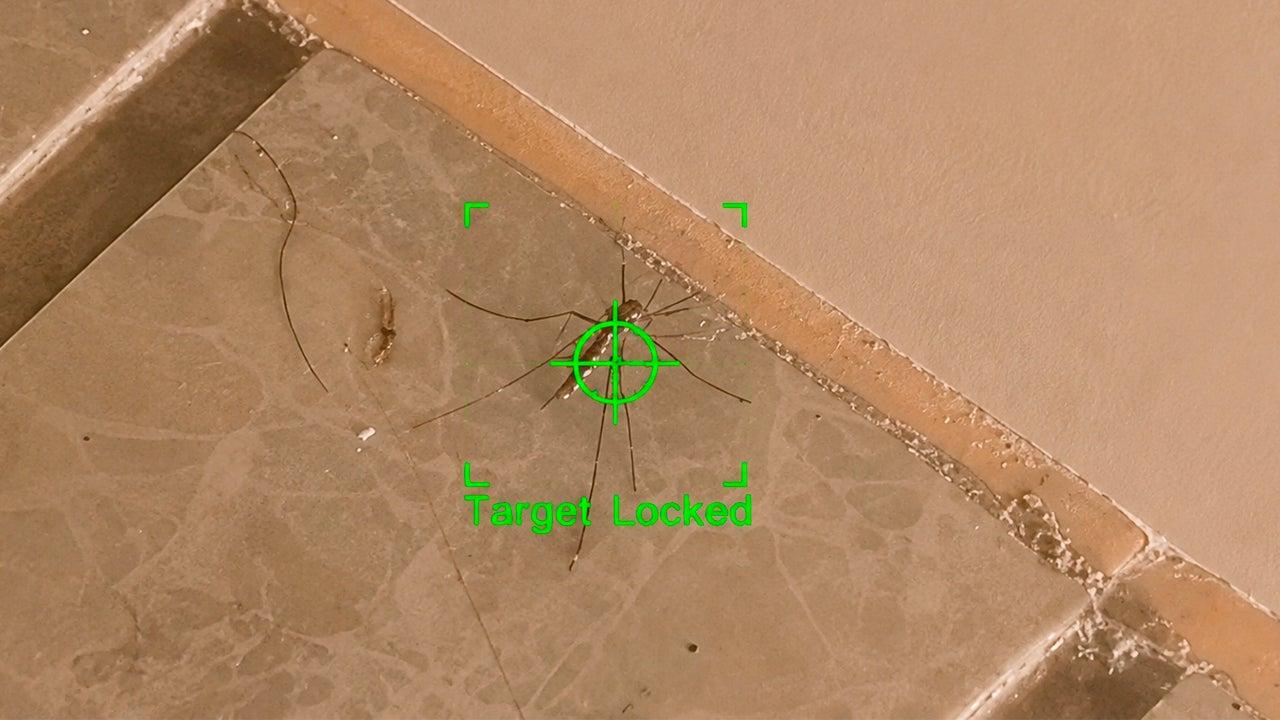
Recent international incidents, particularly those at strategic ports in May 2026, have highlighted that electronic and directed-energy warfare is entering a critical phase. The use of blue light beams, based on commercially available gallium nitride components, has proven insufficient to deter incursions by advanced unmanned aerial vehicles (UAVs). These events have served as a reality check for military strategists, demonstrating that simply blinding conventional optical sensors is no longer a reliable defense when the adversary employs autonomous GPS navigation and state-of-the-art thermal guidance.
The physical scattering of light in maritime environments, due to humidity and haze, acts as a natural shield against attackers, reducing the effectiveness of laser projectors attempting to saturate drone cameras. This situation has driven the European and global industry to accelerate the development of thermal destruction solutions, which, instead of relying on glare, focus on concentrating extreme heat on the target's structure to cause ignition or the detonation of its explosive payload almost instantaneously.
Mobile systems and autonomy on European soil

In this context of technological advancement, the German company Inleap Photonics has taken a significant step forward with the unveiling of the Fastlight Shield. This device, for the first time, is integrated onto unmanned ground vehicles to provide dynamic protection instead of relying on fixed installations. This innovation, already demonstrated in exercises organized by the Bundeswehr in Germany, allows military units to equip themselves with a laser shield capable of supporting troop deployments across complex terrain, filling a gap that traditional anti-aircraft artillery cannot always effectively address.
The German proposal focuses not only on raw power but also on interoperability with other command and control platforms, facilitating the creation of a coordinated defensive ecosystem. These solutions are expected to enter a more intensive operational testing phase toward the end of this year, aiming for a sub-second response time to Class I and II threats. The underlying idea is quite clear: complete mobility is needed to protect temporary infrastructure or moving convoys without resorting to extremely expensive interceptor missiles.

The role of the Army in the modernization of resources
Spain is keeping pace in the race to improve the accuracy and safety of combatants in high-intensity environments. The arrival of new LP5X laser modules to key units, such as the 1/63 Catalonia Battalion, based at the El Bruch barracks, has recently been confirmed. These devices, manufactured by the Lithuanian firm Brolis Defence Group, represent a significant leap forward in personal and collective equipment, enabling extremely precise aiming of both G-36 assault rifles and Browning M2 heavy machine guns. They are being integrated into the drone defense strategy at the Legion base and other units.
What makes these devices especially valuable to our troops is their ability to operate in both visible and infrared modes, which is crucial in night combat or in confined spaces where light is scarce. The fact that this equipment is not subject to US trade restrictions facilitates its maintenance and distribution within Spanish units. Thanks to its ergonomic and ambidextrous design, soldiers can easily manage the combat lighting , even while wearing tactical gloves, ensuring the intended point of impact before pulling the trigger.
Pulse technology against swarm attacks
On the other hand, the threat posed by massive, coordinated attacks has led to the development of pulsed laser interception systems. Unlike continuous-wave lasers, which need to maintain the beam on the drone for several seconds, new architectures like the one presented by Esh-Tech use short bursts of extremely high intensity. This method allows a single system to neutralize up to thirty drones per minute, which translates to a firing frequency of 5 Hz, rendering conventional systems obsolete as they are overwhelmed by more than three simultaneous targets.
This technological advancement not only improves response speed but also drastically reduces energy consumption, allowing very powerful equipment to be mounted on light vehicles without the need for large electrical generators. The ability to penetrate an aircraft fuselage in just two seconds is a game-changer, as the cost of each interception is reduced to a few cents, making it economically viable to defend against even the cheapest commercially available drones modified for combat, similar to those seen in the escalating drone warfare in Europe.
The convergence of these technologies, from targeting modules in Spain to pulse cannons at international trade fairs like Eurosatory, paints a picture where precise light detection is becoming the cornerstone of national security. The transition from outdated optical blinding methods to thermal and pulse destruction systems, supported by mobile and autonomous platforms, responds to a pressing need to close the current defense gap. The future of force protection and the safeguarding of strategic areas depends on mastering the electromagnetic spectrum with tools as fast as the threats they are designed to stop.

Table of Contents