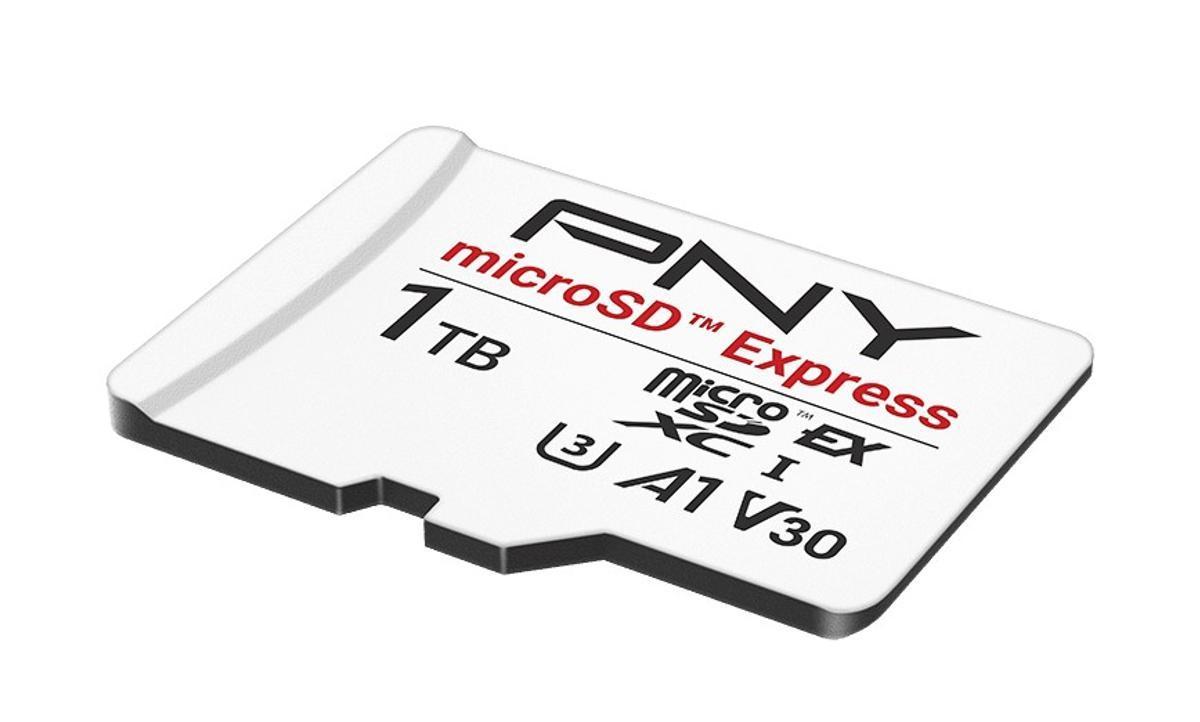
In recent years, microSD cards have gone from being a simple accessory to becoming a key element for getting the most out of mobile phones, action cameras , drones, tablets, and even virtual reality headsets. We're recording more and more video, at higher resolutions and bitrates, making the question of which microSD card is the fastest more important than ever.
Furthermore, while mobile phone manufacturers are reducing internal storage or even eliminating the expansion slot, those who still rely on it need to take advantage of the latest generations of microSD cards, with speeds far superior to those of just a few years ago . And this is where the new MicroSD Express standard, high-performance Extreme-type cards, and all the acronyms for classes—UHS, V30, U1, etc.—come into play, which you should understand to avoid making a mistake.
Who rules the world of microSD cards?
To begin, it's important to understand that there's an organization that sets the rules: the SD Association, the body responsible for defining the specifications of the SD and microSD cards we use in most consumer electronics. It's not a specific manufacturer, but rather an industry association that publishes the standards followed by brands like SanDisk, Micron, and many others.
Thanks to this common framework, an Android phone, a DSLR camera, or an action camera can seamlessly read cards from multiple manufacturers, as long as they all adhere to the same SD, UHS, and now also Express specifications . Each time a new generation of cards is released, the SD Association updates its technical documents to define capacities, physical formats, minimum guaranteed speeds, and compatibility.
This regulatory work is crucial because without firm standardization, ensuring compatibility between devices and memory would be chaotic . So, when you see logos like SDHC, SDXC, SDUC, UHS-I, U1, V30, or similar, you're actually seeing how those SD Association standards are implemented in commercial products.
In that context, the organization announced some time ago one of the most ambitious leaps in this format: the arrival of MicroSD Express, an evolution designed to bring microSD cards to SSD speeds , opening the door to much more intensive use of these tiny storage media.
MicroSD Express: the giant leap towards SSD speeds
The SD Association unveiled the new MicroSD Express format at Mobile World Congress 2019 (MWC19), a trade show where many of the technologies that will later appear in smartphones and mobile devices are traditionally announced. It wasn't a product launch, but rather the official publication of a new technical specification.
The key feature of MicroSD Express is that it adopts the same interfaces used in modern SSDs : PCI Express (PCIe) and NVMe . In other words, it moves beyond the traditional approach of memory cards and relies on the same technological foundation found in the fastest solid-state drives on the market for desktop and laptop computers.
By incorporating PCIe and NVMe, these cards can achieve theoretical transfer speeds of up to 985 MB/s, as defined in the specification. This represents a huge leap compared to current high-performance microSD cards, which typically operate in the tens of MB/s, not nearly a thousand.
To get an idea of the gap, when MicroSD Express was first announced, manufacturers like SanDisk and Micron had already showcased 1TB microSD cards with read speeds of around 160MB/s and 100MB/s, respectively. These were considered incredibly fast for recording 4K video and handling large volumes of data, but they still fell far short of the theoretical ceiling set by MicroSD Express.
The new cards are defined within the SD Association's SD 7.1 specification and introduce variants such as microSDHC Express, microSDXC Express, and microSDDUC Express . These designations combine the capacity type (HC, XC, UC) with the new Express interface, clearly indicating which family and storage range each model occupies within the standard.
Speed and more: energy efficiency and power
Until recently, the main selling point of microSD cards was increasingly easy to summarize: more gigabytes and more terabytes in the same physical space . The headlines were dominated by the first 256GB card, then the 400GB card, then the 1TB card… Capacity skyrocketed, but speeds increased more moderately.
With microSD Express and the evolution of high-performance ranges, the focus shifts: now increased speed takes center stage . It's not just about being able to store more material, but about making it accessible quickly enough to work with ultra-high-resolution video, high-density bursts of photos, and applications that demand intensive data access.
However, the SD Association itself emphasizes that it's not just about being faster and offering more raw power . One of the key aspects of this new generation is power consumption: they have been designed with improved energy efficiency in mind, reducing the cards' energy usage compared to previous generations.
This reduction in power consumption has a direct impact on everyday use. In a smartphone or action camera, every milliamp counts when it comes to battery life . A memory card that transfers data faster but requires less energy helps extend recording sessions and the overall battery life of the device.
This combination of higher performance and lower consumption is especially interesting in contexts where devices operate for many consecutive hours, such as video surveillance systems, cameras installed in vehicles, or autonomous virtual reality equipment that constantly draws on external memory to load content.
Where will MicroSD Express really be beneficial?
The advantages of microSD Express are not limited to the mobile segment, although that is the most visible. The SD Association itself points out that the speed and efficiency improvements will be exploited in all types of compatible devices , both current and, especially, future.
In the realm of smartphones, tablets, and mini-computers, these cards can be the ideal partner for devices that record 4K, 8K, or slow-motion video at extremely high bitrates , as well as for those who play games that take up several gigabytes and require fast loading times. Likewise, mini-computers like the Orange Pi 5 Pro also benefit from fast cards for running systems and applications from removable storage.
Another major beneficiary is action cameras, sports cameras, and devices designed for recording video in extreme conditions . Here, the ability to write data smoothly and continuously is critical to avoid losing frames or corrupting files when the action gets intense.
In the realm of the Internet of Things (IoT), where thousands of small devices constantly collect and store data, microSD Express cards offer an interesting advantage: high bandwidth and improved energy efficiency in a tiny form factor. IoT devices , advanced sensors, industrial data loggers, and demanding home automation systems can all benefit from these features.
Virtual reality and augmented reality are other fields where fast storage makes all the difference. Loading complex scenes, high-resolution textures, or immersive 360° videos requires a constant flow of data, and a slow card can ruin the experience. With a next-generation microSD card, the risk of stuttering is reduced, loading times are sped up, and the overall feeling of smoothness is improved.
When will we really be able to use these cards?
Just because the SD Association publishes a specification doesn't mean you can walk into a store the next day and buy a microSD Express card . The process is step by step: first, the standard is defined; then, memory manufacturers design their products; and, in parallel, device manufacturers integrate the necessary support into their phones, cameras, and other equipment.
Following the announcement of MicroSD Express, the logical situation is one of active waiting: manufacturers will adopt this format in their future generations of SD and microSD cards , integrating PCIe and NVMe controllers into commercial products as it becomes profitable and there is sufficient demand.
In parallel, hardware designers (smartphone, camera, tablet manufacturers, etc.) will have to update their slots, internal controllers, and firmware to be fully compatible with the new cards. Without this compatibility, users won't be able to take advantage of the promised speeds, even if the card meets the specification.
Only when mature microSD Express cards and devices explicitly designed to support them are available on the market will all the advantages described in the official documentation be available. Until then, the cards will continue to offer backward compatibility, but will operate at the maximum speeds supported by each device.
So, in practice, the timeline depends on two factors: how quickly manufacturers release competitive microSD Express models and the pace at which mobile phones, cameras, and consumer gadgets integrate this support. Meanwhile, the bulk of the market will continue to revolve around the already established high-performance UHS-I and UHS-II microSD cards.
Real-world example: the high-performance Extreme microSD cards
To better understand where we stand today, it's helpful to look at specific examples like SanDisk's Extreme range of cards. The company, a world leader in flash storage solutions , announced models such as the Extreme microSDHC and microSDXC UHS-I, aimed at those who need fast memory for smartphones, tablets, and modern cameras.
According to the brand itself, these cards are presented as the ideal complement for users looking to expand the storage of their devices without sacrificing high speeds , something increasingly demanded by those who record high-quality video or make intensive use of their mobile phone for photography and multimedia content.
These high-performance microSD cards offer maximum read speeds of up to 80 MB/s and write speeds of up to 50 MB/s . While far from the nearly 1.000 MB/s theoretical speed of MicroSD Express, at the time they made a significant difference compared to basic cards and were more than sufficient for most demanding Full HD uses.
Faster write speeds enable burst shooting, seamless data transfer, and smooth handling of fast-action photography without bottlenecks . In practice, this means less waiting when reviewing bursts, copying files to your computer, or moving large blocks of data between devices.
In addition to speed, capacity is also a priority. These cards are offered in versions up to 64 GB and higher to provide immediate storage expansion, especially designed for Android devices . This allows you to capture and store large volumes of photos, videos, and apps without overloading your phone's internal memory.
What do the speed classes (U1, Class 10, 4K, etc.) mean?
An important part of choosing the fastest microSD card for your needs is understanding what the different speed classes printed on the card mean . SanDisk and other manufacturers often highlight that their high-end models have classifications like UHS Speed Class 1 (U1) and Class 10, designed for video recording.
The Class 10 designation indicates that the card guarantees at least 10 MB/s of sustained write speed , which is considered the minimum reasonable requirement for recording Full HD video smoothly. The U1 class also refers to this same performance threshold, but within the UHS-I card family.
For more demanding uses, such as 4K video or higher bitrates, higher classes (U3, V30, V60, etc.) come into play, ensuring constant minimum write speeds above 30 MB/s and more . The higher the video class number (V), the more suitable the model is for recordings with high bitrates and the lower the risk of interruptions.
High-end cards like the Extreme microSD are designed precisely for these kinds of scenarios: to take advantage of high-quality HD video, fast-paced photography, and the imaging capabilities of 4G phones and modern cameras . Without that minimum guarantee of sustained write speed, there's a risk that the camera won't be able to smoothly record everything the sensor is capable of capturing.
When a manufacturer states that a card meets Class 10, U1, or a specific video class, they are committing, within the SD Association standard, to deliver at least that performance under normal usage conditions . Above that minimum, actual speeds may vary, but these figures serve as a reliable reference point when choosing a model based on your intended use.
Theoretical speeds versus actual speeds
In all memory card families, from the current Extreme microSD cards to the upcoming Express microSD cards, it's important to distinguish between the specifications or advertising and what you actually get in real-world use . Figures like 80 MB/s, 50 MB/s, or 985 MB/s are theoretical maximums or values achieved under highly controlled laboratory conditions.
In real-world use, many factors influence performance: the device you insert it into, the type of files you transfer, the degree of memory fragmentation, the temperature, and even the card reader you use in your computer . Therefore, actual sustained speeds are usually lower than the advertised maximum.
With cards that offer read speeds around 80 MB/s, for example, it's quite common to see slightly lower figures when copying thousands of small files or when the card is nearly full. The important thing is that the speed remains above the minimum guaranteed by the speed class and that the host device is fast enough to take advantage of it.
In the case of MicroSD Express, something similar will happen: figures of almost 1 GB/s represent the standard's maximum speed, but not all cards or devices will consistently achieve that speed . Even so, with lower practical values, the leap compared to previous generations will still be very significant.
Therefore, when choosing the fastest microSD card for your needs, it's advisable not to focus solely on the largest number on the sticker, but also on the guaranteed speed classes and the compatibility of your phone, camera, or device with each standard . This combination is what will ultimately determine your actual experience.
Compatibility and future of the microSD ecosystem
One of the best-resolved aspects of the SD and microSD ecosystem is backward compatibility . Generally, a new card will work in older readers and devices, although not all of its features will be fully utilized. The same will apply to microSD Express: they will operate in traditional mode in devices that don't support its advanced interface , working at lower speeds but maintaining basic functionality.
This is key so that users don't have to tread carefully every time they upgrade their SIM card. Even so, to enjoy the highest speeds, the device will need to clearly indicate that it supports the new specifications, either through official logos or the manufacturer's technical data sheets.
Looking ahead, all indications are that card manufacturers will continue to push the boundaries in both capacity and speed , leveraging improvements in flash memory manufacturing processes and increasingly sophisticated controllers. MicroSD Express will establish itself as the foundation for scenarios where only internal SSDs were previously used.
Meanwhile, mobile phones, tablets, cameras, and IoT devices will have to decide what balance is most advantageous between cost, complexity, and performance . Not all devices will need a slot capable of delivering almost 1 GB/s, but in the most demanding segments (professional video recording, advanced virtual reality, etc.) it will likely become a major selling point.
Ultimately, for the average user, the key will be knowing how to read the specifications, distinguish between speed classes, and verify their device's actual support before investing in the fastest card on the market. With this clear information, choosing the right microSD card for each situation will be much easier, avoiding overpaying or falling short on performance.
This whole picture, with the SD Association setting the course, MicroSD Express promising speeds close to those of an SSD, current cards like SanDisk's Extreme offering up to 80 MB/s read and 50 MB/s write, and a progressive improvement in power consumption and reliability, paints a picture in which microSD cards will continue to be an essential element for expanding and accelerating storage in mobile phones, cameras, connected devices and countless other gadgets for quite some time, as long as we know what to buy and how to get the most out of it.
Table of Contents
- 1 Who rules the world of microSD cards?
- 2 MicroSD Express: the giant leap towards SSD speeds
- 3 Speed and more: energy efficiency and power
- 4 Where will MicroSD Express really be beneficial?
- 5 When will we really be able to use these cards?
- 6 Real-world example: the high-performance Extreme microSD cards
- 7 What do the speed classes (U1, Class 10, 4K, etc.) mean?
- 8 Theoretical speeds versus actual speeds
- 9 Compatibility and future of the microSD ecosystem