
It seems like only yesterday we started hearing about the benefits of Wi-Fi 7, and in fact, in Spain we're only just beginning to experience its real advantages thanks to the equipment that operators like Movistar and Orange have started installing in homes. However, in the world of technology, there's no rest for long, and its successor is already on the horizon. The industry has begun to make moves to present us with the Wi-Fi 8 standard , an evolution that, far from obsessing over theoretical gigabytes, aims to make things easy for us so that our connection doesn't let us down at the worst possible moment.
The big difference with this new generation, technically called IEEE 802.11bn, is that the main objective has shifted. While for decades manufacturers have competed to see who could put the highest number on the router box, now the focus is on Ultra High Reliability (UHR). This means that, although we won't see a huge leap in peak speed, we will experience a much more robust network, capable of handling the jungle of smart devices we all have at home that often saturate the wireless spectrum.
TP-Link and the vanguard of the 802.11bn standard
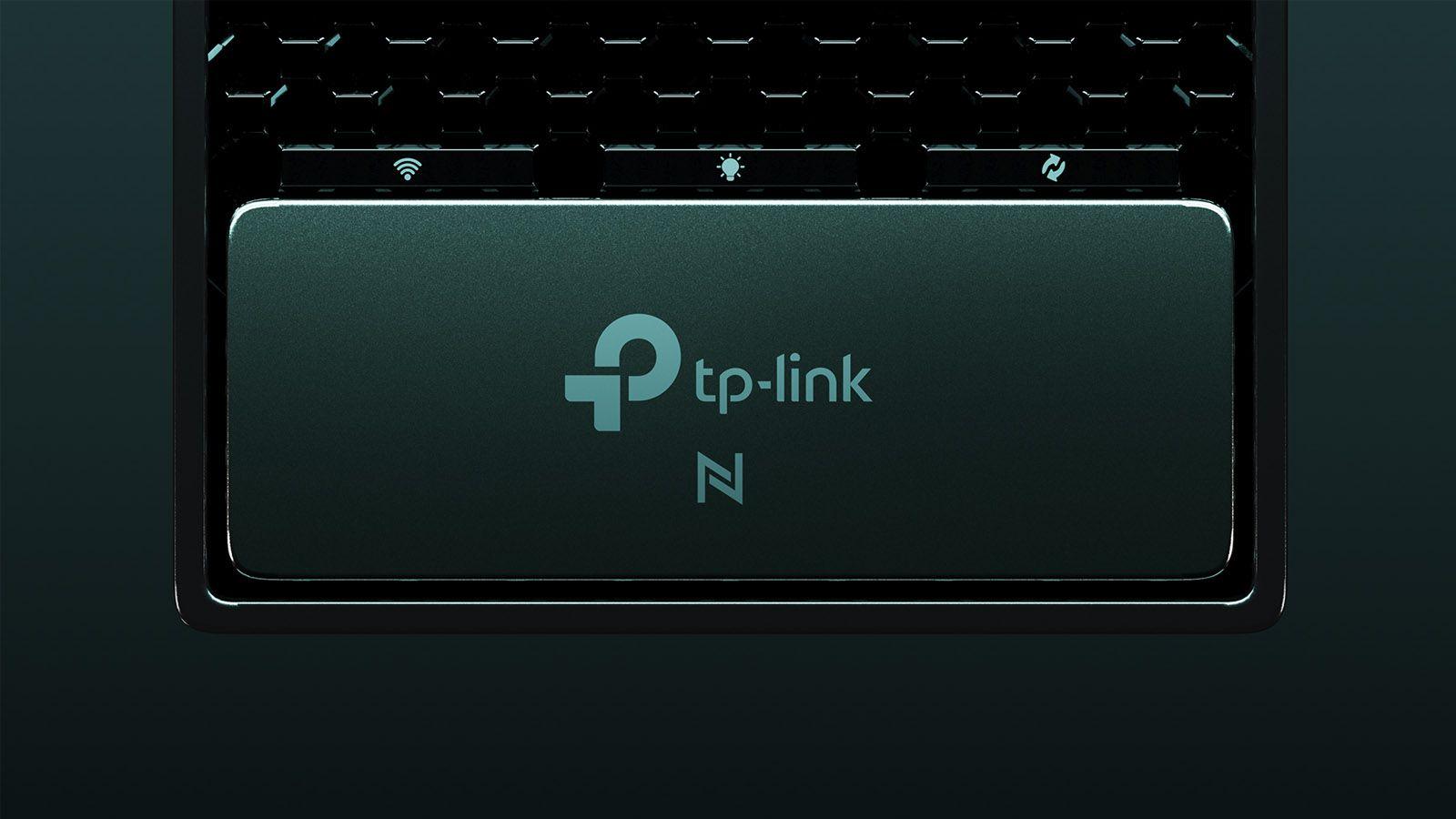
One of the brands that has been most prominent in this early stage of the market is TP-Link. The company has already announced its first major release: the Archer 8 home router . This device not only stands out internally, but aesthetically it abandons the aggressive shapes of the past in favor of a much cleaner and more minimalist design, with micro-ribbed textures and very discreet lighting. The idea is that you won't feel the need to hide the device behind the television, something that, incidentally, is always beneficial to prevent signal loss along the way.
In terms of performance, laboratory tests conducted with these initial prototypes yielded quite promising results for those of us who struggle with coverage. There's talk of up to a 33% improvement in signal stability over long distances and greater sensitivity in the 5 GHz and 6 GHz bands. This means that if you live in a multi-story house or one with many walls in between, the Archer 8 should be able to maintain a solid connection where other current models struggle to avoid disconnecting.
ASUS and its commitment to ultra-high-reliability gaming

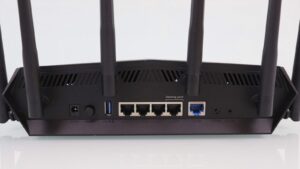
ASUS hasn't been left behind, taking advantage of the spotlight at international events to showcase its crown jewel: the ROG Rapture GT-BN98 Pro. This model, which has already begun to garner design and innovation awards , is specifically designed for gamers who want to avoid Ethernet cables entirely but demand zero latency. As a quad-band router, it utilizes Wi-Fi 8 architecture to intelligently manage traffic, prioritizing game data packets to make lag a thing of the past.
This device incorporates 10 Gbps ports for those who need to connect a NAS or workstation, but its true magic lies in how it coordinates multiple access points . Thanks to its advanced thermal design and route optimization, the GT-BN98 Pro promises that even if ten people are streaming on the same network, your competitive game won't suffer the slightest lag. It is, without a doubt, a show of strength for a standard that aims to be the foundation of our home communications.

Why isn't Wi-Fi 8 trying to break speed records?
Many users will wonder if the upgrade is worthwhile if the raw speed remains similar to the 46 Gbps of Wi-Fi 7. The short answer is yes, because what matters is the actual speed your phone receives, not the theoretical speed. Wi-Fi 8 introduces technologies like Unequal Equivalent Quality Modulation (UEQM) , which allows devices that are farther away or have a weaker signal to avoid hindering the performance of those closer to the router. It's like slow cars on a highway driving in a separate lane so as not to impede those that can go faster.
Another key piece of the puzzle is DSO, or Dynamic Subband Operation. This feature allows the router to surgically allocate bandwidth among connected devices. A smart bulb doesn't need the same amount of bandwidth as a game console downloading a 50GB patch. With Wi-Fi 8, spectrum allocation is much more efficient , preventing wasted resources and drastically reducing interference with neighboring networks—a common problem in apartment buildings in Spanish cities.
Furthermore, the enhanced Extended Range (ELR) will mean that back room, where the Wi-Fi always only reaches with one bar, will start receiving a more decent signal. This isn't about transmitting at a higher power, which is regulated by law, but about encoding the data more robustly so the receiver can interpret it correctly even when the signal is weak. It's a much smarter approach than simply trying to penetrate walls with brute force.
An ecosystem that will grow over the next few years
Although the main event will arrive in October 2026 with the launch of the first router, the manufacturers' roadmap is quite ambitious. It won't be an isolated launch, but will be accompanied by mesh network systems , such as the upcoming Deco 8, which are expected to arrive in early 2027. These systems are ideal for covering large areas without us noticing the transition from one node to another while moving around the house with our mobile phone in hand.
We'll also see more specific solutions, such as compact travel routers called Roam 8 or adapters for computers that aren't yet factory-compatible with the standard. The idea is that by mid-2027 we'll have a full range of peripherals that allow us to take full advantage of every improvement in the 802.11bn protocol. However, we'll have to be patient, because for this entire ecosystem to function at full capacity, we'll also need new smartphones and laptops to start including compatible chips.
The arrival of this new technology represents a necessary shift in mindset, so we can stop being sold a bill of goods with theoretical gigabytes that we never actually see in speed tests. Ultimately, what matters to us when we're on the sofa is that the movie doesn't buffer and that the signal reaches every corner of the house with strength—something the 802.11bn standard seems poised to solve once and for all. With manufacturers like TP-Link and ASUS making their move so quickly, it's clear the industry is focused on ensuring our wireless connections are, above all, a guarantee of stability in everyday use.