
For a long time, additive manufacturing was limited to creating small-scale plastic models or industrial prototypes. However, technological advancements have made 3D printing of homes a tangible reality, poised to transform the construction sector. This trend has reached a new milestone by reviving the use of earth and clay, combining the wisdom of traditional building techniques with the pinpoint precision of modern robotics to offer efficient housing solutions.
In a natural setting in the Traslasierra Valley, a paradigm shift is underway, spearheaded by the Barrobot project . This initiative uses a monumental 3D printer to build walls layer by layer. Unlike other international projects that focus on concrete, this proposal prioritizes mud as the primary material , positioning itself as one of the few projects of its kind worldwide and the first in South America, demonstrating that sustainability and cutting-edge technology are not mutually exclusive.

Modular engineering and precision in construction
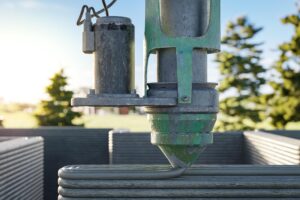
The heart of this innovation is a metal structure approximately four meters high that operates under a computerized numerical control (CNC) system. This machine, which moves along three spatial axes, is capable of depositing concrete beads with an accuracy that would be impossible to achieve manually. One of the great advantages of this system is its modular nature, which allows the equipment to be assembled and disassembled in just one day, enabling its relocation to any site where a new house needs to be built.
The architectural design software divides the house plan into hundreds of horizontal sheets that the printer autonomously processes. Thanks to newly incorporated high-precision servomotors , the robot can follow precise coordinates, minimizing any errors in the structure's geometry. This advancement allows a single person to oversee the process, reducing reliance on extensive logistical infrastructure and significantly lowering operating costs.
Natural materials and biomimetic design

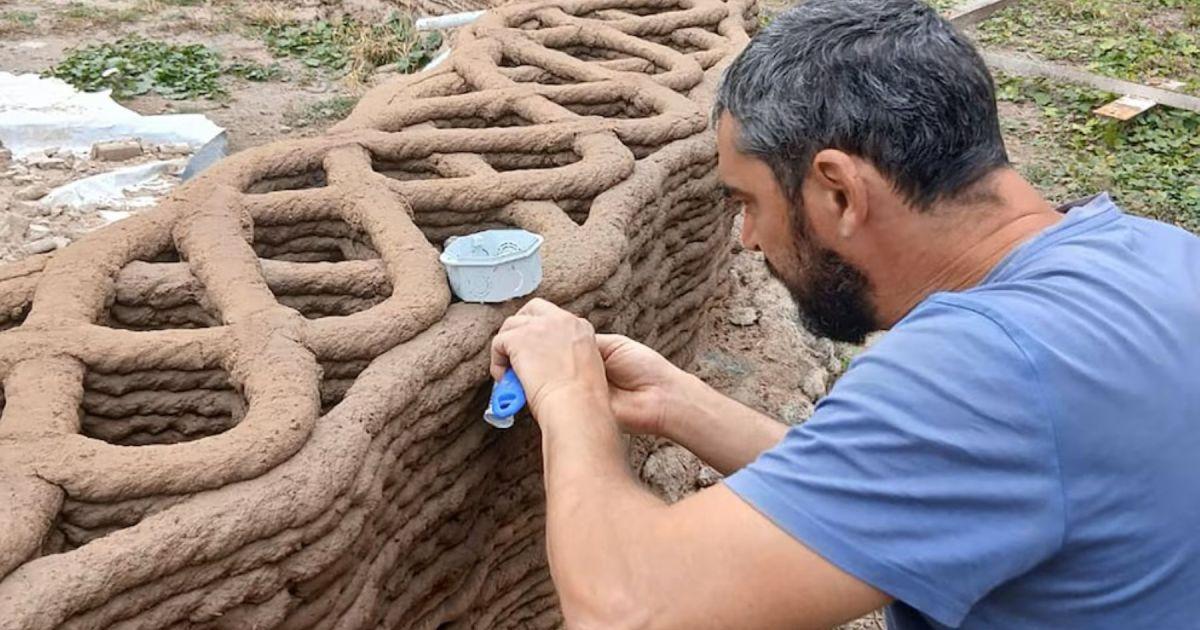
The mixture used in this process is a recipe that includes clay, sand, and plant fibers, to which horse manure is added to take advantage of its fermentation process, which helps give the mixture plasticity. This material is not only ecological and abundant, but it also allows for infinite recycling: any leftover material can be reliquefied and reintroduced into the feed pump. Furthermore, biomimicry plays a fundamental role in the design of the walls, as their internal structure mimics the patterns of honeycombs to create insulating air chambers.
This honeycomb design not only saves material but also gives the home exceptional thermal regulation, keeping the interior cool in summer and warm in winter without the need for complex systems. During the printing phase, technicians take the opportunity to integrate electrical installations and plumbing , placing the conduits directly between the layers. This avoids having to break through the walls later, a tedious and messy task that usually increases the cost of renovations in conventional brick or cement construction.
Climate resilience and a vision for the future
There is a widespread belief that water is the earth's worst enemy, but tests have shown that a proper lime plaster permanently protects the structure. In field trials, prototypes exposed to heavy rain for months showed minimal surface wear, confirming that the durability of these houses is comparable to that of other traditional systems. Interestingly, it is extreme heat that requires the most attention, necessitating moistening the material during drying to prevent cracks from appearing due to excessively rapid dehydration.
The ultimate goal of these developments is to democratize access to decent housing, reducing the housing deficit through 3D printing and robotics technology that accelerates delivery times. It is estimated that printing a medium-sized dome requires just over one hundred hours of net robot operation, representing a dramatic time saving compared to traditional construction. By automating bioconstruction, the aim is to transform the use of natural materials from an exclusive or artisanal option into a viable, competitive, and environmentally friendly alternative on a large scale.
Table of Contents