The promise of solid-state batteries has been on the table for some time: more energy in less space, faster charging, and safer operation. In practical terms, electric cars could see a leap in range and weight , but that's not yet a reality in dealerships. Technology is advancing, yes, but at a pace that requires scrutinizing every announcement and every timeline.
The problem is that there's a huge gap between the test tube and the assembly line . It's not enough for a cell to work in the lab: it has to be manufactured reliably, at a reasonable cost, and with guaranteed durability. That's why the race for solid-state batteries is less like a spontaneous explosion and more like a slow engineering project with many fronts to navigate.

A shared goal: more energy and less weight
Almost all roadmaps agree on the goal: to increase energy density so that more kilometers can fit into a lighter, more compact battery. That's the marketing hook, but also the technical challenge. Higher density is useless if the cell degrades prematurely, fails at demanding temperatures, or is prohibitively expensive to produce.
On a technical level, many of the proposals use solid sulfide-based electrolytes , a method with good ionic conductivity but with well-known challenges. The materials expand and contract with each charge, the contact between layers can be compromised, and humidity necessitates extreme caution because certain reactions can release hydrogen sulfide, a toxic gas. It's not magic: it's industrial chemistry with many variables to control.
CATL has become one of the most frequently mentioned names in this race. Its program has progressed from validation cells of around 10 Ah to 20 Ah samples, with a stated target of 500 Wh/kg . These are impressive figures, although they should be taken with a grain of salt: a laboratory cell is not equivalent to a complete, production-ready battery pack, and the transition to continuous production remains the ultimate test.
Repeated dates, but not equivalent
The most frequently mentioned date in roadmaps is 2027 for testing and small production runs , while mass production is projected for around 2030. Toyota maintains its intention to reach the market between 2027 and 2028; CATL speaks of small-batch production in 2027 and large-scale production towards 2030; Samsung SDI is aiming for the second half of 2027; and BYD is also among the manufacturers preparing their first moves.
The fact that several companies have the same delivery schedule doesn't mean they'll deliver the same products or in the same quantities. The overlap in dates is misleading : it's one thing to show a working sample and quite another to have a production line capable of manufacturing thousands of cells with consistent quality. In between, there are vehicle validations, agreements with manufacturers, and cost reductions that no one gives away for free.
The bottleneck is in the factory
Energy density is the metric that generates the most headlines, but it's not enough to determine if a battery is ready. Lifespan, safety, performance at different temperatures, and the percentage of cells that leave the factory are also important. If too many units are rejected, the cost skyrockets , and the technology can remain an extremely expensive promise for only a few models.
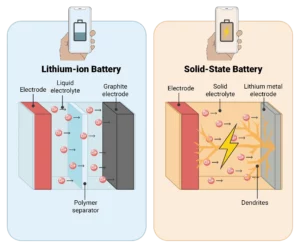
Cost is another major obstacle. Solid-state batteries offer clear advantages over liquid-electrolyte batteries, but their manufacturing remains more complex and expensive. Reducing the price per kWh without compromising durability is the equation manufacturers must solve. Meanwhile, conventional cells are not standing still: they are also decreasing in cost and improving in performance, which narrows the margin for new technologies.
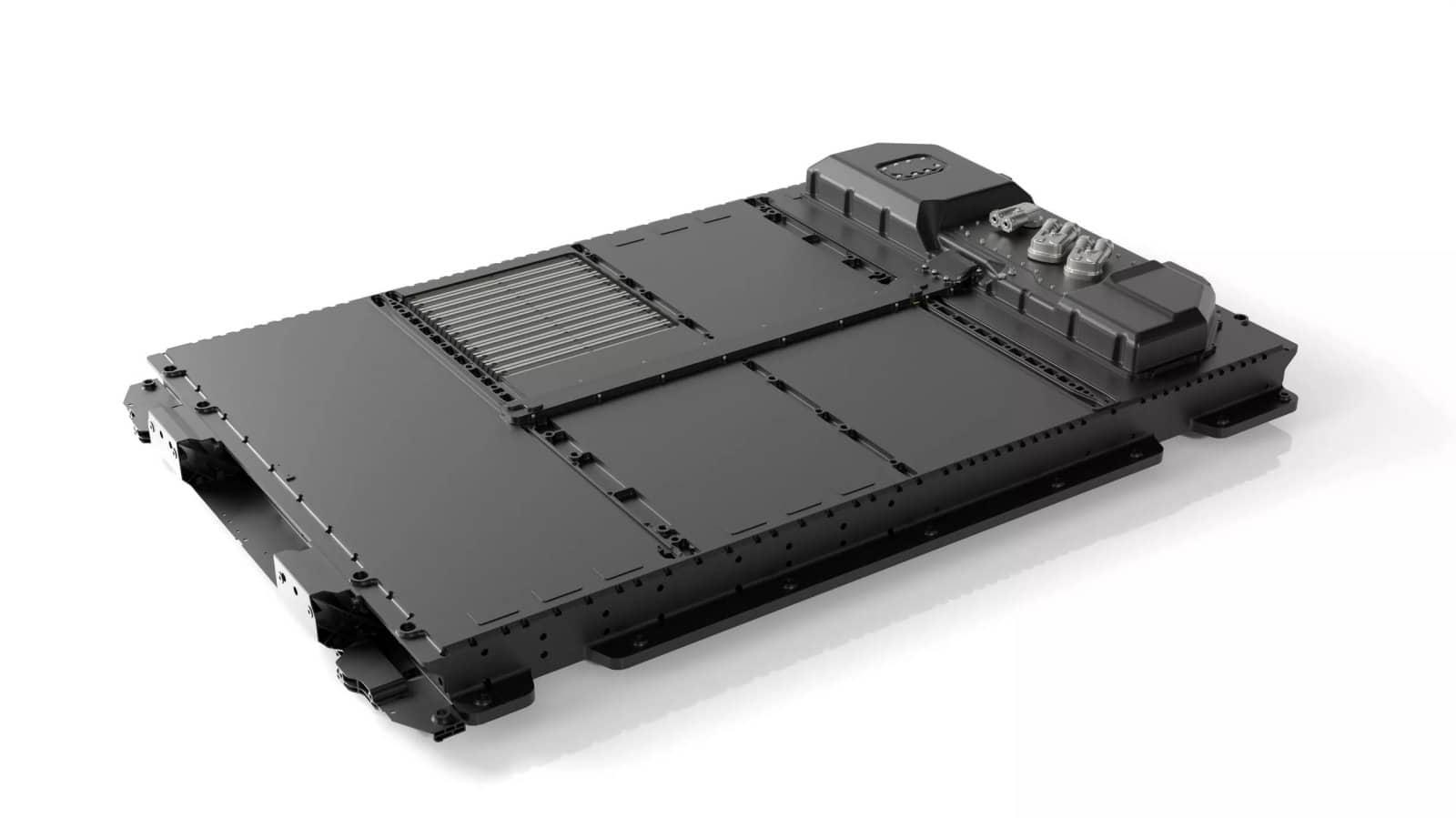
It's also important not to confuse the density of a single cell with that of the entire battery. Integrating the cells requires adding structure, connections, cooling, and control systems. The final battery pack weighs and occupies more space than the sum of its individual cells , so a spectacular laboratory figure doesn't automatically translate into the same real-world range. This difference between the product's performance and the finished product explains many of the concerns.
What the driver may notice and the role of Europe
For those behind the wheel, the appeal is clear: greater range, less weight, and faster charging , plus potentially greater safety thanks to the replacement of the flammable liquid electrolyte. Some roadmaps mention four-figure ranges, but that figure will depend on battery size, vehicle efficiency, and driving conditions. A homologation cycle is not the same as a real-world trip in cold weather, with a load, and on the highway.
In Europe, the question isn't just who gets there first, but at what price and with what supply capacity. Volkswagen is backing Gotion High-Tech , one of the companies on the shortlist, and the European automotive industry is closely watching any move that could bring competitive fuel cells closer to its factories . Dependence on Asian suppliers for key technologies remains a sensitive issue for the continent's automotive sector.

Competition is intense and uneven. China concentrates a large part of the production capacity and has CATL, BYD, and other players pushing hard; Japan is competing with Toyota and Samsung SDI; and in Europe, every development is closely followed to avoid falling behind in the value chain. Nobody wants to depend on a single technology or a single supplier , but neither is it wise to get carried away with every prototype presented.
This whole picture paints a pretty clear picture: solid-state batteries are a promising avenue, but they're still in the industrial demonstration phase. The race isn't decided by the prototype's owner, but rather in the factory , in real-world durability, and in the final cost. Until these issues are resolved, the electric car will continue to advance with interim solutions and announcements that should be read carefully, without confusing a laboratory objective with a dealership reality.
Table of Contents