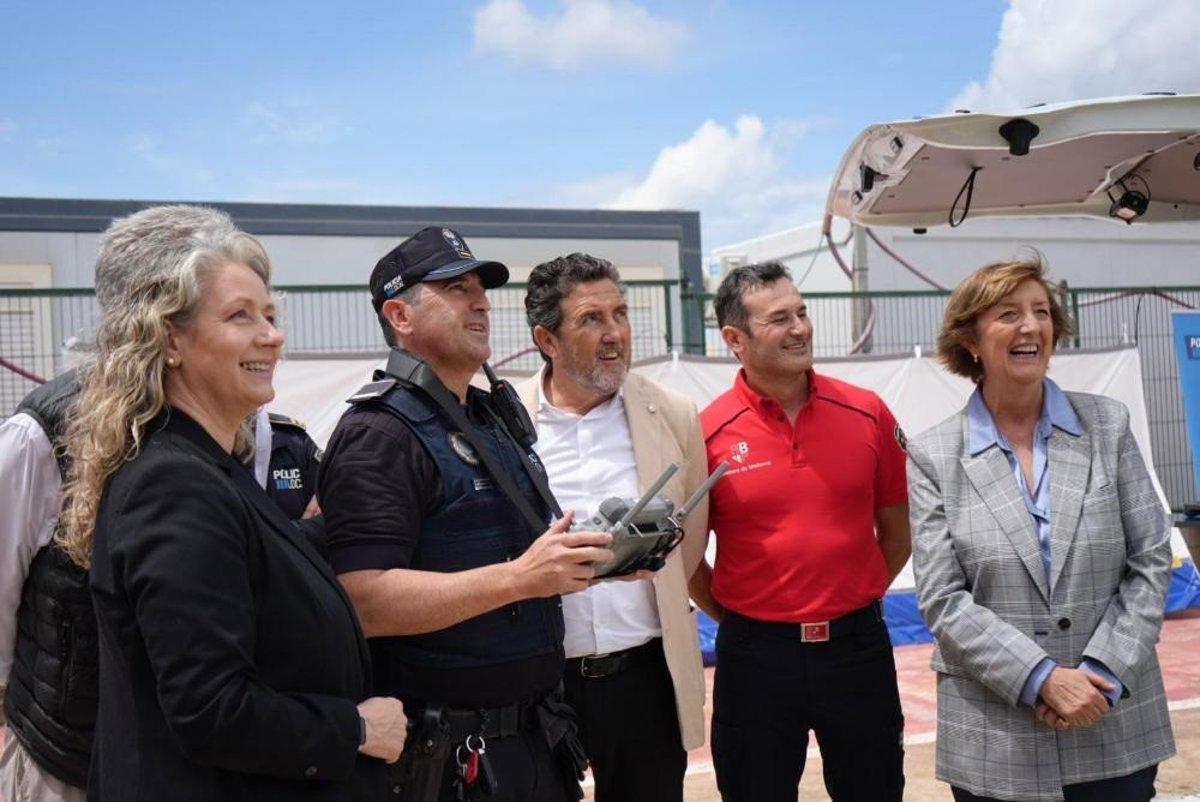
The Calvià Local Police Drone Unit has become a permanent fixture in the municipal security system. Following its official launch at the Son Bugadelles station, the service is fully operational and will continue to run year-round, with increased resources during the peak tourist season.
With an investment of 82.000 euros in technology and training , and the financial backing of the Consell de Mallorca, this new unit aims to improve surveillance in busy areas, optimize traffic control, strengthen the prevention of environmental offenses and offer support in search and rescue tasks throughout the municipality.
A strategic project for a complex tourist municipality
The Calvià Town Council frames the creation of the unit within its commitment to a safe municipality and responsible leisure activities . Mayor Juan Antonio Amengual emphasized that the Local Police must have the best technical and human resources to protect both residents and visitors.
As the mayor explained, the introduction of these aerial resources puts the town at the forefront of local security , complementing other measures such as the deployment of plainclothes officers. The aim is to react more quickly to incidents, anticipate potential risks, and better manage peak tourist seasons.
The Minister of Economic Promotion and Local Development, Pilar Amate, has emphasized that the participation of the Consell de Mallorca, with a contribution of 60.000 euros from the Works and Services Plan (POS) 2024-2025 , translates into a pioneering service that strengthens citizen security and directly impacts the quality of life of the residents.
From the Security area, the first deputy mayor, Esperanza Catalá, has pointed out that the integration of drones into the daily work of the Local Police is not only a technical improvement, but a change of model towards more efficient , preventive and intelligent surveillance, especially relevant in a large municipality, with areas that are difficult to access and a significant tourist pressure.
The City Council insists that this entire deployment is part of a comprehensive policy for a safe, sustainable, and emergency-prepared municipality , in which drones are just one component of a preventative approach that ranges from monitoring nightlife to protecting the environment. In this regard, the council values the advantages of using drones in emergency situations and risk management.
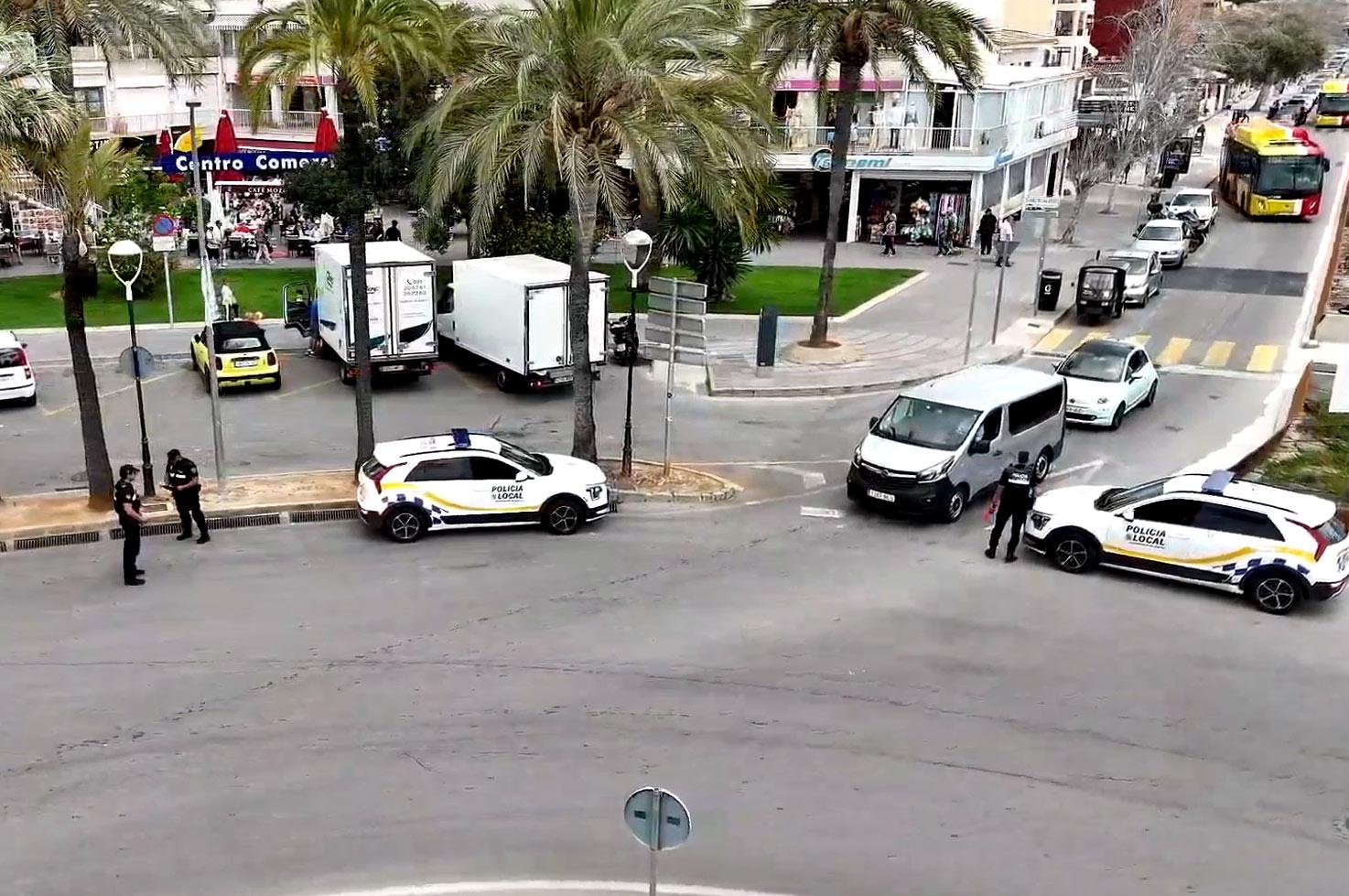
Specialized and operational team available year-round
The unit is comprised of a dedicated team from the Local Police, consisting of a sub-inspector, an officer, three police officers, and three agents currently in training. All of them are either certified pilots and radio operators or are in the process of obtaining the necessary qualifications, as required by current regulations.
These personnel operate on an on-call basis for urgent interventions , allowing for rapid deployment in response to accidents, disappearances, coastal emergencies, or incidents in high-traffic areas. The goal is for the unit to maintain a continuous presence throughout the year, not just for occasional summer operations.
The Drone Unit has a mobile command center integrated into a 4x4 vehicle , equipped to coordinate operations on the ground. From this van, flights are controlled, real-time images are received, and immediate decisions are made in coordination with other police units and emergency services.
In addition to the agents already in operation, the City Council has opted for a continuous training process , so that staff can update their knowledge as regulations and the technology of unmanned aerial systems (UAS) evolve.
The municipal intention is for the human team to consolidate itself as a stable unit within the police organizational chart , with the capacity to act both in planned operations —patron saint festivals, mass events or traffic campaigns— as well as in unforeseen actions that require an immediate response.
Advanced technology for surveillance, rescue, and environmental control
The heart of the device is a high-performance main drone , equipped with a high-resolution thermal camera, enhanced night vision, long-range zoom, and a telephoto camera that allows people to be identified at a distance of more than 1.300 meters.
This device also incorporates a laser rangefinder and distance and coordinate measurement systems , facilitating the precise location of targets in real time up to an approximate range of 1.800 meters. Furthermore, the recognition systems allow for the identification of vehicles, vessels, and people, and enable intelligent target tracking in a virtually autonomous manner.
One of the aspects most valued by municipal officials is the speed of deployment : the drone can be in the air in about 15 seconds from its activation, and has an operational signal distance of up to 25 kilometers, which provides a wide margin of maneuverability throughout the municipality of Calvià.
The unit also operates lightweight drones weighing less than 250 grams , designed for use in urban environments or hard-to-reach natural areas. These small aircraft are especially useful in searches for missing persons, inspections of confined spaces, or interventions in areas where a larger drone would be less practical.
Overall, the equipment places the Calvià Local Police at a technological level that is unusual in the municipal sphere , combining surveillance capabilities, incident documentation, support for reports and environmental protection with a flexible use of different types of drones depending on the mission.
Strict legal framework and privacy guarantees
The City Council emphasizes that the Drone Unit operates under a very defined legal framework , in compliance with the regulations of the State Aviation Safety Agency (AESA) and the Organic Law on Data Protection, in addition to the specific legislation on the use of unmanned aerial systems.
To this end, clear operating protocols have been established that determine when, how, and under what conditions drones are used. These procedures aim to balance the need to strengthen public safety with respect for citizens' privacy, ensuring that the images and data collected are handled with restrictive criteria.
Among other measures, regulations are in place for flight zones, recording duration, and data handling , as well as coordination with other municipal services and emergency response teams. The aim is to prevent indiscriminate use and ensure each operation is tailored to a specific and justified purpose.
The presence of certified pilots and radio operators ensures that flights are conducted within the limits established by European and Spanish aviation regulations , including restrictions on altitude, distance to populated areas, night operations and overflights of concentrations of people.
The city council emphasizes that citizens can consider these devices as another resource for protection and public service , subject to internal and external controls, and not as a tool for indiscriminate daily surveillance.
Areas of focus: traffic, nightlife and major events
One of the unit's main functions will be traffic control and management . Drones will conduct aerial surveillance of the municipality's main roads to detect traffic jams, incidents, or hazardous areas, allowing for the proposal of detours and the adjustment of traffic control devices in real time.
In the leisure sector, the devices will be used to monitor nightlife areas and tourist hotspots , with the aim of detecting dangerous crowds, potential disturbances, or antisocial behavior. The information they provide will allow for a faster response and better allocation of personnel on the ground.
Drones will also be present at local festivals, demonstrations, concerts and large events , helping with crowd control and the early detection of risk situations, both during the day and at night.
Another key area will be the documentation of traffic accidents using photogrammetry . By obtaining precise aerial images of the scenes, officers will be able to prepare more detailed reports and, at the same time, expedite the removal of vehicles and the reopening of roads to minimize traffic jams.
The council's idea is for the Drone Unit to become a regular support to police operations on days and periods of peak activity , from the summer months to key dates on the local calendar, optimizing the distribution of personnel and improving reaction capacity.
Search and rescue, coastal and emergencies
Beyond routine surveillance, the unit plays a central role in search and rescue operations . Working in coordination with Civil Protection and other emergency services, drones equipped with thermal imaging cameras and night vision can search hard-to-reach areas to find missing persons, whether in forests, rural areas, or coastal environments.
The Calvià coastline, with its numerous beaches and coves, will also be subject to enhanced aerial surveillance . These devices will facilitate the detection of irregular vessels, hazardous situations at sea, and problems in bathing areas, supporting rescue and lifeguard teams.
In terms of prevention, drones can be used in devices for potential fires or floods , allowing for a rapid assessment of the evolution of an event, locating active hotspots, identifying evacuation routes, and better guiding the intervention of ground teams.
This rapid observation capability, combined with the transmission of real-time images to the mobile command center, makes the unit an especially useful resource in rapidly evolving emergencies , where every minute counts.
The City Council emphasizes that the use of drones in these types of situations will be integrated into the municipal civil protection and inter-institutional coordination plans , so that aerial information can be shared with other agencies if necessary.
Environmental and urban planning control and enforcement of ordinances
Another major area of focus will be environmental and urban planning monitoring . Drones allow for the surveillance of hard-to-reach areas to detect illegal dumping, waste accumulation, or potential violations related to the use of public space.
In the field of construction and urban planning regulations, aerial devices will facilitate visual inspections of buildings, earthworks or coastal activities , helping to verify whether they comply with municipal authorizations and environmental regulations.
The information obtained from the air will also serve to reinforce the application of municipal ordinances , whether in matters of occupation of public roads, annoying activities or unauthorized uses of certain areas, without the need to deploy large teams in the first instance.
In parallel, the unit will provide useful data for service planning and the detection of problem areas , such as areas where spills or concentrations of waste are repeated, which will allow the design of specific cleaning or citizen awareness campaigns.
In this way, drones become a versatile tool not only for security in the strict sense, but also for more efficient management of the territory and the natural environment , in line with the sustainability policies that the municipality wants to promote.
With the Drone Unit fully operational, Calvià now has a stable aerial resource that combines advanced technology, specialized personnel, and a robust legal framework . Its year-round use in traffic control, large events, coastal areas, emergencies, and environmental monitoring reinforces the municipal strategy for safety and responsible leisure, while also providing new tools to respond quickly and with greater precision to the challenges of a complex and constantly evolving tourist destination.
Table of Contents
- 1 A strategic project for a complex tourist municipality
- 2 Specialized and operational team available year-round
- 3 Advanced technology for surveillance, rescue, and environmental control
- 4 Strict legal framework and privacy guarantees
- 5 Areas of focus: traffic, nightlife and major events
- 6 Search and rescue, coastal and emergencies
- 7 Environmental and urban planning control and enforcement of ordinances