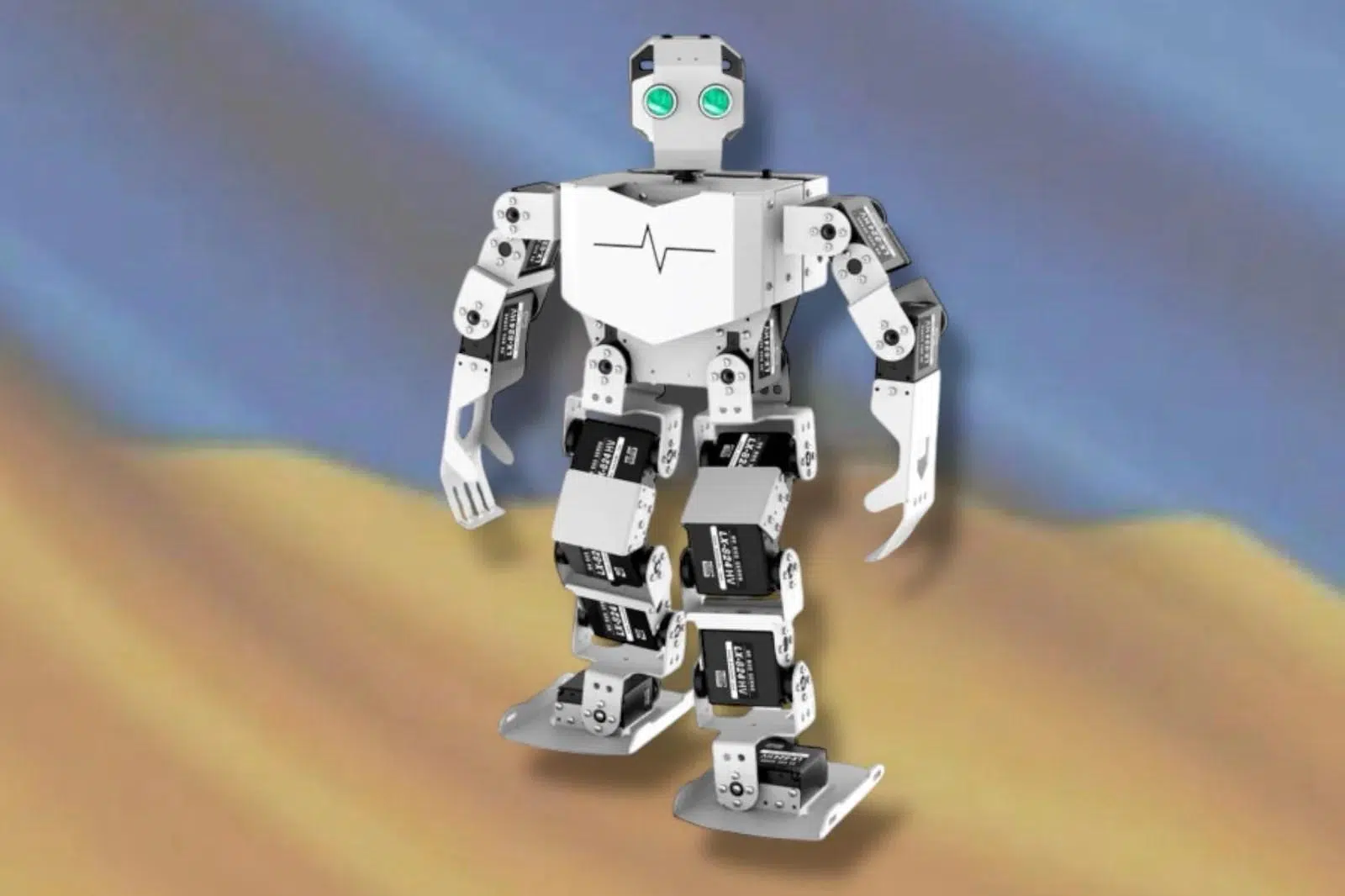
If you're drawn to educational robotics and looking for a versatile humanoid robot for learning and teaching, Tonybot stands out for its combination of advanced mobility, AI modules, and ease of programming . It's not just another toy: its design and ecosystem are specifically tailored for genuine learning, from beginner to intermediate and advanced levels.
Beyond its smooth movement, this robot integrates computer vision, voice control, and IoT capabilities, all built on a base of 17 joints and intelligent servos. Thanks to its compatibility with Arduino, Scratch, and Python, it's suitable for classrooms, makers, and self-learners , allowing users to progress from simple exercises to complex projects with a manageable learning curve.
What is Tonybot and who is it for?
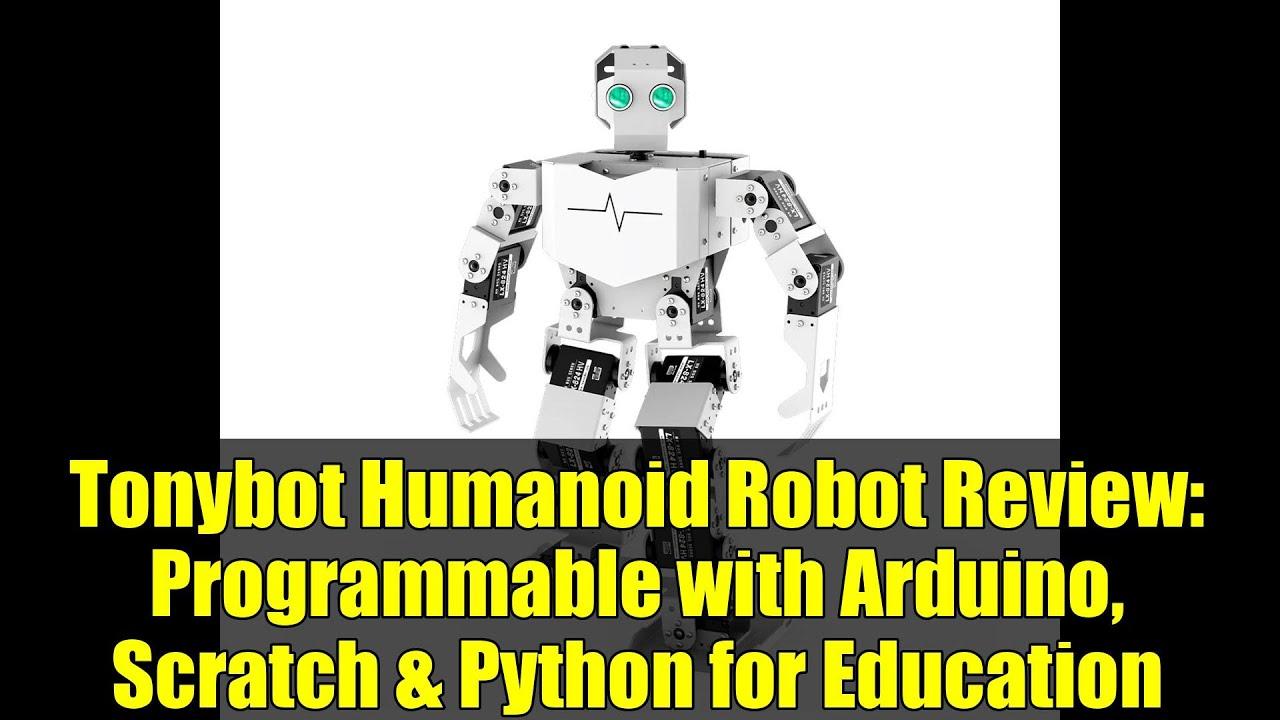
Tonybot is a programmable humanoid robot designed for educational purposes that combines robust hardware, accessible software, and educational resources. It can walk, turn, dance, or perform gymnastic routines with remarkable stability, thanks to 17 degrees of freedom (17DOF) and bus servos , ensuring fluidity and precision in every movement.
It's geared towards all ages and skill levels: from students starting with block-based programming to those wanting to delve into Arduino and Python. The inclusion of modules such as AI vision, voice interaction, ultrasonic sensors, an IMU, a dot-matrix display, and WiFi connectivity allows users to explore robotics, AI, and IoT within a single environment.
Control can be achieved through an intuitive app for directing movements and activating action groups, but also via PC using graphical software that facilitates editing postures and choreographies. This duality of control and programming makes it useful for both quick demonstrations and in-depth practice.
Standard features include distance measurement, obstacle avoidance, fall recovery, and touch detection, and if you want to go further, it supports expansion with multiple modules from the Hiwonder series. All of this makes it an open platform for experimentation and secondary development.
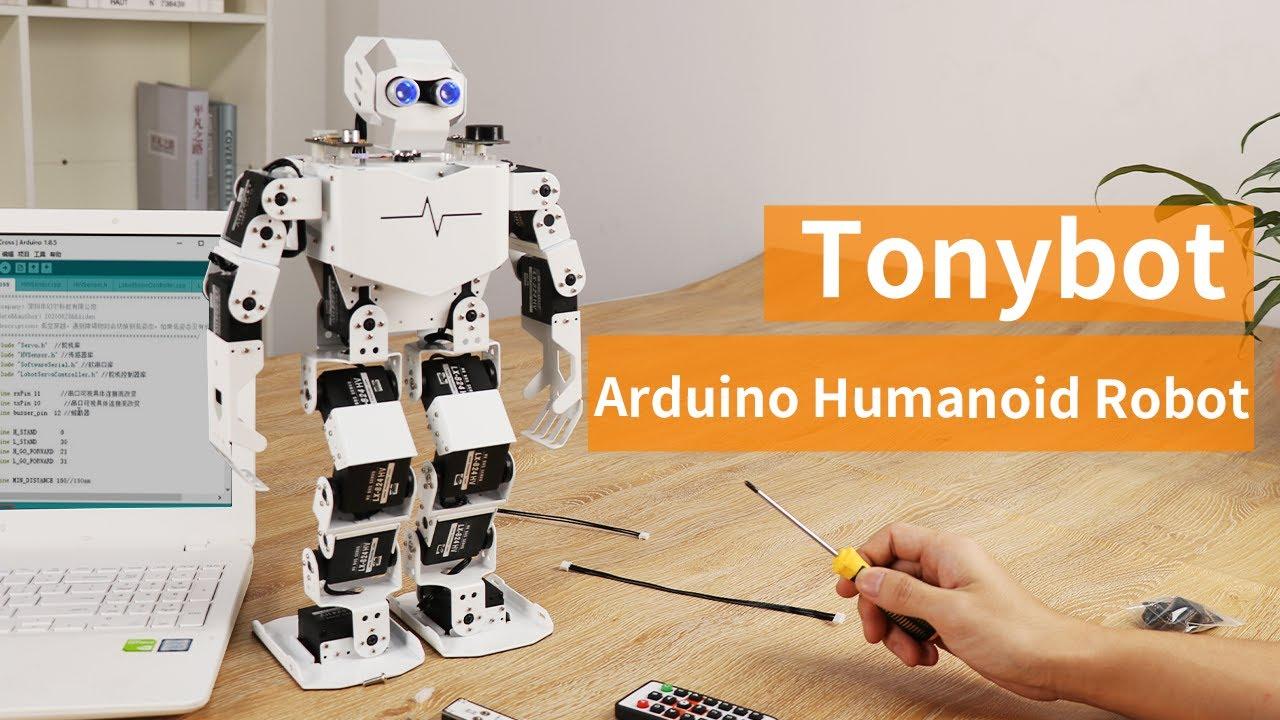
Smart design, joints and servos (17DOF)
Tonybot's mechanical base rests on 17 joints, offering a wide and natural range of motion. This allows it to perform tasks ranging from basic locomotion to gymnastic figures and complex choreographies with fine control and smooth transitions.
To achieve this, it employs high-voltage serial bus servos along with anti-lock servos, a choice that increases accuracy, stress resistance, and energy efficiency. In practice, this means the robot is able to maintain demanding postures and react with more stable and consistent movements, even when the program requires rapid changes.
Another key point is the reduced current draw thanks to its 11,1V operation compared to traditional 7,4V servos. This difference represents over 60% improvement in power consumption, extending autonomy and increasing battery life , which is especially useful in classroom sessions or demonstrations.
Hardware architecture and drivers
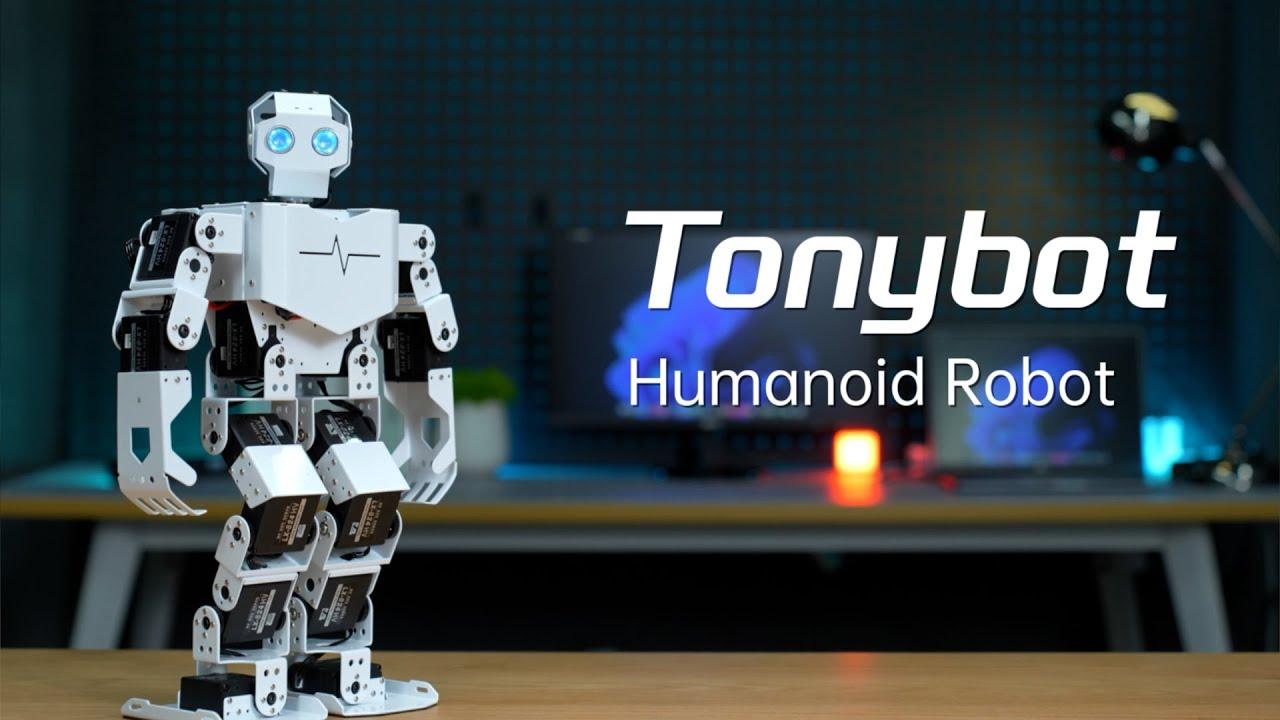
The robot's brain and muscles are divided between two coordinated controllers: one specialized in servos and the other based on the ESP32 for module expansion. This dual-controller architecture improves performance and allows each subsystem to do what it does best, optimizing both movement and sensor integration.
The head includes an ultrasonic sensor with RGB lighting that, in addition to measuring distances, serves as an interactive and signaling element. This assembly supports additional sensor expansions, so if your project requires it, you can add new inputs and outputs without restructuring the robot.
ESP32-S3 WiFi Vision Module
Machine vision is a fundamental part of Tonybot and is handled by an ESP32-S3-based module with WiFi connectivity. Its 2-megapixel HD camera provides a crisp image stream, while communications support UART and I2C for integration with the rest of the system. Furthermore, it supports LAN STA and direct AP network modes, making it easy to connect the robot to both local and peer-to-peer networks.
One of the most practical features is real-time live video streaming . Connected via Wi-Fi, you can open a designated URL to view the camera feed from the app or your PC—ideal for debugging algorithms, demonstrating practical exercises in class, or documenting vision experiments wirelessly.
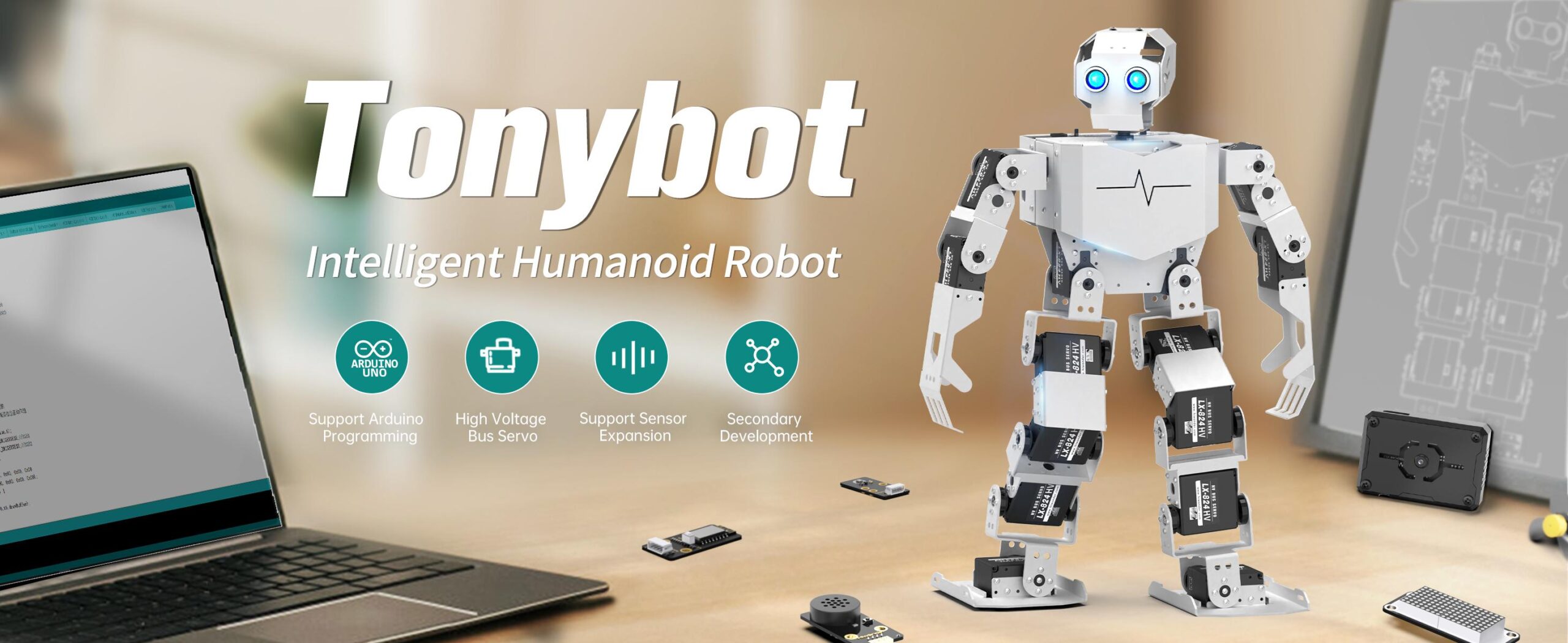
AI vision capabilities
The camera module is more than just a viewfinder: it includes AI algorithms for recognition and tracking. Through color threshold segmentation, the robot can accurately identify various shades and, from there, trigger programmed behaviors tailored to each color.
For human interaction, it incorporates face detection based on a lightweight convolutional neural network. If the robot identifies a face within its field of vision, it can activate pre-programmed routines, from a greeting to a sequence of movements or voice responses , depending on your programming.
Color tracking allows Tonybot to automatically locate and follow objects with specified hues. This provides a great foundation for mobile robotics exercises, such as escorting a marker or reacting to visual cues defined by the student.
Finally, line tracking using vision allows for the detection of paths of different colors and their autonomous follow. This opens the door to vision-based navigation and control practices, without the need for dedicated floor sensors.
Voice interaction with WonderEcho
The WonderEcho module adds voice control and response with a range of up to 5 meters, designed for educational environments and demonstrations. It integrates a neural processor that supports one-click recognition and playback, as well as model training, enabling easy customization of keywords and commands.
The recognition works in Chinese and English, but the commands that trigger actions can be adapted to the routines you program. Asking it to move forward, backward, or lean is as simple as speaking to it, and the robot can confirm the executed commands with voice confirmation if you configure it to do so.
Within a 5-meter range, Tonybot understands instructions and triggers the corresponding actions, making it very useful in classrooms and workshops. It also supports specific use cases such as recovery after falls: with the activation word and the corresponding command, the robot executes its recovery sequence without manual intervention.
Furthermore, it's possible to customize voice prompts. For example, if it detects an object in front of it, it can play a greeting or a message you program. The combination of voice and vision allows the robot to respond more naturally to its environment.
IoT, app and remote control
Connectivity is another key feature of Tonybot. It incorporates an IoT-oriented WiFi module and a temperature and humidity sensor that powers connected projects: from triggering a choreographed routine upon receiving an event, to activating smart alerts and remote monitoring via the app.
The IoT application allows you to view real-time temperature and humidity data, activate alarms, and access multiple functions, all with on-the-fly adjustments. The idea is that you can experiment with the connected layer without dealing with complex integrations: remote control, telemetry, and actions , all in one place.
Among the remote actions, the control of the ultrasonic sensor's lighting (RGB) stands out, to indicate states or distances with colors; the activation of dances and predefined movement groups; and the visualization of data on the LED dot matrix of the shoulder.
The smart alarm system combines vision and sensors: facial recognition, object detection, proximity alerts, collision and posture deviation warnings, with real-time app notifications. It's a very comprehensive solution for teaching safety, control, and diagnostic concepts.
Sensors and expansion: unlimited possibilities
Tonybot comes loaded with sensors and supports even more. It includes an ultrasonic RGB sensor, IMU, and buzzer as standard, and is compatible with modules such as a dot-matrix display, fan, temperature and humidity sensors, and Wi-Fi connectivity. Thanks to its programming capabilities, you can enable creative functions and combine them to solve challenges.
Compatibility with Hiwonder series sensors and support for secondary development make the robot a scalable platform. You can add, program, and test new capabilities without changing the main hardware, extending the equipment's lifespan and enabling long-term projects.
On a practical level, here are some examples of immediate integration that you can implement with very little code:
- Distance measurement screen: The shoulder-mounted dot matrix displays the distance detected by ultrasound in real time, perfect for explaining sensor concepts and data representation.
- Intelligent voice control: With the shoulder sound sensor, react to different sound patterns (e.g. clapping at different rhythms) to perform push-ups, sit-ups or twists.
- Touch control: : The shoulder touch sensors allow the robot to wave or perform any interaction you associate via software with a gentle touch.
- Smart fan: When the ultrasonic detects an object in front of it, the fan module automatically turns on; when the obstacle disappears, it turns off.
PC software and stock editing
In addition to the app, it includes graphical PC software designed to edit movements and action groups without programming. With sliders, you can adjust servos individually or in groups, record poses, and link sequences, achieving precise choreography in very little time.
This interface is ideal for quickly creating dance routines, demonstration sequences, or basic poses that you can then use with Arduino, Scratch, or Python. For hands-on classes, it lowers the barrier to entry and accelerates prototyping.
Programming for all levels: Arduino, Scratch, and Python
In Arduino, the hardware interface is compatible, and development is done using the standard IDE. The underlying code is open source and includes detailed comments, which students and teachers appreciate because it makes it easier to understand and modify what the robot does step by step, including platforms like M-Bot.
For beginners, Scratch's block-based programming allows you to drag and drop instructions without writing code. This way, you can focus on logic and robotics concepts before moving on to text-based languages, with an immediate and visual learning experience.
If you want to go further, Python support gives you access to a vast ecosystem of libraries and modules, accelerating development and expanding functionality. Combined with vision and voice modules, Python allows for agile testing of AI algorithms and IoT workflows .
As an added bonus, comprehensive tutorials and use cases are provided, covering everything from the basics to AI applications, making Tonybot a well-structured educational tool.
Control from the app: direct and flexible
The mobile app allows you to control the robot in real time: smooth movements, gesture selection, dance initiation, and execution of predefined action sequences. For exhibitions, trade shows, or classes, having these shortcuts makes interaction quick and highly visual.
Furthermore, the app allows you to adjust parameters such as the ultrasonic sensor's detection distance or the color of its illumination, which is also useful for perception and usability experiments. It's a remote control that doesn't just move the robot; it lets you adjust its sensor settings based on the context.
High voltage and autonomy servos
Using 11,1V servos instead of the traditional 7,4V ones reduces current by more than 60%, directly impacting efficiency and durability. What does this mean in practice? Less heat generation, lower power consumption for the same torque, and longer runtime per charge —a clear advantage during extended use.
If you're going to be working with demanding movement sequences or field exercises with live streaming, you'll appreciate this optimization. Proper energy management is just as important as computing power, and this is where the design is well implemented.
AI, Voice, and IoT Projects: Ideas for the Classroom and Maker
With color recognition and eye tracking, you can create exercises such as traffic lights, color sorting, or marker tracking. Face detection enables automatic greetings, access control, or the activation of routines for specific individuals, always within an educational context.
Voice technology allows for personalized commands and the training of models for specific instructions, from initiating fitness sequences to activating fall recovery. Combined with IoT, it's easy to build small, connected assistants that react to environmental data or network events.
The IoT app and dot matrix make it easy to display real-time information, such as temperature and humidity, and smart alarms encourage the design of safety and predictive maintenance systems on a didactic scale.
Real experience: what you like the most
Those who have tried it appreciate that the source code is open source and that detailed tutorials are available, as this makes it easier to delve deeper and adapt it to each project. The 17DOF mobility provides remarkable fluidity and precision, and the technical support stands out for being quick and effective when any issues arise.
Overall, the hardware is robust, the software is well-designed, and the tools and interfaces are reasonably straightforward for what they offer. It's a kit that's a great fit for those who want to gain real-world experience in programming and robotics without sacrificing advanced AI, voice, and IoT modules.
With its blend of refined mechanics, AI-powered vision and voice, and a range of sensors ready to expand, Tonybot offers fertile ground for learning and teaching modern robotics, from basic movements to connected projects that integrate perception, interaction, and control.
Table of Contents
- 1 What is Tonybot and who is it for?
- 2 Smart design, joints and servos (17DOF)
- 3 Hardware architecture and drivers
- 4 ESP32-S3 WiFi Vision Module
- 5 AI vision capabilities
- 6 Voice interaction with WonderEcho
- 7 IoT, app and remote control
- 8 Sensors and expansion: unlimited possibilities
- 9 PC software and stock editing
- 10 Programming for all levels: Arduino, Scratch, and Python
- 11 Control from the app: direct and flexible
- 12 High voltage and autonomy servos
- 13 AI, Voice, and IoT Projects: Ideas for the Classroom and Maker
- 14 Real experience: what you like the most