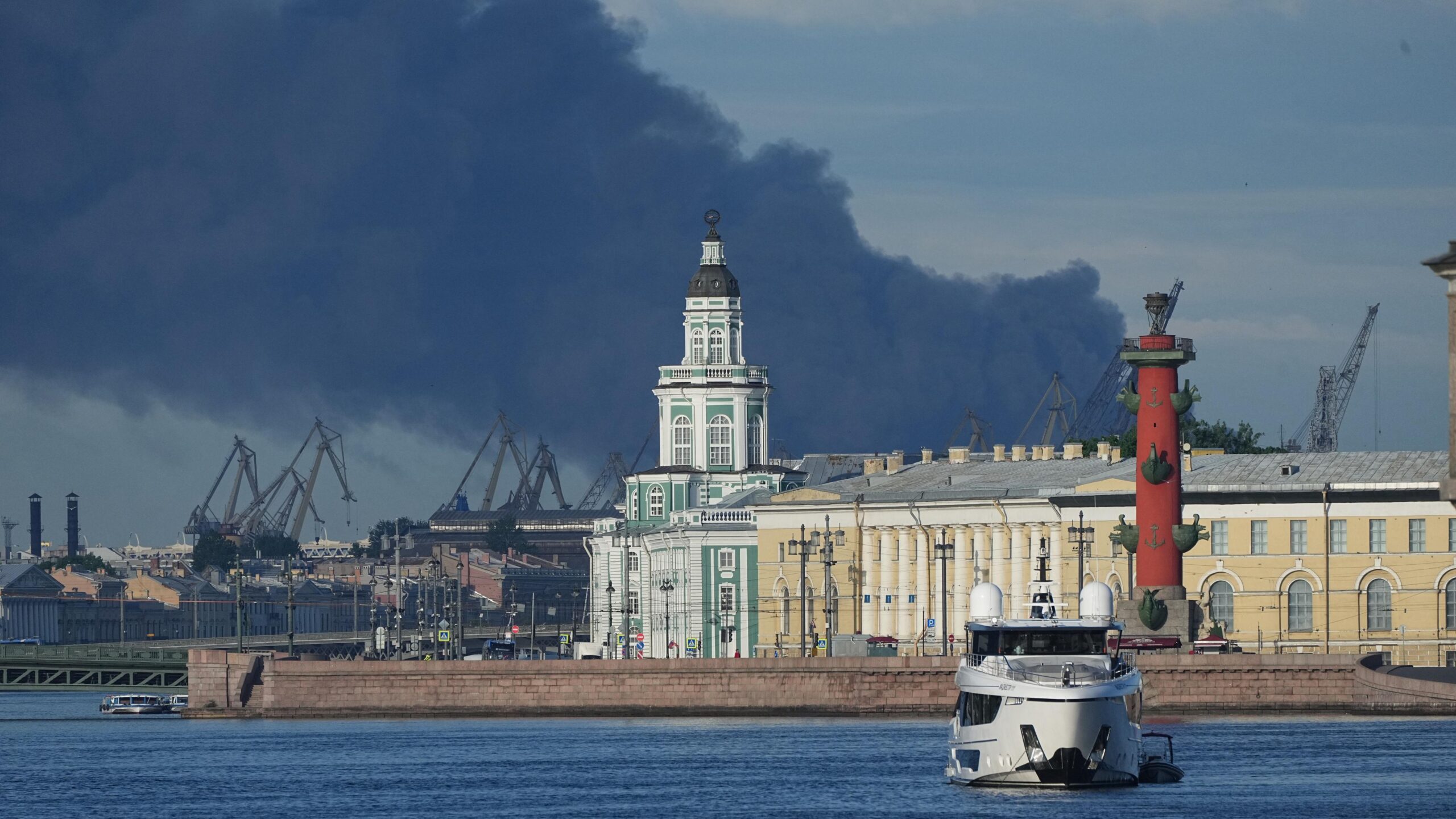
The situation in Eastern Europe has become especially tense in recent days following a series of offensives that mark a turning point in the use of unmanned technology. What was once a steady trickle of skirmishes has transformed into a veritable barrage of projectiles and drones that no longer only affects the front lines but penetrates deep into the territories of both sides, even dangerously approaching neighboring European Union countries. The feeling on the ground is that the conflict has entered a much more dynamic and, unfortunately, unpredictable phase for the civilian population trying to carry on with their lives.
In recent days, air raid sirens have become the constant soundtrack in cities like Kyiv and Dnipro, where emergency teams are overwhelmed trying to rescue people from the rubble. The scale of the Russian attacks has left a trail of destruction across apartment blocks and refineries, while the Ukrainian response has been no less impressive, deploying hundreds of aircraft toward strategic targets on Russian soil, including locations as far away as St. Petersburg. This new dynamic not only aims at military attrition but also appears to have a strong psychological component, serving as a reminder that no one is truly safe from the drone of these aircraft.

The direct impact on the security of the European Union
One of the most critical moments occurred recently when a Russian-made Geran-2 drone crashed into an apartment building in the Romanian city of Galati. This incident is of paramount importance because it represents the first time that citizens of a NATO member country have been directly injured by the impact of one of these devices. Although Romanian authorities have attempted to maintain calm, assuring the public that the country remains at peace, the deployment of F-16 fighter jets and the activation of emergency protocols demonstrate that war is very much upon Europe's doorstep.
The President of the European Commission has been unequivocal on this matter, describing the situation as a further step in the recklessness of military operations. In Romania, the atmosphere is one of absolute caution, as its armed forces have only a few minutes to react from the moment a threat is detected until impact occurs. The problem lies in the difficulty of intercepting these targets without violating Ukrainian airspace, which places national defense systems in an extremely delicate diplomatic and operational position.
The technology that is changing the rules of the game
It's not just about quantity, but about a level of technical sophistication that is rendering some traditional defense methods obsolete. The use of drones that combine artificial intelligence with satellite connectivity, such as the Hornet model, is allowing Ukraine to strike enemy logistics at great distances with surgical precision. These devices are capable of withstanding electronic interference that was once so effective, forcing engineers on both sides to work against the clock to develop new countermeasures in a technological race that seems to have no end, similar to how the new military drones of the future are designed.
Even more rudimentary but effective innovations have been detected, such as the use of fiber optics to prevent the control signal from being intercepted. The situation is complex: radars have serious difficulty detecting devices made of materials like foam, forcing the use of optical and acoustic sensors to raise the alarm. It's a cat-and-mouse game where layered defenses, ranging from directed-energy lasers to interceptor missiles, are tested every night by massive swarms of low-cost devices.
A change in the dynamics of the battlefront
According to the latest intelligence reports and analysis centers like ISW, territorial advances have slowed considerably, but tactical mobility has returned to the battlefield. Ukraine is successfully moving armored vehicles into areas that were previously death traps, thanks to its own drones clearing the way of enemy threats . This has led to Ukraine, for the first time in a long time, regaining more ground than it loses, although analysts warn that this window of opportunity could be temporary while the opponent adapts to the new tactics.
The pressure is no longer confined to the trenches; the war economy is beginning to take its toll on daily life. Attacks on oil terminals and transport hubs aim to cripple the adversary's ability to move, while within Russia's borders, air raid sirens are changing the public perception of the conflict . What was once seen as something distant on television is now felt in the vibrations of windows and the power outages affecting thousands of homes.
In short, we are witnessing an evolution of the conflict where unmanned technology has gone from being a complement to becoming the central axis of both sides' strategies. The spread of attacks on vital infrastructure and the spillover of borders into NATO territory present a scenario where European security is directly compromised. While defense systems are becoming more sophisticated to try to curb this constant threat, the civilian population continues to be the main victims of a war fought both in the software code of drones and in the mud of occupied territories.

Table of Contents