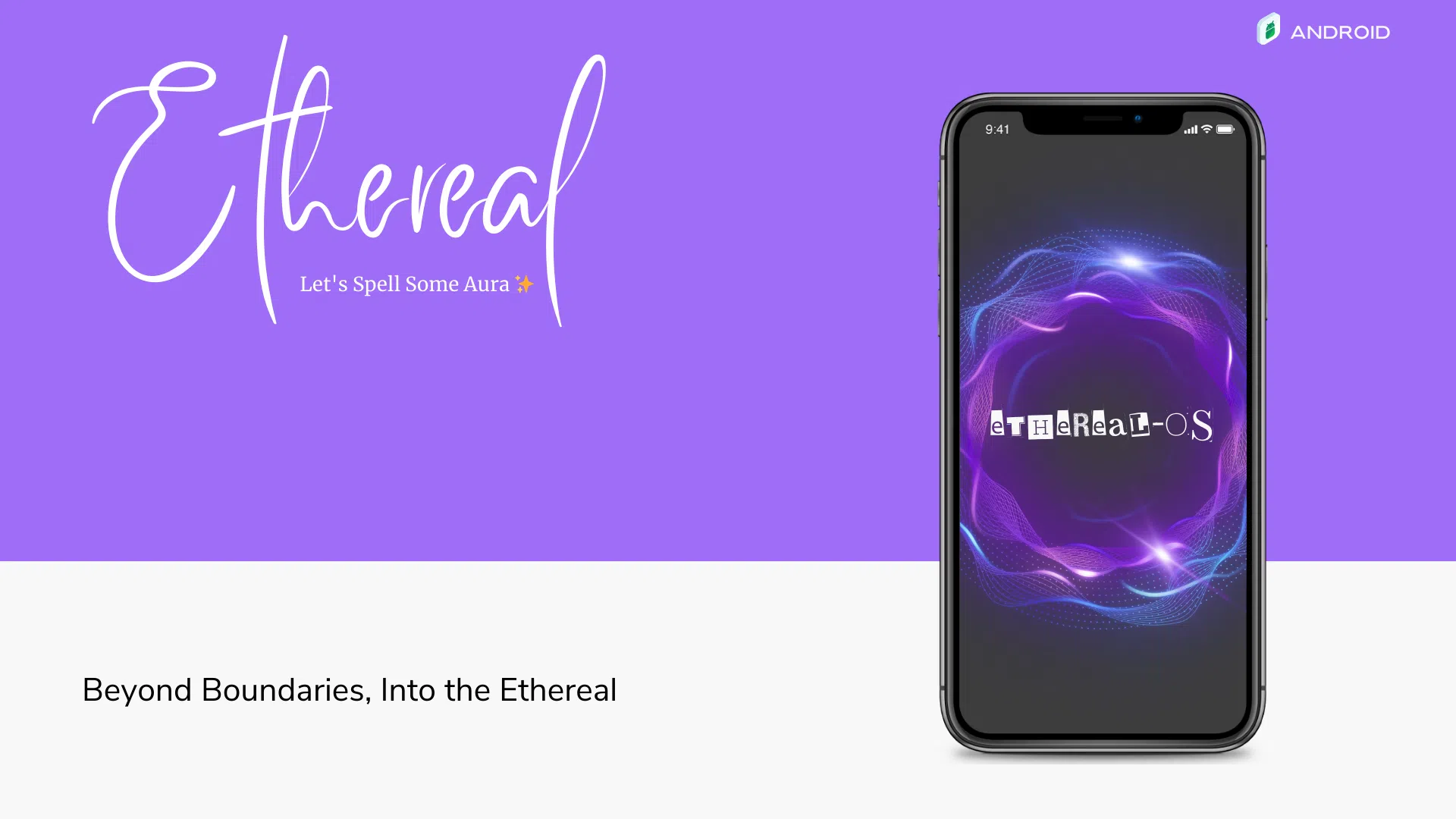
If you've made it this far, it's because you're wondering what's behind the name EtherealOS. In short, it's a minimalist operating system concept that sounds lightweight, modular, and efficiency-oriented, but also something that can be a bit elusive due to the limited information available. To clear up any doubts, this article will provide a thorough and, above all, very practical explanation, with clear clues to understanding its approach, potential components, and uses.
Before we get started, a word of warning: when searching online, you'll often come across results unrelated to EtherealOS. These may include language learning resources, quiz creation tools, and content from communities that share word collections. That's precisely why we're offering you a clear and concise guide with everything you need to understand EtherealOS from scratch.
What is EtherealOS
The name EtherealOS suggests a minimalist operating system, designed to offer a stable and fast foundation without burdening the user with superfluous elements. In the realm of systems, the adjective "ethereal" is often associated with lightness and a reduced footprint, both in terms of resource consumption and complexity. Following this idea, EtherealOS is understood as a platform that prioritizes simplicity, modularity, and agile startup , allowing users to build from the essentials to the specifics based on their use case.
In modern environments, this approach aligns with deployments that value granular control: from resource-constrained devices (IoT, edge, miniPCs) to clean desktops or cloud instances that need to launch services on the fly. The goal, therefore, is not so much to compete by having "everything" in the base system, but rather to enable the user or integrator to add precisely what they need, with optional and well-defined layers.
Another expected feature of an approach like EtherealOS is the consistency of the package system and the clear separation between the kernel, user space, and modules. This organization reduces the risk of cross-dependencies and simplifies maintenance, a key advantage when the goal is to keep the system fine-tuned and with controlled and predictable updates.
What appears when you search for it today (and why it doesn't help)
If you've searched "what is EtherealOS" on Google, you've probably come across pages offering free access to vocabulary lists and Cambridge exams, which have nothing to do with operating systems. You've also found tools that allow you to create your own exercises or custom lists, again clearly geared towards language learning. These kinds of results are a sign that, right now, there's a lack of well-developed information about EtherealOS and that there's room for explanatory, rigorous content that's 100% focused on the technology.
Furthermore, these results include website interface elements (such as notices about categories not visible in wikis) and login screens like "create your account" or "log in with your username." In other words, a lot of noise and little technical substance. This reinforces the idea that there's room to publish a guide that brings order, explains concepts, proposes an architecture, and clarifies how to fit EtherealOS into different scenarios, without getting bogged down in irrelevant content. In this article, we're going to fill precisely that gap with actionable and well-organized information.
Design philosophy and objectives
The EtherealOS philosophy rests on three pillars: lightness, modularity, and clarity. Lightness allows the system to run smoothly on modest hardware; modularity enables customized configurations for different environments; and clarity simplifies maintenance and ensures transparent design decisions. This combination aims for a stable experience with fewer critical components and greater control for the user or administrator.
Another reasonable objective is to minimize friction during implementation by providing base images that work well from day one and documentation that guides system installation and expansion. The aim is for an integrator or development team to be able to set up a functional environment in minutes, adding only what is essential and maintaining a small attack surface against oversized configurations.
Architecture: How the Pieces Fit Together
From an architectural standpoint, the natural approach is to envision a compact kernel with an equally streamlined user space. Separating the kernel from the user space, along with a simple package manager, allows for orchestrating dependencies without dragging along unnecessary components. This foundation would be complemented by essential services (network, storage, logging) and a fast boot system, geared towards short boot times and low resource consumption.
Regarding user experience, systems of this type typically offer an optional lightweight graphical environment or web-based administration interfaces for servers and headless devices. The goal is to allow users to choose between a clean and efficient command line or a simple and responsive desktop, hardware permitting. This versatility makes EtherealOS comfortable for both developers and those seeking a stable and distraction-free work environment.
Security and the update cycle deserve separate mention. A good approach involves atomic or clearly reversible updates, package signing, and hardening exposed services by default. With fewer components loaded, vulnerable surfaces are reduced, and the management of critical patches is simplified. At the same time, maintaining well-curated repositories prevents version drift, a common problem in systems with very extensive or poorly controlled packages.
Common use cases
On clean workstations or desktops, the focus is on maintaining a fast system that doesn't hinder productivity. A lightweight graphics stack, a straightforward window manager, and pre-selected essential tools can provide a responsive experience even on older machines. Those who need additional software can add it in modules, keeping the core system uncluttered and preserving the feeling of consistent speed.
In labs and virtualization environments, EtherealOS can serve as a testbed or a minimalist guest operating system for running specific workloads. Fewer background services mean less noise in measurements and more control over what runs in each instance. This is very useful for CI/CD pipelines or for replicating debugging environments, where it's desirable to start from a familiar and easily restoreable system.
Differences compared to other systems
Unlike general-purpose distributions that come with a massive ecosystem out of the box, EtherealOS takes the opposite approach: it prioritizes the essentials and offers the rest on demand. This simplifies maintenance and leads to more predictable installations. It also helps reduce technical debt: fewer installed packages mean fewer potential vulnerabilities and fewer dependency conflicts, resulting in smoother and more systematic updates.
If we look at the mobile or mass-market landscape, the philosophy differs even more. It's not so much about offering a closed experience burdened with resident services, but rather about proposing a malleable foundation, adaptable to different purposes. In container or microservices environments, this minimalist approach shines: each container starts from a reduced footprint, with fast startup and a smaller exposed area, which aligns with modern DevSecOps practices.
Community, documentation and ecosystem status
One reality worth bearing in mind is that public information about EtherealOS can be scattered or still limited. Proof of this is that, when searching for it, pages unrelated to the topic emerge: portals with vocabulary collections, tools for creating exams, and community spaces for dictionary enthusiasts. There are even traces of wikis that display sections marked as invisible and screens prompting users to create an account or log in. This context indicates that there is still work to be done to consolidate documentation and centralize technical resources.
In the absence of a single reference, the sensible approach is to rely on public repositories (if they exist), release notes, systems forums, and trusted technical blogs. It's also helpful to monitor development channels, mailing lists, or spaces where architectural decisions are discussed. The more primary sources you check, the better your understanding of the project's current state and its medium-term priorities.
How to get started with EtherealOS
The first step is usually to identify an official or reliable base image and, if necessary, burn images using Etcher . From there, you can deploy it in a virtual machine to explore the experience without affecting your main system. It's recommended to document the installation step by step, take snapshots, and test adding minimal packages to validate stability. With this methodology, you'll find it easy to reproduce environments and detect regressions early.
If your goal is a lightweight machine for everyday use, look for a basic graphical environment and choose applications that prioritize moderate resource consumption. For servers or devices without a screen, focus on essential services, hardening by default, and well-defined update policies. In both cases, define in advance what will remain in the core image and what will be installed on demand, preventing the system from losing its modular and streamlined character.
Pay attention to hardware compatibility: network, storage, and graphics drivers, and in some cases, CH340 drivers, can make a significant difference to your experience. Building EtherealOS on a foundation of common and widely supported components will minimize surprises. Maintain a checklist of kernel versions, loaded modules, and enabled services to accurately replicate installations—a time-saving practice that also facilitates team collaboration.
Table of Contents
- 1 What is EtherealOS
- 2 What appears when you search for it today (and why it doesn't help)
- 3 Design philosophy and objectives
- 4 Architecture: How the Pieces Fit Together
- 5 Common use cases
- 6 Differences compared to other systems
- 7 Community, documentation and ecosystem status
- 8 How to get started with EtherealOS