
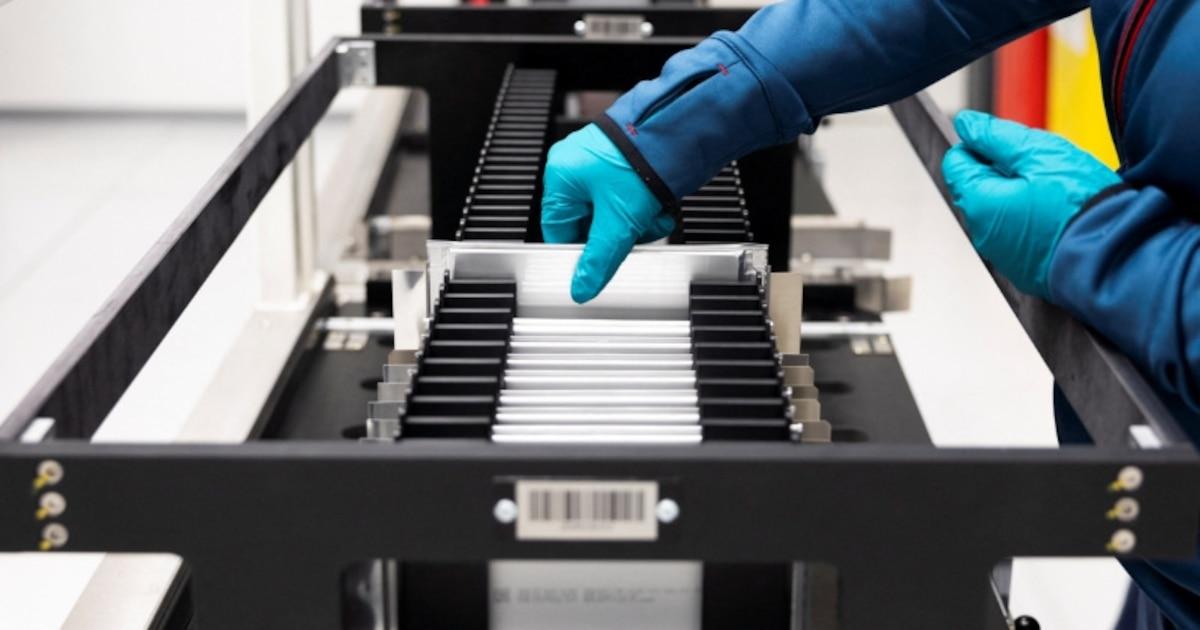
The need for energy storage systems continues to grow in Europe. The commitment to renewable energies, especially solar and wind power, demands that this electricity can be stored when it is produced and released when needed. In this context, a team from Flinders University in Australia has presented a zinc-iodine battery that promises to be a game-changer: it withstands more than 60.000 charge and discharge cycles with minimal performance loss.
The technology is still in its early stages, but its performance figures represent a huge leap forward compared to the lithium-ion batteries that currently dominate the market. Researchers describe a system that combines zinc, iodine, and a polymer derived from cyclodextrin. The major advantage is that it uses a water-based electrolyte , instead of the flammable organic liquids used in conventional batteries, which greatly reduces the risk of fire.

Longest battery life and fastest charging in minutes

The most striking data relates to durability. In laboratory tests, the prototypes have successfully completed over 60.000 full cycles without significant capacity degradation. According to measurements, the loss per cycle ranges from 0,0001% to 0,0003%, allowing for a lifespan that could last for decades in a fixed installation.
The charging speed is also impressive. In one of the tested configurations, the battery can be fully charged in about three minutes when set to operate at around 150 mAh/g. If higher capacity is desired, the system delivers 200 mAh/g and recharges in about seven minutes, reaching 8.000 cycles. The operating voltage is between 1,3 and 1,4 volts, suitable values for stationary systems.
These values were achieved in small experimental cells, not in commercial batteries, but they demonstrate that the chosen chemistry offers a combination of strength and endurance that previously seemed unattainable. The ability to charge so quickly and withstand so many cycles makes this technology a very attractive option for installations that require constant rotation, such as solar power plants or grid backup systems.
The key: a molecular cage for iodine
The biggest challenge with these batteries is maintaining stable iodine levels during use. In previous systems, iodine compounds dissolved in the electrolyte and migrated to the anode, causing self-discharge and degradation. This effect, called "polyiodide displacement," was the main barrier to achieving a long battery life.
The researchers have solved the problem using a cyclodextrin structure , oligosaccharides extracted from starch and already used in the food industry. These molecules have an internal cavity that traps the iodine substances and prevents them from moving, but without blocking the electrochemical reactions. This ensures that the active material remains at the cathode and that the battery has a long lifespan.
In addition to technical improvements, the system prioritizes abundant and inexpensive materials , such as zinc and iodine, over scarcer minerals. The availability of these materials in Europe and in countries like Australia, one of the world's largest zinc producers, can streamline the supply chain and reduce dependence on external regions.
The primary application for this battery will not be mobile phones or computers. The developers are targeting large-scale energy storage: solar power plants, industrial facilities, or grid backup. In these applications, weight is less critical, and the value lies in the ability to handle multiple loads with a low investment. The team is already working with commercial partners to launch an industrial prototyping platform.
There is still a long way to go before this materializes into commercial products. Its performance in larger cells needs to be confirmed, its efficiency analyzed more thoroughly, and its stability verified under real-world conditions. But this study demonstrates that it is possible to break the reign of lithium and pave the way for safer, longer-lasting, and more environmentally friendly chemistries. This achievement has the potential to transform how renewable energy is integrated into our grid.