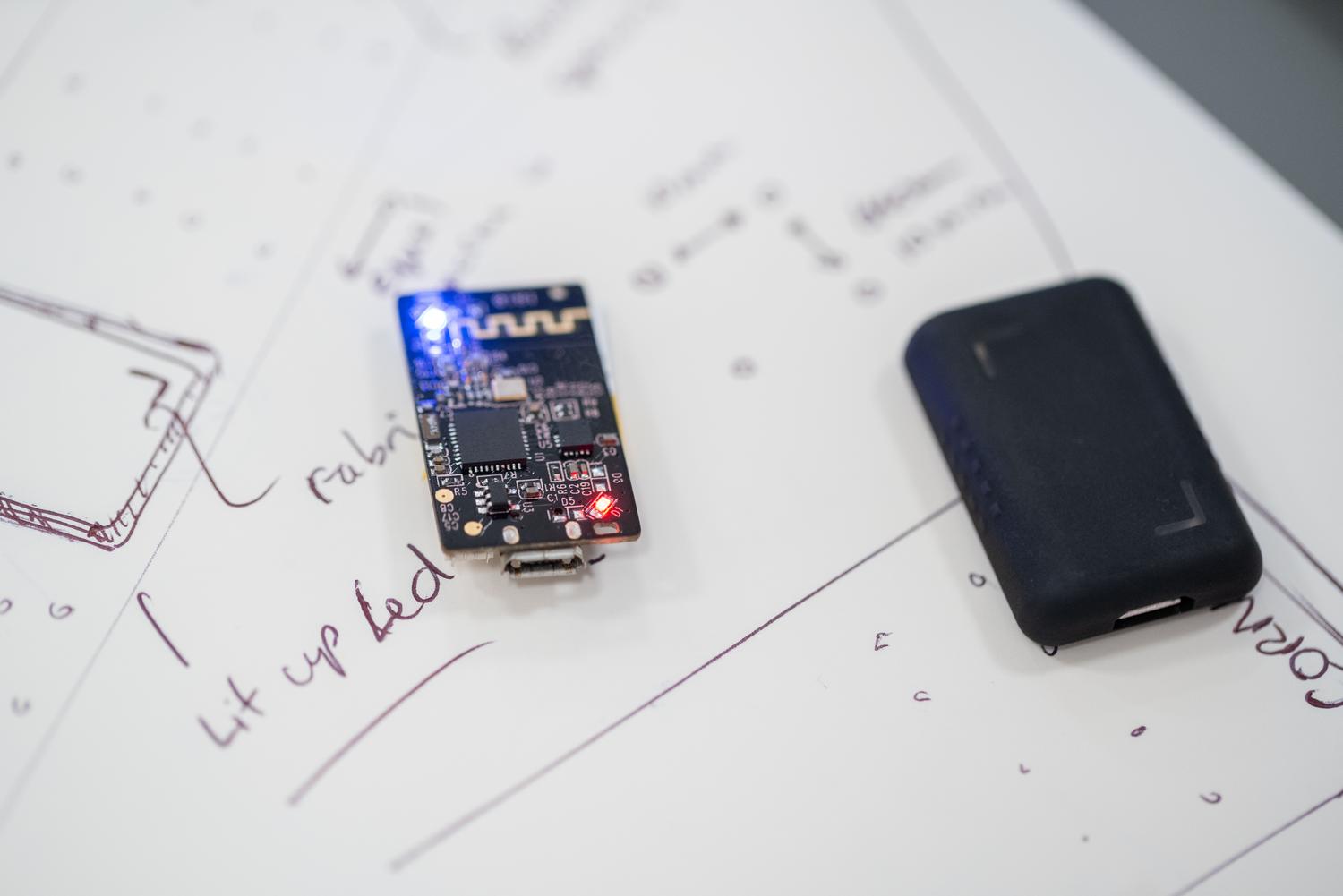
When we delve into the world of embedded systems, it's common to encounter the STM32G031 , a component that has become essential for those seeking efficiency without unnecessary complexity. This microcontroller is not just a piece of silicon, but a powerful tool that allows for the management of complex tasks with relatively low energy consumption.
If you're considering integrating it into your next design, the first thing to know is that its architecture is designed for flexibility and compatibility , inheriting the best features of the STM32G0 family. Essentially, it strikes the perfect balance between processing power and ease of implementation, making it ideal for projects requiring precise hardware control.
Efficient Communication with LPUART
One of the strengths of this device is its communication capabilities. It features LPUART1 , located at memory address 0x40008000, which is an ultra-low-power serial port. The interesting thing here is that it's compatible with both the LPUART standard and conventional UART, allowing the system to continue transmitting data while the main processor is idle, thus drastically saving battery power .
To make this work smoothly, the system uses the RCC clock controller and the RCTL reset control, ensuring that the signal is stable and that the response times are adequate to avoid transmission errors on the data bus.
Timer Management and PWM Control
When it comes to motor control or signal generation, timers are key. The device has several timers, notably timer2 located at address 0x40000000. This module is a true Swiss Army knife, as it can be configured as a PWM generator , a simple counter, or even a quadrature decoder (qdec), which is invaluable for reading encoders.
Furthermore, the system allows for input filtering via the `st,input-filter-level` parameter , eliminating electrical noise commonly found in industrial environments. Additionally, the timers1 module offers more complex clock management, utilizing the APB1_2 bus to ensure pinpoint accuracy in executing timed tasks.
Electrical Stability and VREFBUF
We cannot forget the importance of having a stable reference voltage, especially if you are going to read analog sensors. In chip versions with 48 pins or more, we find the vrefbuf . This component is vital because it provides internal reference voltages, specifically 2048mV and 2500mV options , preventing you from having to add external components that take up space on the board.
This voltage module is closely linked to the APB1H bus, ensuring that the voltage reference does not fluctuate, resulting in much more reliable and accurate analog readings, avoiding those annoying jumps in the data that can ruin a measurement project.
This microcontroller stands out for its versatility by combining a low-power communication system with multifunction timers and an integrated voltage reference system, all under an optimized architecture that facilitates integration into simple buses and guarantees robust performance in modern electronic applications.
Table of Contents