
Batteries are appearing in more and more areas, and not just in electric mobility. In an electric car, they account for a significant portion of the cost and range , to the point that many drivers consider them the most critical component. The way they are charged, daily use, and minimally careful maintenance make a noticeable difference over time.
There are also batteries designed not to power a vehicle, but to keep medical equipment running when the power grid fails. This dual reality—energy for transportation and energy to maintain life support—helps explain why it's important to discuss batteries without oversimplifying: each application has its own requirements, limitations, and precautions.

What role does the battery play in an electric car?
In an electric vehicle, the battery isn't just another accessory. It arguably defines the user experience : it influences range, performance, and the initial investment. Therefore, treating it properly isn't just a workshop quirk, but a way to protect a significant investment.
The first piece of advice from the user guides is to avoid improvising with the loads . It's best to follow the manufacturer's instructions, avoid habits that put unnecessary stress on the system, and not leave all the maintenance to the workshop. The idea is simple: the more predictable the usage, the better you'll be able to preserve the system's useful capacity over the years.
It's also important to know what type of battery each vehicle uses , as there are various innovations in electric car batteries and the available technologies don't all perform exactly the same. Urban use with frequent charging is not the same as intensive use with long journeys. This variety explains why general recommendations should be adapted to each model and driving style.

Power backup for medical equipment in California
The case of Southern California Edison illustrates another function of batteries. The company offers the Critical Care Backup Battery (CCBB) program to people living in fire-prone areas who need continuous electricity for their medical equipment. During the Santa Ana wind season, the fire danger increases in California, and utility companies may implement Public Safety Power Shutoffs (PSPS) to prevent fires from starting.
The problem arises when these power outages coincide with customers who have specific health conditions and need to plug medical devices into the electrical grid. To enroll in the program, customers must register for Medical Baseline Allowance, which offers lower electricity rates for the use of medical equipment. Eligible individuals receive a call from a SoCal Edison representative to help them choose the appropriate battery based on their medical equipment.
According to the company, the backup power can temporarily power nebulizers, power wheelchair chargers, respirators, ventilators , or other suitable medical devices. Once a suitable battery is selected, a delivery appointment is scheduled. Southern California Edison handles delivery, installation, and training at no cost.

Program deadlines and practical details
The battery can temporarily power critical medical devices and can be recharged by plugging it into a standard electrical outlet. However, obtaining one can take up to 30 days . An Edison spokesperson says calling 211 can expedite the process of getting a temporary battery. For more information about the program and its limitations, the company refers to its SoCal Edison website and the phone number 800-736-4777.
This example shows that a backup battery doesn't replace mains electricity or solve every emergency, but it can cover a critical period for someone who depends on a medical device. It also makes it clear that the type of battery must be chosen carefully: not every model is suitable for every device, nor is every battery life suitable for every need.
Care, limits and differences between uses
Comparing these two contexts reveals that the word "battery" masks very different realities. In electric mobility, the focus is on range, durability, and efficiency ; in medical backup, the priority is ensuring the power supply arrives at the right time and that the device functions for the necessary duration. In both cases, the key is not to treat the battery as a black box that simply runs out.
To extend the lifespan of an electric car battery, the recommendations focus on using and maintaining it intelligently . This means following the manufacturer's guidelines, avoiding excessive charging, and not neglecting maintenance, understanding that the Battery Management System (BMS) is key to the management of lithium batteries . The battery can continue to perform at its best for many years if bad habits are avoided and it's understood that its performance naturally changes over time.

In the area of medical backup, caution is also essential. Having a portable battery does not exempt you from reviewing the program requirements , confirming that the device is eligible, and being aware of delivery deadlines. Official information emphasizes the limitations and the need to register for the corresponding program to access assistance.
Looking at the whole picture, batteries are a common component in very different situations : they can power the daily mobility of an electric vehicle or temporarily run a medical device when the mains electricity fails. The difference lies in the priorities of each use and the importance of knowing what the battery can—and cannot—offer.
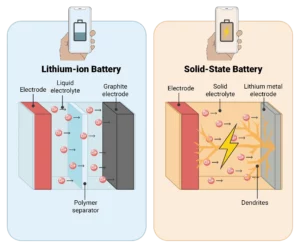
Table of Contents