
Now that we're spending more time at home, in lockdown, you can build a homemade pinball machine to pass the time. There are several ways to do this, as I'll explain, using common development boards like Arduino or Raspberry Pi . You might even have some of the necessary components at home and enough materials to get started like a true maker.
If you don't have the ingredients for this recipe, you can easily buy them online. These services will remain active during these weeks of coronavirus lockdown . Therefore, the materials are guaranteed so you can distract yourself and escape from what's happening during these difficult times. And once the project is complete, you can play a few games with your loved ones…
Pinball and its history
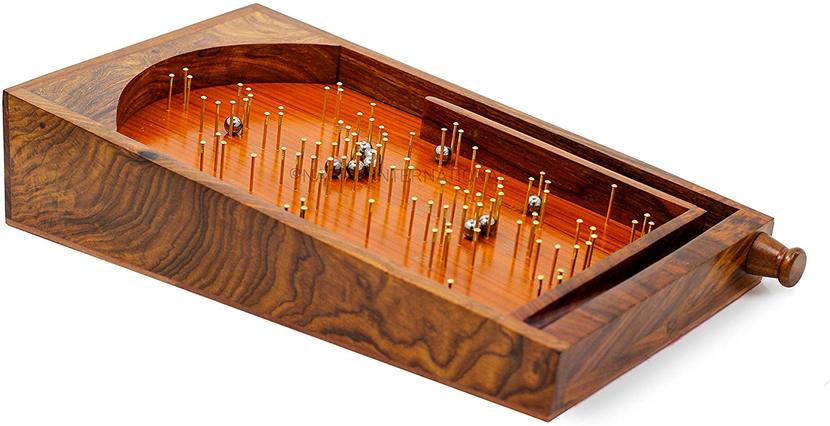
It was, and still is, a very popular type of arcade machine . Many enthusiasts still enjoy them in arcades where they can still be found, while others have them in their own home game rooms. With the rise of the maker community and DIY projects, you can also create one of these pinball machines inexpensively.
It has several names, such as pinball , flipper, but it's also known as pinball, pimbola, etc. Whatever you call it, the gameplay and procedure are the same in all of them. Although the components, difficulty, and decorative themes vary.
It's based on a ball that's propelled by a spring at the start and travels around the entire circuit or track, which features different designs and decorations. The ball bounces or changes direction as it encounters these elements, and falls towards the bottom due to the machine's incline.
The idea is to prevent the ball from falling through the gap, or you'll lose it (like a life). To do this, you have controls that move two paddles or flippers . With these, you can launch the ball back up, and your score will be calculated based on its trajectory and any obstacles it encounters.
It seems strange to explain how such a popular machine works, but surely there are some younger people who may not have seen a pinball machine… It became popular in the 60s and 70s, where it was very popular in taverns, clubs, ice cream parlors, bars, casinos and arcades.
I'm reminded now of Jeri Ellsworth (Tilt Five) , whom I was lucky enough to interview recently, and who loves these parlor games. And by the way, unlike many other similar games, this one didn't originate in the United States.
Pinball originated in Europe , dating back to 18th-century France. There, very rudimentary games called Bagatelle began to be sold and became popular throughout Europe. They consisted of a horizontal board on a table with a series of holes and wooden pegs that players had to aim at to guide the ball through the circuit.
- No products found.
Gradually, this evolved until, in the 30s and 40s, engineers Arthur Paulin Whiffle and David Gottlieb of Automatic Industries began integrating more modern elements into the game. Harry Williams invented a coiled electromagnet system called Tilt to prevent cheating.
Then, a few decades later, they continued to evolve, culminating in the popularization of American pinball machines from the Williams Manufacturing Company. These machines flooded arcades for young people in the late 70s and early 80s.
Have a Pinball machine at home
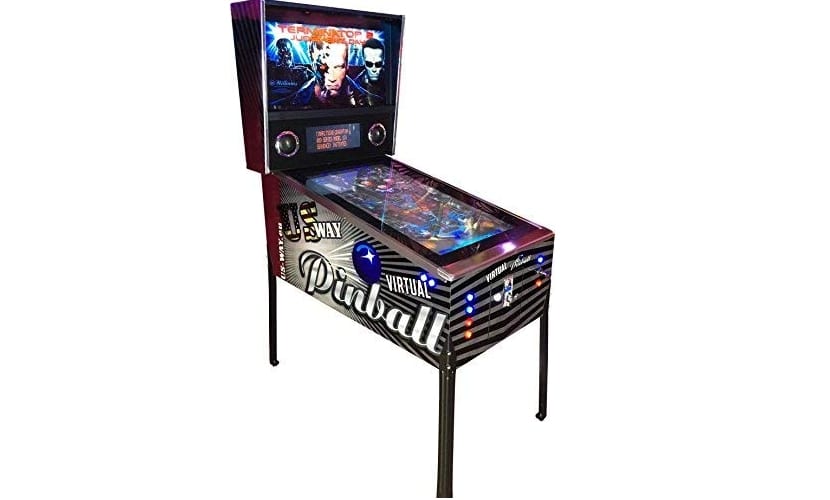
There are several options , from buying a machine to building one yourself. Here I'll try to explain both methods so you can choose the one that best suits your needs. I'll also include purchase links so you can access all the necessary materials from home.
Buy your Pinball machine
It's the most convenient option , and the one that allows you to get the best results since you have a finished product with a guarantee. For this, you can buy everything from toy-like models for young children to more professional options similar to those found in arcades, but for the comfort of your own home. For example:
- Toy Story Themed Mini Pinball for Kids.
- No products found..
- No products found..
- Real Pinball Pro Table.
Create your own homemade Pinball machine
The other option, preferred by makers, is a DIY project to create your own homemade pinball machine , without having to buy one ready-made. There are several projects online that you can follow. Some of them are very interesting. To avoid repeating content or simply copying and pasting, I prefer to show you other interesting, already developed and tested projects so you can choose the one that interests you most.
I've selected the most interesting ones so you don't have to bother...
- Leroy marlin has a wood mechanical proposal. It is similar to the video that I have left you in this cardboard section. It can be a good initiative for the little ones, if you have children at home.
- DIY electronic pinball de Instructables. The fellow Instructables community has one of the best projects to make an electronic Pinball similar to the ones you can buy. You just have to use Arduino for it.
I recommend that, to avoid making them exactly like the originals, you give them a more personalized touch . Instead of using wood, if you have a 3D printer , you can use printed parts to make them look even better. Or you can combine a wooden structure with 3D-printed details.
Table of Contents