
Integrated circuits , chips, microchips, ICs (Integrated Circuits), or CIs (Circuito Integrado) , or whatever you want to call them, are a type of electronic circuit that has made technological advancement to its current levels possible. Without this invention, computing and telecommunications would probably not be what they are today, and electronic and electrical devices would be very different.
Despite their tiny size and ubiquitous presence, these integrated circuits hold great surprises waiting to be discovered . Here you can learn much more about these electronic components …
What are integrated circuits?

Integrated circuits are encapsulated semiconductor chips containing an embedded electronic circuit. Depending on the logic family they belong to, these circuits will be composed of various miniaturized electronic components. For example, they may include diodes, transistors, resistors, capacitors, and so on.
Thanks to them, modern electronics has been developed and a new era has begun, given the high level of integration they allow. In fact, some of today's most advanced chips can integrate billions of transistors onto a die just a few square millimeters in size.
History of chips
Initially, electronics began using crude vacuum tubes similar to conventional light bulbs. These tubes were large, inefficient, generated a lot of heat, and broke down easily, so burnt-out tubes had to be replaced for computers and other equipment that used them to continue functioning.
In 1947 came the invention of the transistor , a component that would replace the old vacuum tubes and revolutionize electronics. Thanks to it, a solid-state device could be created, much more durable, efficient, and faster than vacuum tubes. However, some scientists thought they could integrate several of these components onto a single silicon chip. This is how the first integrated circuits in history were created.
Over time, solid-state electronics evolved, reducing the size of components and lowering costs. In the late 50s, an inventor at Texas Instruments named Jack Kilby conceived the idea of creating a semiconductor chip and wiring that interconnected the different parts. This became the first chip in history, and he would go on to win the Nobel Prize for it.
Almost simultaneously, Robert Noyce , then an employee of Fairchild Semiconductor (later one of the founders of Intel), also developed a similar device, but with significant advantages over Kilby's. Noyce had conceived the idea that would lead to modern integrated circuits. This technology was called planar, and it had advantages over Kilby's mesa technology.
Since then, the evolution and improvement of these components has been continuous . Costs have plummeted, as have consumption and size, while performance and capabilities have improved stratospherically. No other sector has evolved so much, and no other sector has had such a profound impact on humanity…
How are they made?
The manufacturing process for integrated circuits is extremely complex. However, as shown in the video, it can be summarized in a few simpler steps so that people can understand how they are made.
Here I will try to summarize the design steps as best as possible, without going into too much detail, as that would be enough for thousands of articles:
- Be part of a need, an application for which you need to create an electronic circuit.
- A design team is in charge of outlining the characteristics and specifications that the chip should have.
- Then, the design will begin using logic gates and other memory elements, etc., until a logic design is achieved that develops the function for which this chip is designed.
- After this, it will go through a series of steps between which tests and simulations are carried out to determine that it works correctly at a logic level, and even test chips are manufactured to see if they do it physically.
- Once the design stage has been completed, a series of masks for manufacturing are created from the layout of the designed circuit. A pattern is engraved on them so that it can be engraved on the silicon.
- This pattern is used by the foundry or factory, to create the integrated circuits in a semiconductor wafer. These wafers usually contain up to 200 or 300 chips in some cases.
This covers the design stage; from the manufacturing side , we have:
- The silicon mineral is obtained from sand or quartz.
- Once it is refined to be ultra-pure, or EGS (Electronic-Grade Silicon), with a level of purity higher than the silicon used in other industries.
- This EGS arrives in the form of pieces at the foundry, where it is melted in a crucible and through a seed crystal it is made to grow using the Czochralski method. So that it is easy to understand, it is similar to how the typical cotton candy is made at fairs, you introduce the stick (seed crystal) and the cotton (molten silicon) sticks and increases in volume.
- At the end of that step, the result is an ingot, a large piece of monocrystalline silicon crystal in the shape of a cylinder. This bar is cut into very thin wafers.
- These wafers go through a series of processes to polish the surface so that they remain unpolluted for the start of production.
- Afterwards, these wafers will go through several repetitive processes to create the chips on them. These processes are of a physical-chemical type, such as photolithography, etching or etching, epitaxial growth, oxidation, ion implantation, etc.
- The final idea is to create electronic components, generally transistors, on the wafer substrate, and then add layers to interconnect said components to form logic gates in the lowest layer, then in the following layers these gates are connected to form elementary units (adders, registers, ...), in the following layers functional units (memory, ALU, FPU, ...), and finally all are interconnected to create the complete circuit, for example, a CPU. On an advanced chip there can be up to 20 layers.
- After all these processes, which can take several months to complete, hundreds of equal circuits will be obtained for each wafer. The next thing is to test and cut them, that is, divide them into individual silicon chips.
- Now that they are loose dies, we proceed to encapsulate (DIP, SOIC, PGA, QFP, ...) where the chip is protected and the pads are connected, which are conductive tracks on the surface, with the pins of the integrated circuit.
Obviously, not all integrated circuits are the same . Here I've talked about functional units and more complex things like a CPU, but there are also very simple circuits like a 555 timer or an IC with four logic gates that are extremely simple. They only have a few dozen components and are connected with one or a few layers of metal interconnects…
Types of ICs
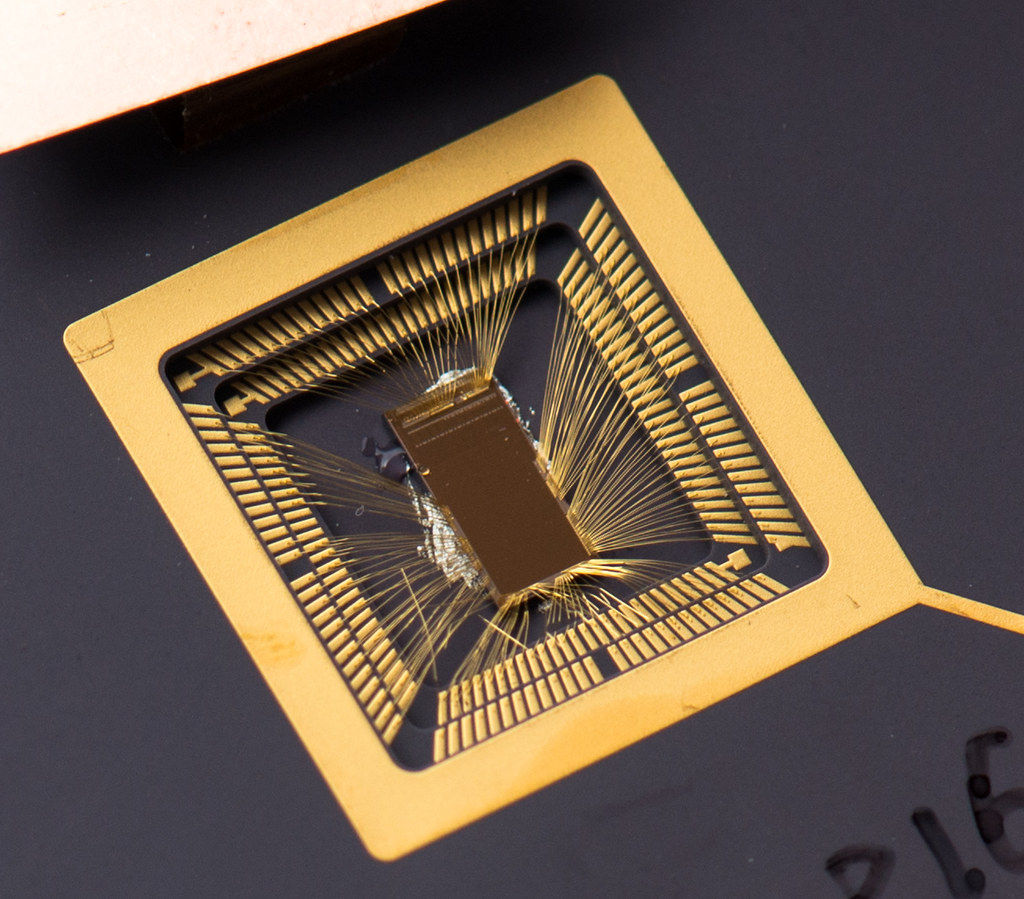
There isn't just one type, but several types of integrated circuits . The most prominent ones you can find are:
- Digital integrated circuits: they are quite popular, and used in many modern devices, from computers, to mobile devices, Smart TVs, etc. They are characterized by working based on the digital system, that is, with 0 and 1, with 0 being a low voltage signal and 1 being a high signal. This is how they encode information and operate. Examples can be PLCs, FPGAs, memories, CPU, GPU, MCU, etc.
- Analog: instead of being based on binary signals, in this case they are continuous signals variables in voltage. Thanks to this, they can achieve tasks such as filtering, signal expansion, demodulation, modulation, etc. Of course, many systems work with both analog and digital circuits, making use of AD / DA converters. They can be divided into two large groups, linear integrated circuits and radio frequency (RF). Examples could be a chip for audio filtering, sound amplifiers, emission or reception systems for electromagnetic waves, sensors, etc.
- Mixed signal ICs: as the name suggests, they are a mixture of both. Some examples could be the analog-digital or digital-analog converters themselves, certain chips for clocks, timers, encoders / decoders, etc.
Differences with printed circuits
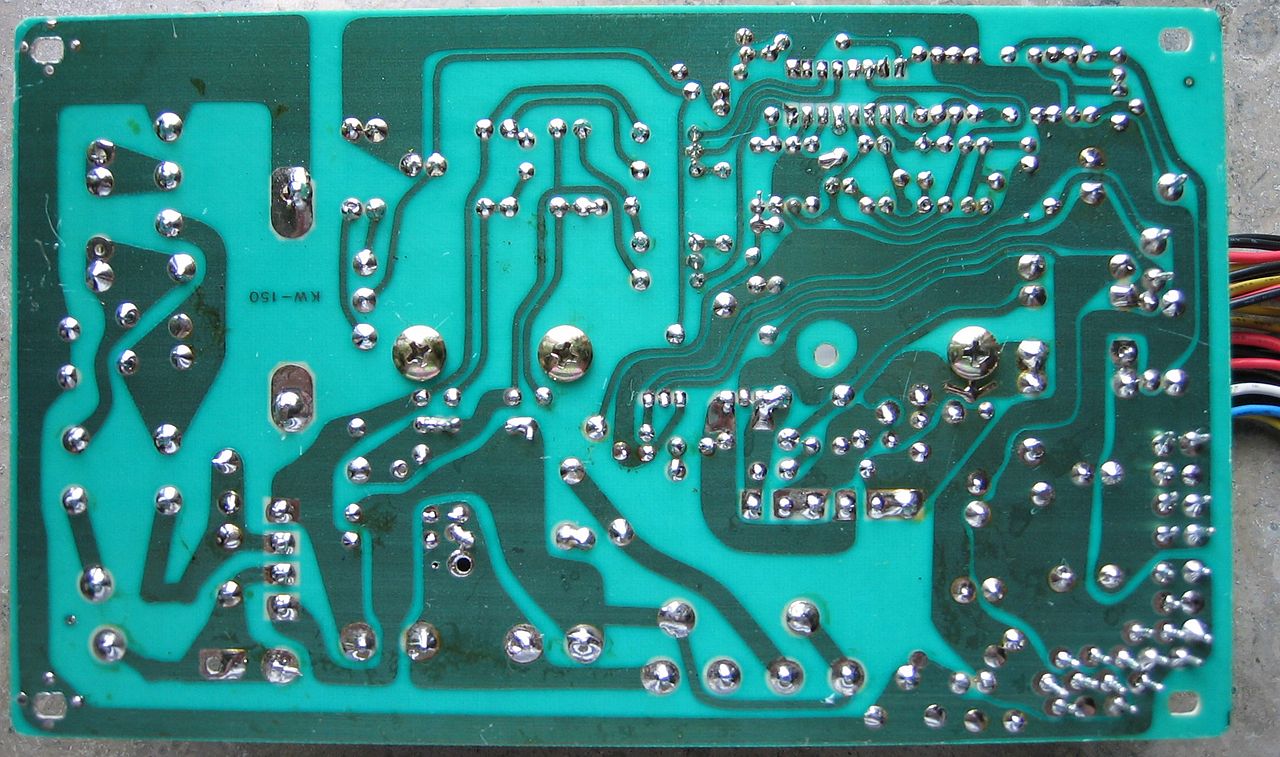
Integrated circuits should not be confused with printed circuit boards. They are two different things. While the former refers to microchips, as you have seen, printed circuit boards, or PCBs , are another type of electronic circuit printed on larger boards.
The most notable differences are:
- Printed circuits: they are made up of a plate that has a pattern of conductive lines, such as copper tracks to link the different inserted components (capacitors, transistors, resistors, microchips, ...), soldered by tin soldering, in addition to a dielectric material ( substrate) that separates the layers of connecting interconnections. They also typically have through holes, or vias, for non-surface mount (SMD) components. On the other hand, they usually have a legend, a series of marks, letters and numbers to identify the components and facilitate maintenance. To protect copper, which oxidizes easily, they usually have a surface treatment. And, unlike integrated circuits, they can be repaired, replacing damaged components or restoring interconnects.
- Integrated circuitsThey are very small in size, solid state, and have low cost of mass production. Unlike a PCB, these cannot be repaired as their components and connections are so extremely tiny that it is impossible.
Neither integrated circuits are substitutes for printed circuits nor vice versa. Both have their uses and in most cases they go together in practical applications ...
Most popular integrated circuits
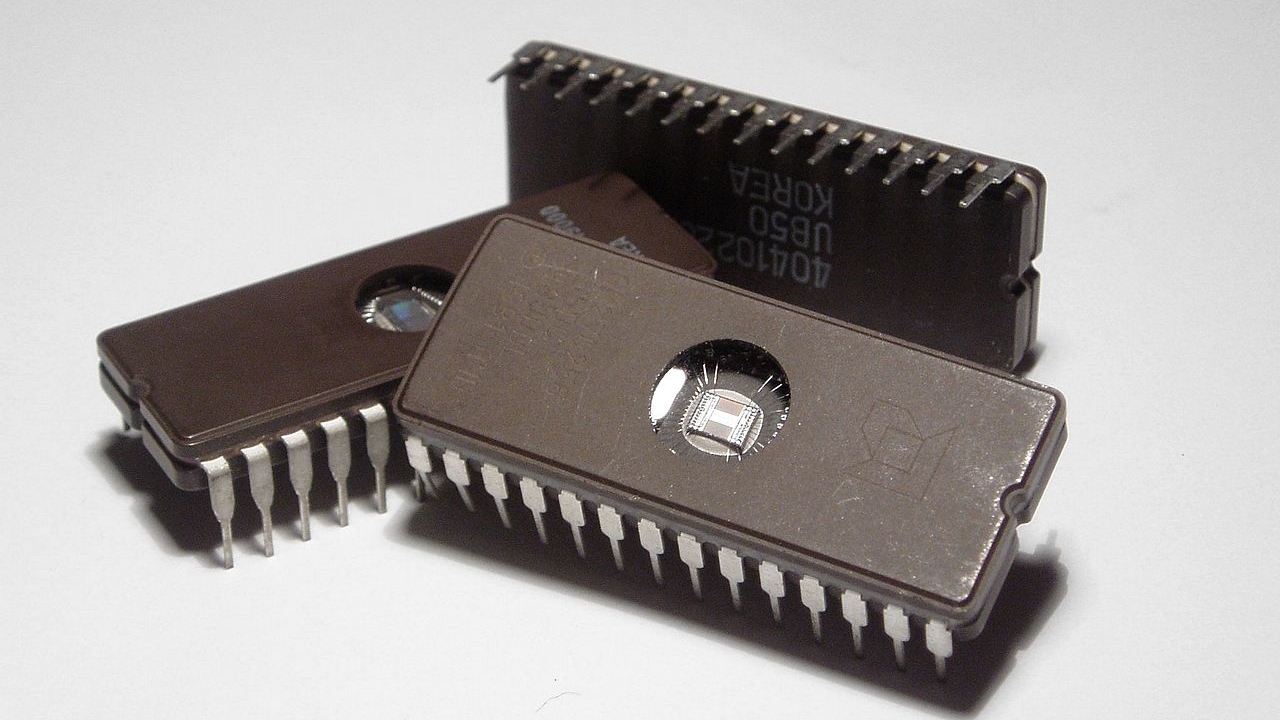
Finally, there are many popular integrated circuits on the market used for electronics projects, such as logic gates . They are inexpensive and readily available at retailers like Amazon or specialized electronics stores. For example, here are some of the most popular ones:
- 75 popular ICs kit from Interstellar Electronics
- No products found..
- 10 ICs of the popular NE555 timer.
- No products found..
Table of Contents