
What for years seemed like science fiction is becoming a reality. 3D printers that build homes have gone from prototypes to habitable projects in different parts of the world, at a speed that is forcing traditional industry to take notice. The first news about this technology came from the United States, but there are already developments in Europe, the Middle East, and Latin America. In Spain, several technology centers are now researching specific applications for the European market.
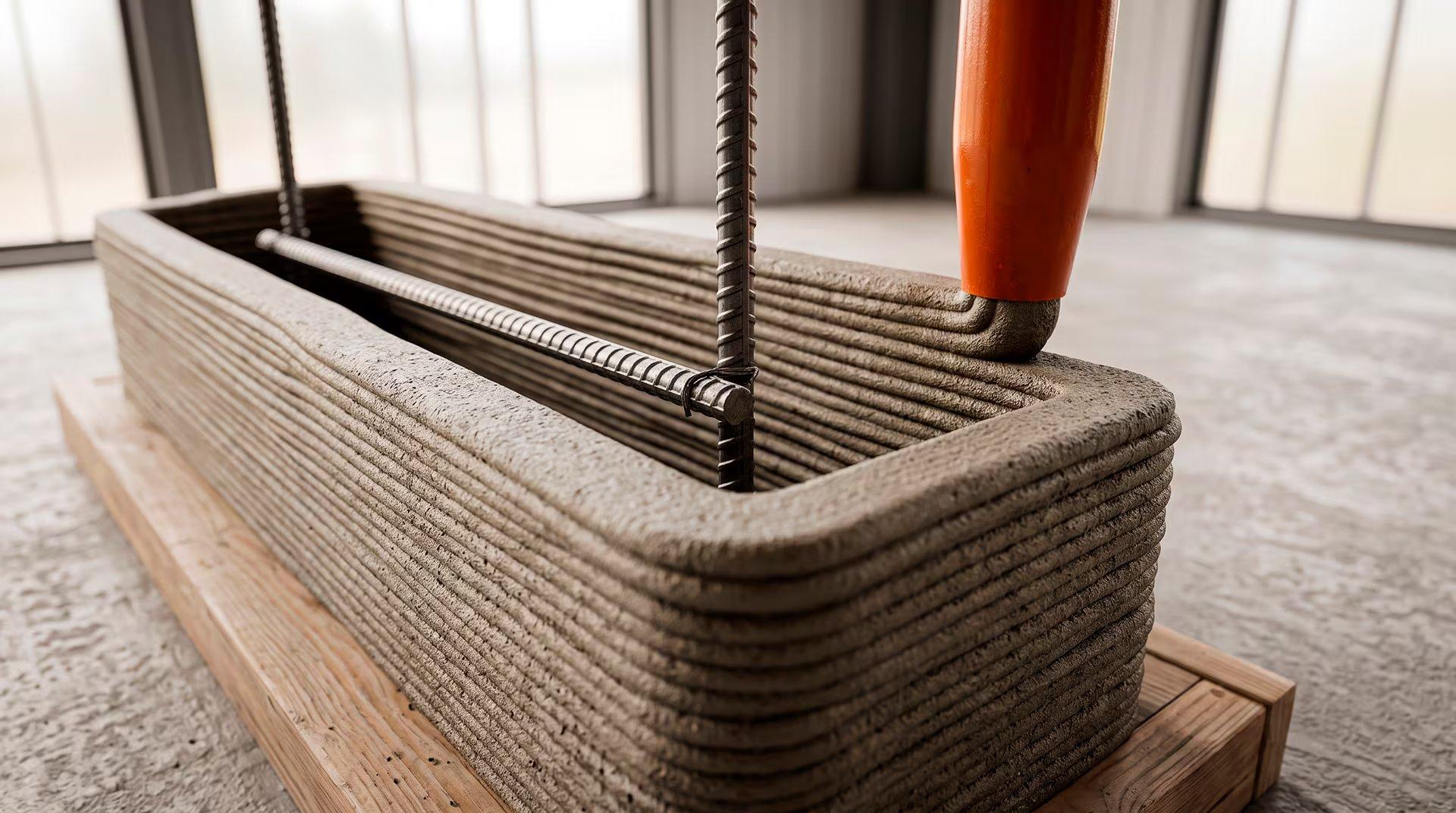
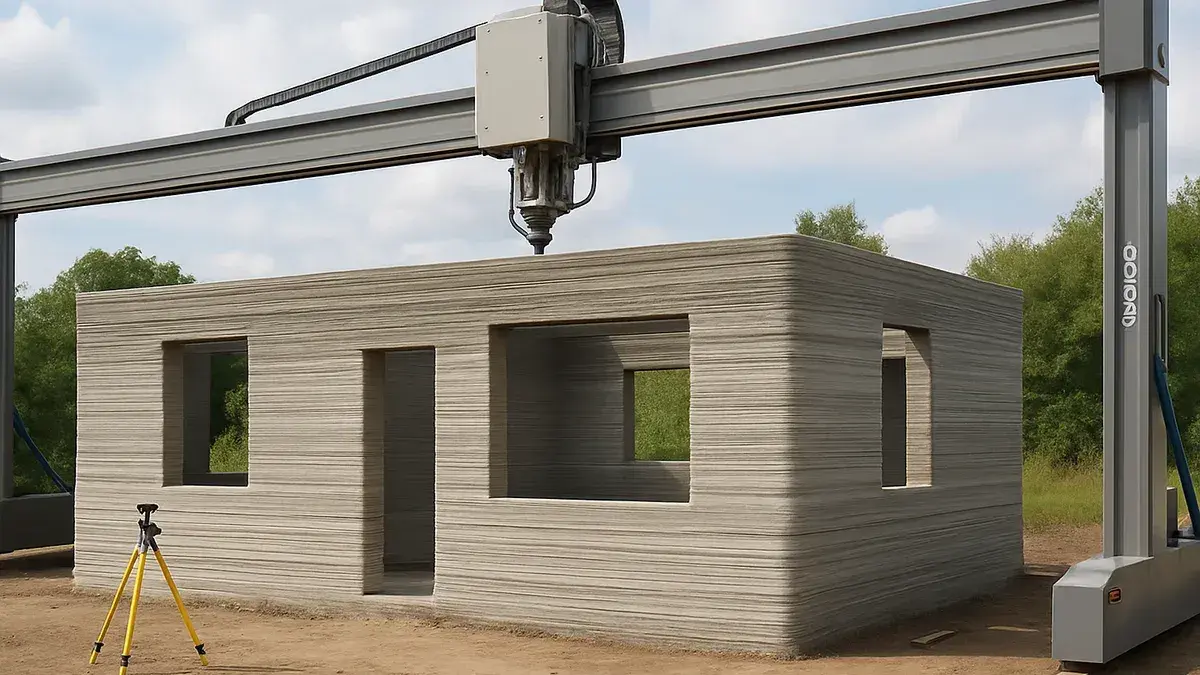
The technique uses a robotic machine to deposit layers of a cementitious mixture, following a digital design and without the need for formwork. This allows for curved and organic shapes, reduces material waste, and accelerates construction phases. The figures speak for themselves: a 120-square-meter house can have its structure printed in just 48 hours. Construction times improve by approximately 35% compared to conventional systems, and costs can decrease by up to 30%.

The new way of building
The machine, mounted on a movable gantry, extrudes the material layer by layer following a digital design. It requires no formwork and wastes almost no material. Furthermore, it can operate autonomously overnight, reducing human intervention. However, make no mistake: the printer generates the structure, but traditional tradespeople are still needed for roofing, installations, and carpentry. Technology reorganizes construction work ; it doesn't replace it.
One of the most striking aspects is the cost. According to specialist Myriam Heredia, the 3D-printed structure represents between 20% and 30% of the total cost of a home. While traditional construction costs around $900 to $1.600 per square meter, 3D-printed concrete homes bring that figure down to around $300 to $600 per square meter for the structure. Interior and exterior finishes must be added to this, bringing the final price to around $1.000 to $1.100 per square meter for standard models. The reduction can be up to 35% in construction time and 30% in cost , according to estimates from various studies.

Projects that are already a reality
In Texas, the company ICON has built a neighborhood of over 100 3D-printed houses, featuring curved walls, solar panels, and proprietary materials. The same firm collaborated with NASA on a simulated habitat. In the Netherlands, the Milestone project in Eindhoven became the first to offer 3D-printed homes for legal occupancy, with rentals starting in 2021. Now, the project will launch four two- and three-story homes, ranging from 113 to 124 square meters and priced from €635.000, with construction slated to begin in 2026. Meanwhile, Dubai has set an ambitious goal: that 25% of its new construction will be 3D-printed by 2030.
In Europe, in addition to the Netherlands, several regions have begun researching how to adapt the technique . In Spain, various technology centers are working on materials for 3D printing , such as fast-setting concrete and mortars with natural fibers. Although there are still no large-scale commercial developments, research is progressing thanks to the public institute and R&D project grants.
An alternative to the housing crisis
In Argentina, a country with a housing deficit of 3,5 million units, the National University of La Plata, in conjunction with the Buenos Aires provincial government and the Río Santiago Shipyard, is developing a prototype to print houses up to 60 square meters in approximately 24 hours. The provinces of Buenos Aires, Santa Fe, and Córdoba account for half of the deficit, and these are precisely the areas where advances in 3D printing of homes in Argentina would have the greatest impact. Furthermore, entrepreneur Agustín Gore has built South America's first mud printer in Traslasierra, Córdoba, using earth, sand, natural fibers, and water—a fusion of ancestral techniques and cutting-edge technology.

What for many is still a novelty is becoming a practical solution for building entire neighborhoods faster and at a lower cost. 3D printing isn't a panacea, but it paves the way for smart construction that combines efficiency, design, and sustainability. In Europe and other emerging markets, the technology is beginning to move from the laboratories to the ground up and take shape.
The speed of these advances suggests that in the coming years, 3D printing of homes will cease to be a novelty and will become standard practice in construction. Public interest and investment in R&D are moving in that direction, both in European institutions and in private industry. If these figures are confirmed, we would be witnessing a turning point for the sector, with profound implications for how we live and build our environment.
