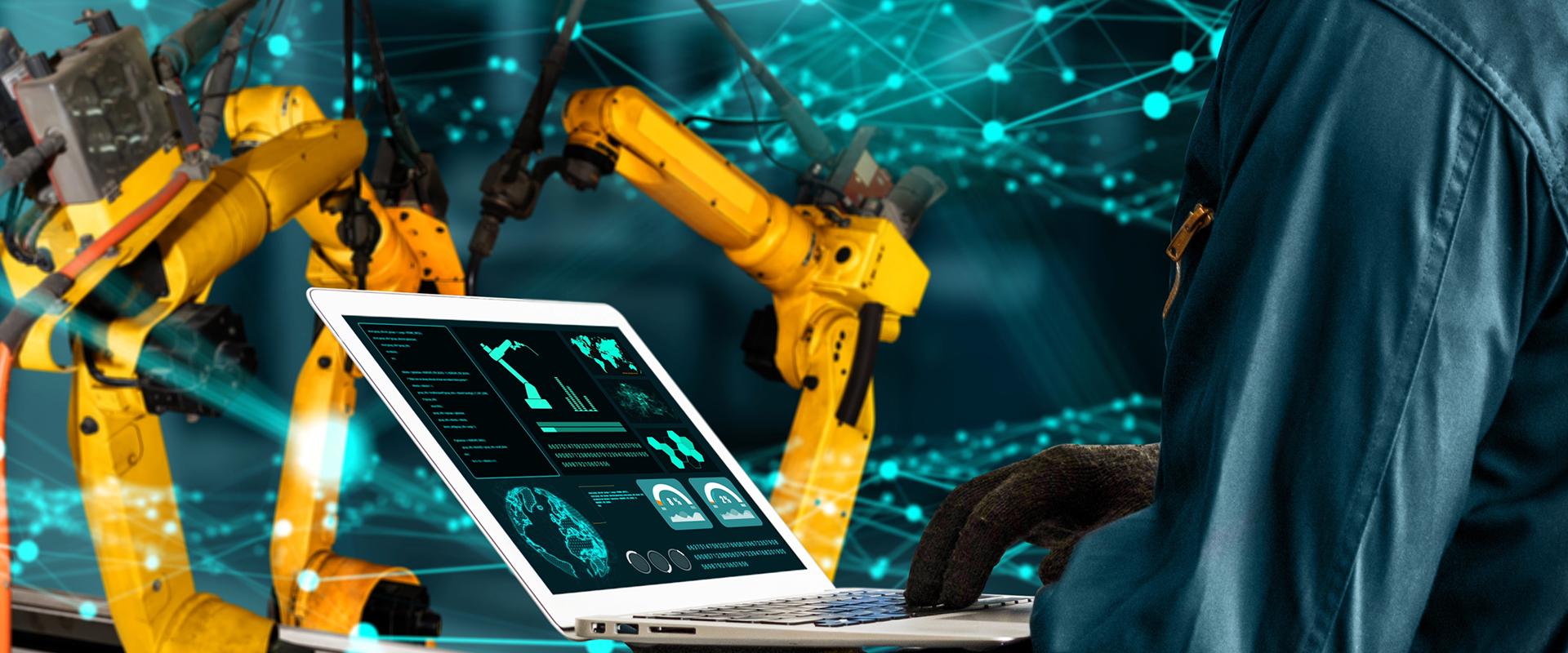
In any modern factory, there's a silent element that makes all the difference between a smooth-running production line and one plagued by problems all day long: motion control . It's not just about installing motors and making them spin; it's about coordinating every movement, turn, stop, and start with millimeter precision to produce more parts, with better quality, and fewer unexpected issues.
As automation advances, motion control has become a strategic component for productivity, flexibility, and safety . From a simple positioning station to a robotic cell with dozens of axes, the philosophy is the same: that the machine does exactly what is asked, when it is asked, and as many times as necessary, without deviating even a micron.
What is motion control in industrial automation?
In industry, motion control refers to the set of technologies that govern the precise movement of machines and mechanisms , controlling variables such as position, speed, acceleration, and torque in real time. It goes far beyond simply turning on a motor: it's a discipline focused on how the machine moves and how it synchronizes with the rest of the process.
A motion control system can include servomotors, stepper motors , linear actuators, variable frequency drives, motion PLCs, HMIs, and feedback sensors . All these elements work as a coordinated team: the controller decides what needs to happen; the drive translates these commands into power; the motor moves the load; and the sensors inform the system whether the movement is correct.
The key to modern motion control is that it generally operates in a closed loop . Process controllers and regulators continuously compare the desired motion with the actual motion, calculate the tracking error, and adjust the signals to correct any deviations. This ensures that the machine performs the intended function, not something "more or less similar."
In practice, this allows for the simultaneous coordination of multiple axes , as is the case in many CNC machines . Imagine three axes moving at the same time on a complex production line, without bumps, collisions, or delays. That's well-designed motion control, and it's precisely what distinguishes mediocre automation from high-performance automation.
Architecture of a motion control system
Every motion control system, however simple or complex, is based on an architecture with three essential building blocks: actuator, control, and feedback . Layers of complexity are added from there, but the foundation always remains the same.
On the actuator side, you'll typically find servomotors and stepper motors controlled by a drive or amplifier . This drive integrates current control and regulation gains (P, PI, PID) that allow the motor to respond quickly and reliably to commands from the main controller.
The control system typically consists of a motion controller or PLC with motion functions , which generates trajectories, calculates velocity and acceleration profiles, manages safety, and coordinates the different axes. It is often complemented by an HMI so the operator can monitor status, adjust parameters, and diagnose faults.
Feedback is received via encoders, resolvers, or other position and velocity sensors that convert physical movement into digital information interpretable by the system. These devices close the control loop: the controller constantly compares the actual value with the setpoint and corrects the movement to reduce the error to almost zero. In advanced applications, techniques borrowed from autonomous control and robotic sensorization are applied to improve error detection and compensation.
At the so-called subtraction point or sigma point, the reference value is subtracted from the feedback value , yielding the tracking error. This difference is what the system continuously attempts to minimize by adjusting the control signal to the motor as many times per second as necessary.
Key components of a motion control system
To design, evaluate, or improve a motion control application, you need to know its fundamental building blocks very well , since a bad choice in any of them can ruin the performance of the whole.
The first element is the motion controller, or automation PLC with motion functions . Its role is to manage trajectories, coordinate axes, execute control algorithms, and ensure that safety conditions are met. It also typically handles communication with other systems (SCADA, MES, ERP) and integration into the plant architecture.
The second pillar is the drives or power amplifiers . These electronic converters take commands from the controller (usually via fieldbuses such as Profinet, EtherCAT, EtherNet/IP, etc.) and transform them into power signals suitable for each motor. The system's dynamics, responsiveness, and many safety functions depend on them.
Thirdly, there are the actuators: servomotors, stepper motors, and linear actuators . These are responsible for executing the physical movement with the required precision and torque. Incorrect motor sizing can lead to problems such as overloading, overheating, vibrations, or, conversely, an unnecessarily high cost.
To close the loop , feedback sensors such as incremental, absolute, or resolver encoders are used . These provide real-time data on position, speed, and even direction of rotation. In high-precision applications, encoders can be combined on the motor and the load (dual feedback) to compensate for mechanical errors.
Mechanical elements must not be overlooked : linear guides, ball screws, belts, reducers, and couplings . Although they often receive less attention than electronics, they are crucial for system rigidity, achievable precision, and machine lifespan.
Finally, the user interface, or HMI, allows the operator to interact with the system: viewing alarms, entering recipes, changing formats, or diagnosing malfunctions. A well-designed HMI reduces downtime, prevents operating errors, and facilitates maintenance tasks.
How motion control works in practice
In operation, a motion control system combines specialized hardware and software to generate, monitor, and correct complex movements . The process relies on very rapid cycles of signal calculation and updating.
The controller receives a motion command: for example, to move a linear axis 300 mm in 0,5 seconds with a specific acceleration curve. From there, it generates the motion profile (position, velocity, and acceleration at each instant) and sends it as commands to the drive that controls the motor.
As the motor executes the movement, feedback sensors continuously return the actual position and velocity . The controller compares these values with the predicted profile and, if it detects any deviation, readjusts the command signal. This closed loop runs hundreds or thousands of times per second, allowing for extremely precise control.
When multiple axes are involved, the system must also synchronize their trajectories . For example, in a Cartesian robot, the X, Y, and Z axes move simultaneously to achieve a linear or smooth curved path in space. This coordination is achieved through interpolation, by jointly calculating the commands that each axis needs based on the desired overall trajectory.
Modern systems also integrate functional safety features such as Safe Torque Off (STO) or other safe stops , which allow the engine torque to be deactivated in an emergency, complying with safety regulations, without the need for very complicated wiring or additional external solutions.
Advanced functions of motion control in the industry
Beyond simple positioning, today's motion control systems offer a suite of advanced features that make a significant difference in productivity and flexibility . These capabilities are especially critical in high-speed packaging, printing, cutting, winding, or assembly machines.
One of its key features is multi-axis interpolation . This allows the coordination of multiple motor movements to generate 2D or 3D trajectories. It forms the basis of Cartesian robots , CNC machines, 3D printers, and palletizing applications, where several axes must move simultaneously and precisely to follow complex curves.
Another key function is the synchronization of axes in production lines . In a packaging machine, for example, the product feed, film advance, and cutting or sealing blade must all be synchronized. Motion control ensures that all these axes are coordinated, preventing mispackaged products, breakage, or unexpected stoppages.
The electronic cam replaces traditional mechanical cams with programmable digital profiles . This allows for almost instantaneous changes in format or product, without requiring any mechanical adjustments. In high-performance systems, the internal cycle times of the control can reach tens or hundreds of microseconds.
In applications requiring extreme precision , dual feedback or dual-loop systems are used : an encoder on the motor shaft (for control stability) is combined with a linear encoder on the load itself (for final position accuracy). This compensates for errors arising from backlash, flexure, lead screw pitch errors, or the elasticity of mechanical components.
Finally, many motion platforms include advanced diagnostic, preventive, and even predictive maintenance functions . By analyzing data on torque, speed, vibration, and power consumption, the system itself can anticipate wear on belts, spindles, or gearboxes, trigger alarms before a critical failure occurs, and help plan maintenance shutdowns.
Typical motion control platforms and solutions
Major automation manufacturers have developed their own architectures to offer integrated motion control solutions , covering everything from simple applications to complex multi-axis systems and robotics.
A common approach is to combine PLC families dedicated to automation (e.g., SIMATIC S7-1200 or similar modular controllers) with specific servo drive ranges (such as SINAMICS or other equivalent solutions). All of this is programmed from an integrated engineering environment (such as TIA Portal or others), from which controllers, drives, networks, and HMI screens are configured.
In this type of platform, the compact PLC manages basic speed and positioning tasks in relatively simple machines: pick & place stations, rotary tables, small packaging machines, etc. For more demanding applications, more powerful controllers are used, capable of handling multiple interpolated axes, robot kinematics, and advanced diagnostic functions.
Servo drives typically offer torque, speed, and position control modes , real-time communication via industrial buses, and integrated safety features. A typical example is compact servo drives that connect via Profinet IRT or EtherCAT with response times of just a few milliseconds, enabling very high performance in tasks such as material feeding, labeling, or synchronized cutting.
Furthermore, advanced development environments incorporate pre-configured motion technology blocks for common tasks: absolute or relative positioning, master-slave synchronization, electronic cam generation, virtual axis control, etc. This drastically reduces setup time and facilitates standardization across projects.
An increasingly valued aspect is the scalability of the solution . The idea is that the program developed for a small machine can be reused and scaled up for a more complex one without having to rewrite all the logic. This protects the intellectual capital invested in programming and simplifies future plant upgrades.
Benefits of implementing motion control in the company
Adopting a good motion control system is not just a technical matter, but a strategic decision with a direct impact on the bottom line . The benefits appear in productivity, quality, costs, and safety.
The first obvious benefit is improved accuracy and repeatability . By automating movements with servomotors and closed feedback, many human errors and variations inherent in less sophisticated mechanical systems are eliminated. This results in more consistent products, fewer rejects, and less rework.
Another important advantage is the reduction in cycle times and the increase in production capacity . Motion control systems allow for optimal acceleration and braking, coordinate axes without downtime, and adjust motion profiles to get the most out of the machine without compromising its lifespan.
From an economic standpoint, motion control helps reduce material waste and energy consumption . Precise positioning means less waste, tighter cuts, and fewer defective products. Furthermore, modern servos are highly efficient, allowing for energy recovery during braking or the implementation of energy-saving strategies during partial line stops.
Safety is also a priority. By integrating functional safety features directly into drives and controllers , safe stops, speed limitations in areas with human access, and monitoring of hazardous positions are achieved without the need for numerous external components. This reduces the risk of accidents and protects both people and machines.
Finally, well-designed motion control increases plant flexibility . Changing formats or products can be as simple as loading a different recipe or modifying a few parameters, without touching any mechanical components. This is key in sectors with increasingly shorter production runs and enormous pressure to reduce changeover times.
Consequences of not using (or misusing) motion control
When a suitable motion control system is not available, or when it is poorly sized or poorly parameterized, very clear symptoms of inefficiency and risk begin to appear in the plant.
One of the most common problems is a lack of positioning accuracy . This leads to out-of-tolerance parts, the need for rework, and significant material waste. In critical processes, such as container filling or cutting expensive materials, this flaw becomes a major financial drain.
Another negative effect is the increase in cycle times . Without optimized motion control, machines are forced to operate with lower accelerations, excessive safety margins, and inefficient sequences. The result: fewer parts per shift and higher operating costs.
In terms of safety, the absence of reliable motion control results in abrupt or unpredictable movements , frequent emergency stops, and real risk to operators. A collision between poorly synchronized axes can damage expensive components and cause lengthy production downtime.
Flexibility in adapting to new products or format changes is also lost . If the entire machine relies on manual adjustments of stops, limit switches, and mechanical cams, each change of reference requires lengthy setup times, highly skilled personnel, and a significant amount of trial and error.
Typical applications of motion control by sector
Motion control is present in virtually all areas of advanced manufacturing, although in each sector it is applied with different nuances and requirements specific to its process.
In traditional industrial automation, it is used to control industrial robots, synchronized conveyors, CNC machines, 3D printers, and assembly systems. Here, precision in trajectory, repeatability, and the ability to integrate with the rest of the production line are paramount.
In the world of packaging, motion control is almost ubiquitous. Forming, dosing, sealing, and labeling machines—each station incorporates electric axes that must work in sync to handle product and packaging at high speed without errors. Electronic cams and master-slave synchronization are commonplace.
In the pharmaceutical and food industries , traceability and hygiene are paramount, in addition to precision. Motion control systems must allow for fine control of dosing, filling, cutting, and packaging, as well as the ability to record production data for audits and quality control.
The automotive industry integrates motion control into robotic welding, painting, body handling, and final assembly lines. Although the sector has faced challenging times, the need to adapt production lines for different models and versions means that motion control solutions remain a key component.
In fields such as aerospace and CNC machinery , where tolerances are particularly tight, motion is used for high-precision machining, drilling, laser or waterjet cutting, and the manufacturing of complex components. Multi-axis interpolation and advanced mechanical error compensation algorithms are commonplace.
Outside of purely manufacturing environments, motion control appears in medical robotics, assisted surgery systems, imaging equipment (such as MRIs or scanners), film cameras, and object tracking systems . In all these cases, the smoothness and accuracy of movement are fundamental to safety and the quality of the outcome.
Emerging trends: AI, predictive maintenance, and Industry 4.0
Motion control has not been left behind by industrial digitalization: it is undergoing an evolution linked to artificial intelligence, connectivity, and data . The solutions reaching the market no longer just move axes; they also "think" and communicate.
One of the major trends is the integration of AI and machine learning into servo systems and controllers. Advanced algorithms analyze operating patterns (torque, speed, vibrations, power consumption) to detect deviations from normal behavior and anticipate failures in spindles, belts, gearboxes, or guides.
Leading manufacturers have incorporated predictive and preventive maintenance functions into their servodrives , supported by proprietary AI technologies. The servo is capable of generating and storing process data, setting thresholds, and triggering alarms when it detects progressive wear or significant changes in the system's mechanical condition.
There is also a clear trend towards more open and scalable control platforms , based on standards such as PLCopen, industrial IoT ecosystems, and architectures that combine discrete control, motion, and robotics on the same hardware. This facilitates integration with the cloud, data analytics, and connectivity with business systems.
Another area of development is the improvement of real-time communication protocols , with technologies such as EtherCAT, Profinet IRT, and TSN (Time Sensitive Networking). These technologies allow for the synchronization of dozens of axes with very low latency, paving the way for faster, more precise machines and more collaborative robotics.
Furthermore, progress is being made in servosystems with safety functions integrated into the actuator itself , such as servos with safety in motion. This allows for reduced downtime, keeps certain machine parts operating safely, and enables the design of more compact installations that comply with safety standards.
Growing sectors and demand for motion control
Although the industrial market has gone through periods of uncertainty, there are sectors that have strongly driven the demand for motion control solutions , further boosting its evolution.
The most significant sector is packaging , especially in food and retail. The growth of e-commerce, the proliferation of formats, and the need to package products at high speed have driven the demand for servo-driven machines capable of adjusting their movements and formats almost on the fly.
The pharmaceutical and healthcare sector has also seen a significant boost. The production of masks, PPE, vials, syringes, diagnostic kits, and medical equipment has demanded fast and precise machinery with numerous coordinated axes and a high level of process control and monitoring.
In parallel, the food and beverage industry has significantly increased its investments in automation to respond to changes in consumer habits, demand for packaged products, and the need for traceability. In this context, robots, high-speed picking systems, and servo-driven packaging lines have become almost essential.
Other sectors, such as warehousing and logistics , have increased their use of motion control in sorting systems, intelligent conveyors, shuttles, and automated warehouses. In these applications, motion control ensures fast and reliable positioning of trays, pallets, or containers in three dimensions.
Even in industries that were not traditionally big consumers of servo technologies, such as some branches of textiles or continuous processes, applications of tension control, cutting, winding and automatic machine adjustment are beginning to be seen that require advanced motion to gain flexibility and reduce manual interventions.
Overall, motion control has become a cornerstone of modern automation: from the compact servos of a small labeler to the open control platforms that coordinate robots, axes, and entire processes, the ability to precisely move, synchronize, and adapt systems is what allows companies to be more competitive, reduce costs, and prepare for the challenges of Industry 4.0 without having to rebuild their plant every few years.
Table of Contents
- 1 What is motion control in industrial automation?
- 2 Architecture of a motion control system
- 3 Key components of a motion control system
- 4 How motion control works in practice
- 5 Advanced functions of motion control in the industry
- 6 Typical motion control platforms and solutions
- 7 Benefits of implementing motion control in the company
- 8 Consequences of not using (or misusing) motion control
- 9 Typical applications of motion control by sector
- 10 Emerging trends: AI, predictive maintenance, and Industry 4.0
- 11 Growing sectors and demand for motion control