Raspberry Pi has expanded its ecosystem with an accessory designed for those working with the Compute Module 5 in production environments. This is the Compute Module 5 Programming Jig, a programming station that allows users to flash the operating system and apply security configurations directly onto the module, without needing to mount it on a carrier board. The device, which is already available through official distributors for $600, aims to simplify a process that previously required separate connections and controls, especially when preparing multiple units simultaneously.
The official launch, which took place on August 19, 2026, also included two software tools: rpi-image-gen and rpi-sb-provisioner. The former is used to build custom Raspberry Pi OS images , while the latter automates module provisioning, including the implementation of secure boot and full disk encryption. This combination of hardware and software makes the jig a more complete solution than a simple image writer, geared towards manufacturers who integrate the CM5 into their own commercial devices.

What does the Programming Jig solve in practice?
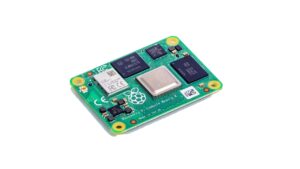
The Compute Module 5 is sold without exposed connectors or a casing, designed to be integrated into custom-designed carrier boards. This complicates the process of flashing the firmware and operating system before final assembly, especially on production lines where dozens or hundreds of units are needed quickly. The new jig addresses precisely this bottleneck: instead of soldering the module to a temporary board or fabricating a homemade adapter, the operator simply fits the CM5 into the station, closes the mechanical clamp, and lets the system do the rest.
The first step involves flashing the station itself with Raspberry Pi Imager, loading the corresponding manifest, and activating rpiboot mode using the Ctrl + Alt + S key combination. From there, the workflow is quite similar to flashing a microSD card for any other Raspberry Pi model. The station is connected to the network, preferably via Ethernet, and is then ready for three tasks: screen sharing and SSH access using Raspberry Pi Connect, downloading software updates, and transferring the operating system images to be flashed onto each CM5.
One important technical detail is that the web configuration interface is only accessible on localhost for security reasons. Remote access depends on Raspberry Pi Connect, which exposes the local screen through an encrypted tunnel without opening any ports to the outside world. This is a sensible way to prevent the programming process of a manufactured device from being directly exposed to the internet, which is especially important when handling signing keys or secure boot configurations.

Device hardware and specifications
The Programming Jig features a pogo pin system and a mechanical clamping mechanism that holds the CM5 in place while the image is being transferred. It has two Gigabit Ethernet ports, one for connecting the station to the provisioning network and another dedicated to the module itself, as well as Wi-Fi with an external antenna as an alternative. The device is powered by a 12V, 2A jack connector, weighs 1796 grams, and measures 181,5 x 170 x 153 millimeters.
The station's own LED indicators provide real-time information on the process status, including network connection and firmware flashing progress. This is useful for anyone monitoring multiple units simultaneously in a production environment. Furthermore, the combination of pogo pins and a mechanical clamp allows the same station to be reused thousands of times without visible wear on the module's contacts, something that would occur with connectors that are manually soldered repeatedly.
The role of the rpi-sb-provisioner software
What makes this station more than just an image writer is the open-source rpi-sb-provisioner software. This tool automates the entire provisioning workflow: implementing secure boot, full disk encryption, and clean installation of the base operating system—all from the same web interface. The operator simply follows the indicated steps, transfers the image, configures the security mode, points to the corresponding manufacturing database, and defines the signing key before initiating module programming.
The code and complete documentation are available in the rpi-sb-provisioner repository on GitHub, where you can review exactly which steps the script executes and how the different phases of the secure provisioning process are integrated. The rpi-image-gen tool, meanwhile, allows you to build Raspberry Pi OS images with the content the device will receive before starting the programming process. For Programming Jig users, this stage serves as the foundation for establishing a Raspberry Pi OS version that will then be transferred to the module via the provisioning flow.
An accessory designed for production, not for the desktop
It's important to be clear about the target audience for this product. It's not an accessory for someone building a single home project with a Compute Module 5 on a third-party carrier board. The price of $600, combined with its dimensions and weight of approximately 1,8 kilograms, clearly places it in the realm of small- to medium-scale manufacturing, where several units of the workstation can operate in parallel on an assembly line.
For a manufacturer integrating the CM5 into its own hardware, avoiding the step of soldering or adapting each module to a breadboard represents a considerable time saving, especially when multiplied by hundreds of units. The station integrates with Raspberry Pi Imager, the official tool that the foundation has been refining in recent months with a revamped interface and added support for Raspberry Pi Connect directly from within the program itself. The fact that the station relies on this same application for its initial setup greatly simplifies things for any team already familiar with the standard microSD card writing process on other models in the range.
The launch of the Programming Jig reinforces the idea that the CM5 is not simply a more compact version of the Raspberry Pi 5, but a product designed from the ground up to be integrated into commercial devices where the security of the manufacturing process is as important as the module's performance. Offering an official provisioning tool, with factory-integrated support for secure boot and disk encryption, reduces the need for each manufacturer to develop its own in-house solution, something that was quite common in these types of projects until now.
In short, Raspberry Pi has taken another step into the industrial and OEM integration segment with an accessory that, while not inexpensive, can be cost-effective for those who need to quickly and securely prepare multiple Compute Module 5s. The combination of dedicated hardware and open-source software offers a more structured workflow, and the ability to access it remotely via Raspberry Pi Connect adds flexibility in production environments. For manufacturers already working with the CM5, this programming station can be an investment that pays for itself over time, especially if they value security and repeatability in their processes.