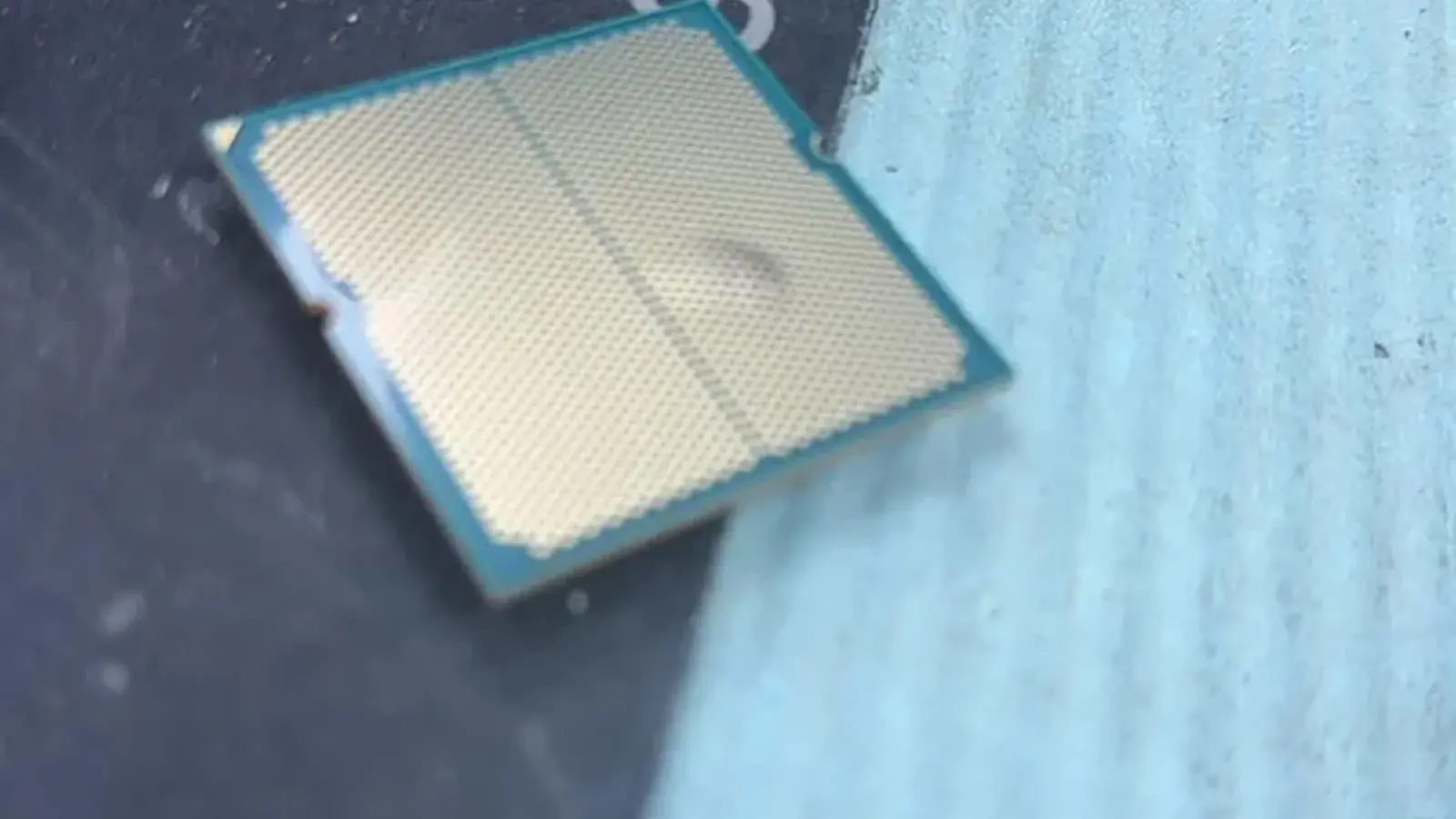
Imagine investing a small fortune in building a top-of-the-line PC, only to have it suddenly decide to give up the ghost without warning. This is exactly what happened to a Reddit user, VINCENT199411, whose powerful Ryzen 9 7950X3D -based system shut down after a loud crackling sound while the computer was idle. What initially seemed like a software glitch or a minor scare has turned into a full-blown tech saga, impacting confidence in the after-sales service of one of the industry's leading processor manufacturers, Intel and AMD .
The affected party claims that his system, assembled in May 2023 with top-of-the-line components such as a Gigabyte X670E AORUS Master motherboard and a 1000W power supply, operated strictly according to factory specifications. Despite having enthusiast-level hardware, the user asserts that he never adjusted voltages or performed manual overclocking, limiting himself to using the EXPO profile for the RAM. This situation has surprised many, as the processor exhibited a physical deformation on its back, which has been used as grounds for denying legal coverage.

The technical diagnosis that exonerates the motherboard
Following the incident, the first step was to send the motherboard to Gigabyte's official technical service. After a thorough inspection, the technicians discovered that the BIOS data had been corrupted, but after reprogramming the chip, the motherboard was brought back to life without further issues. In fact, to ensure that the problem did not originate from the motherboard's electronics, the specialists performed a 64-hour stress test using an identical processor, demonstrating that the rest of the hardware was in perfect working order.
For its part, the power supply manufacturer, the prestigious firm be quiet!, also conducted its own load and stability tests, confirming that there were no voltage spikes or electrical anomalies that could have fried the processor. With these reports in hand, everything pointed to the AMD chip as the sole cause of the system failure, something that should have simplified the replacement process, but the reality has been quite different for the owner.

AMD's refusal and the photo controversy
When the case reached AMD, the response was not what was expected. The company decided to reject the warranty claim after reviewing the images sent by the user, which showed a kind of bulge or swelling on the processor substrate. According to the brand's terms, any visible physical damage is grounds for immediate exclusion of the warranty, as it is presumed to have been caused by an external factor or improper handling, even though the user insists that the failure occurred with the PC completely closed and without any human intervention.
What has most outraged the hardware community on social media is that AMD didn't even request the defective part for further laboratory analysis. Making a decision of this magnitude based solely on digital photographs sent via email seems rather drastic for a component that costs over €500. This inflexible stance leaves consumers completely defenseless, especially when technicians from the other brands involved have certified that the equipment had no prior defects.
Old ghosts and the problem of voltages in AM5
This incident inevitably brings to mind the problems that arose during the launch of the AM5 platform, where several models in the X3D series suffered permanent damage due to excessive voltages applied by the motherboards. At that time, both AMD and the manufacturers had to release urgent updates to limit the SoC voltage to 1,3V and prevent the processors from literally burning out. Although a direct link has not been proven, the shadow of that design flaw looms over this new incident.
There's a technical detail that further complicates solving this mystery: because Gigabyte reprogrammed the motherboard's BIOS to repair it, they lost the ability to audit the exact voltage values being applied at the time of the failure. Without these records, it's nearly impossible to determine whether there was a single spike that caused the silicon to swell or if it's a latent manufacturing defect. Ultimately, what's clear is that with such unusual hardware failures , it's usually the end user who loses out due to the strict policies of major manufacturers.

Ultimately, this case underscores the critical importance of having an updated BIOS on modern high-performance systems to prevent disasters. While warranty regulations protect against manufacturing defects, physical damage to the substrate is often the red line that brands are unwilling to cross, leaving hardware enthusiasts in a very vulnerable position if something goes wrong. Without an on-site technical inspection by the chip manufacturer, the mystery of why this processor decided to warp while idle will likely remain without a satisfactory official answer.
Table of Contents