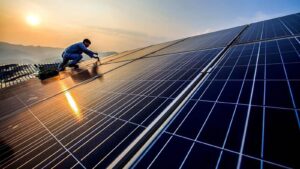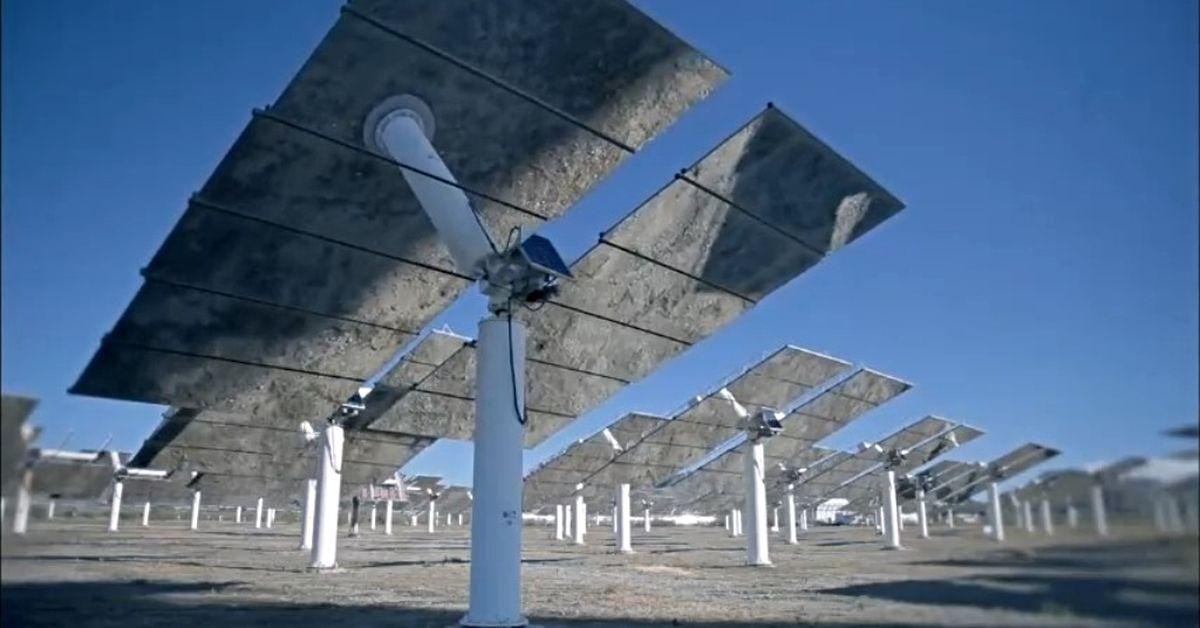
Barcelona has an energy dependency problem that's plainly visible from any rooftop. The city only utilizes 2,5% of its rooftop photovoltaic capacity , according to a report by the Barcelona Institute for Urban Research (IDRA) and the Coòpolis Observatory. In practical terms, this means that out of every 100 roofs that could accommodate solar panels, only two or three actually have them. Meanwhile, the Catalan capital continues to import a significant portion of its energy consumption and maintains a bill vulnerable to the fluctuations of fossil fuel prices.
The potential for improvement is significant. If all viable rooftops were utilized, Barcelona could cover 61,3% of its household electricity consumption and 18,6% of its total consumption . Currently, installed photovoltaic systems generate only 1,5% of the electricity used by homes. The report paints a picture of a city that depends almost entirely on external sources and, moreover, perpetuates social inequalities in something as tangible as gigawatt-hours.

Enormous potential that remains untapped
The study's data indicates that Barcelona consumed 14.413 GWh of final energy in 2022. Electricity accounted for 44,6% of the total , while natural gas made up 32,4% and petroleum-derived fuels 22,1%. Local renewable energy production barely reached 7% of consumption, highlighting a strong dependence on external sources. In this context, rooftops appear as an underutilized asset: around 60% of roofs could accommodate solar panels, although current deployment is far from reaching that level.
Solar radiation is plentiful in Spain, but in cities the bottleneck lies elsewhere. Barcelona has fewer than two solar installations per thousand inhabitants , a figure well below the Catalan average of 17 per thousand residents. This contrast reflects the fact that urban self-consumption is not progressing at the same pace as ground-mounted photovoltaics, and that rooftops remain an underutilized space for generating energy close to where it is consumed.
The uneven map of self-consumption
The report not only measures how much sunlight is wasted; it also shows who benefits from it. Installed solar power is concentrated in neighborhoods with high incomes, low population density, and many single-family homes . In areas like Vallvidrera, Tibidabo i les Planes, Font d'en Fargues, Sarrià, and Pedralbes, there are up to 28 solar panels per 1.000 inhabitants. At the other extreme, Ciutat Meridiana has none, and other neighborhoods like Turó de la Peira, La Guineueta, Vall d'Hebron, and La Verneda i la Pau also lack a single solar panel.

Behind that photograph lie urban planning and economic decisions. Housing developments built in the 60s and 70s concentrate many apartments in a small rooftop area , limiting the capacity of each building to generate electricity. Furthermore, property tax (IBI) rebates for installing solar panels often end up in single-family homes, where family income is 26% higher than in apartments. The result is that solar panels have a harder time gaining traction in the very neighborhoods where they could most effectively lower electricity bills and combat the summer heat.
Treat rooftops as useful infrastructure
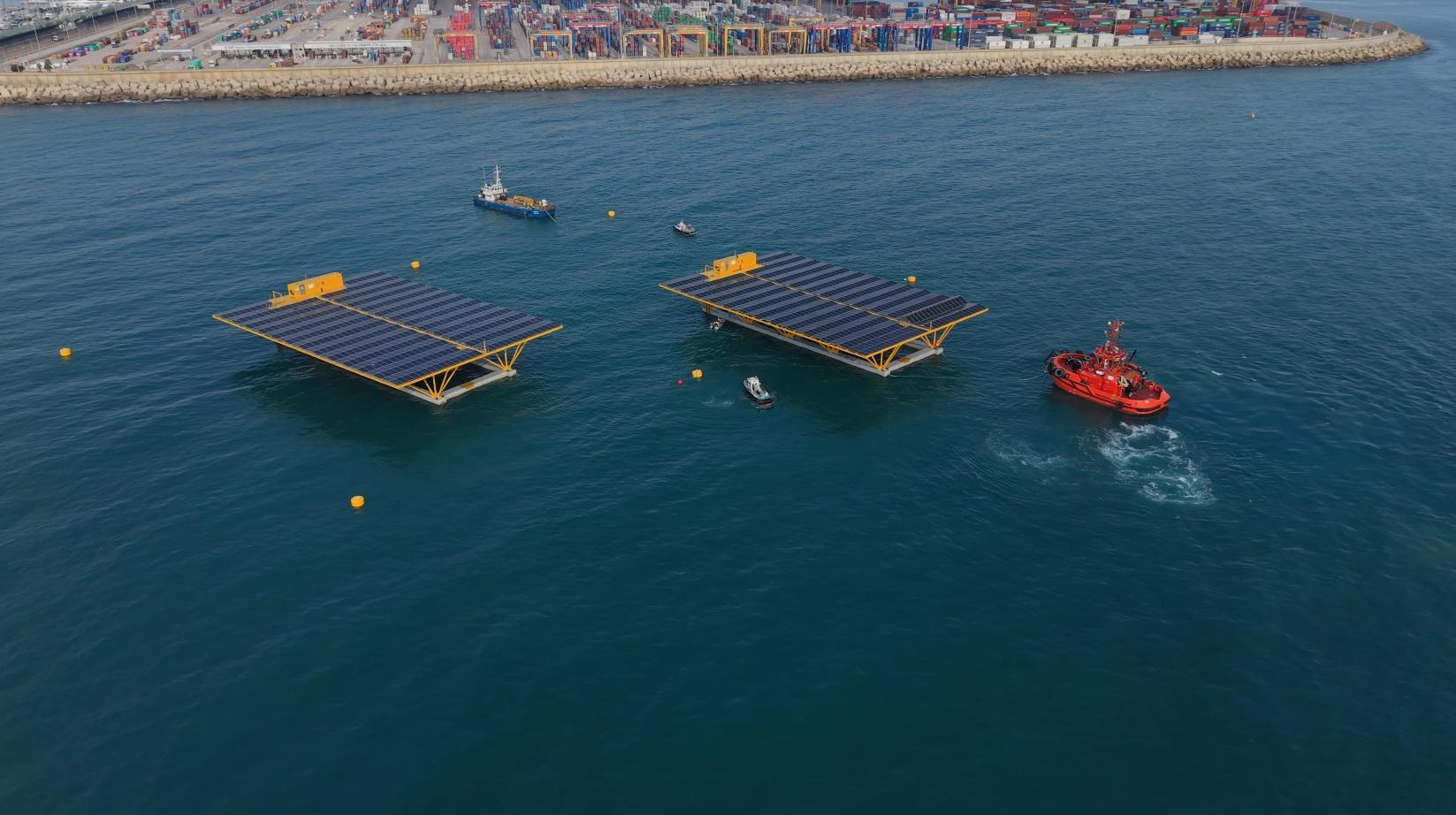
IDRA's central proposal involves shifting the focus from viewing rooftops as a collection of private decisions to treating them as a space of public utility. The idea is to facilitate the transfer of use of private rooftops through public or mixed investment , so that the owner retains ownership, a public energy operator assumes the investment, and the energy can be distributed throughout the neighborhood. With this model, the roof would not only serve for the building's own consumption but could also power nearby neighbors and utilize surplus energy that is currently wasted.
From a regulatory standpoint, experts point out that energy sharing is now easier to implement in cities. The 2026 decree-law allows for the distribution of surplus energy from commercial or industrial rooftops within a five-kilometer radius , explains Rubén Martínez Moreno, director of the Urban Planning and Ecological Transition Area at IDRA. The key, they insist, lies in unlocking these areas and preventing deployment from depending solely on the will and financial resources of each individual owner.
Taxes, financing and plans by neighborhood
The report also proposes tax measures. It suggests progressive property tax (IBI) rebates for the installation of solar panels , so that those who can afford the investment do not benefit equally. In lower-income neighborhoods, such as Ciutat Meridiana, many homeowners cannot afford to pay upfront, even if they are interested in installing solar panels. Local taxation could help correct some of this imbalance.
Another aspect of the proposal is financing solar panels without requiring upfront capital. IDRA argues that installations should be affordable for tenants and communities who want to lower their energy bills but lack the initial funds . Furthermore, it advocates for a specific program for neighborhoods with high climate vulnerability, where shared energy is distributed based on social and environmental welfare criteria. Surplus energy generated on private rooftops under usage agreements could be allocated to areas with multi-family buildings and limited usable floor space.
To organize this rollout, the authors discuss municipal solar energy plans with neighborhood-specific targets. They also call for a more stringent ordinance that extends beyond newly constructed buildings . The urban energy transition, they argue, cannot be left to the aggregation of individual preferences; it requires public will to coordinate investments, regulations, and the distribution of benefits. In a country with so much sunshine, leaving entire rooftops untapped is an opportunity that slips away every day.

Energy communities and administrative hurdles
The study also examines energy cooperatives. In Barcelona, there are only four energy communities , located in Poblenou, La Bordeta, Guinardó, and Bon Pastor. Bureaucratic complexity, reliance on volunteers, and difficulty accessing rooftops hinder many initiatives. Despite this, these collective models appear as a way to better distribute the benefits of renewable energy generation and to involve SMEs, residents, and local organizations.
A European comparison helps to put the challenge into perspective. A study published in Nature and supported by the European Commission estimates that the EU could obtain 40% of its energy from solar panels by 2050 if the right policies are implemented. However, only around 10% of rooftops currently have photovoltaic equipment. Spain, due to its levels of solar radiation and its building stock, appears to be one of the countries with the greatest potential for growth.
Barcelona faces a paradox that's hard to ignore: it has thousands of rooftops, abundant solar resources, and a growing need to reduce emissions and dependence on foreign energy, yet most of that potential remains untapped. Data from IDRA shows that the problem isn't just technical, but also social and regulatory, because self-consumption is concentrated in the wealthiest, least densely populated neighborhoods. Changing this trend would require accessible financing, better-designed tax incentives, municipal plans with clear objectives, and mechanisms for sharing the energy generated on rooftops. Barcelona has no shortage of sunshine; what it lacks, for now, is a way to distribute and harness it.