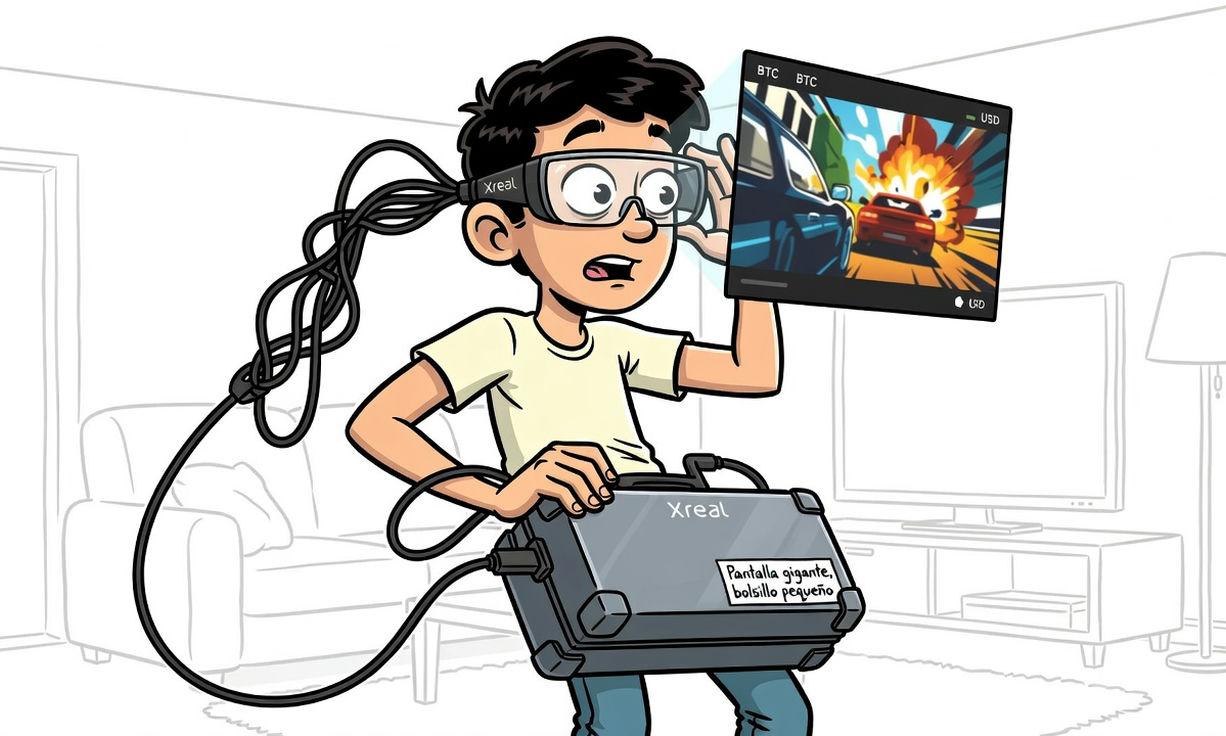
Xreal has unveiled Aura, a new extended reality headset powered by Android XR and connected via cable . The announcement, made at the Android Developers Summit, positions the product as an alternative to closed-back headsets: the lenses allow you to see the surrounding environment while overlaying windows and digital content. This offering comes from Google and Qualcomm, with a focus on everyday use rather than the isolation typical of traditional virtual reality.
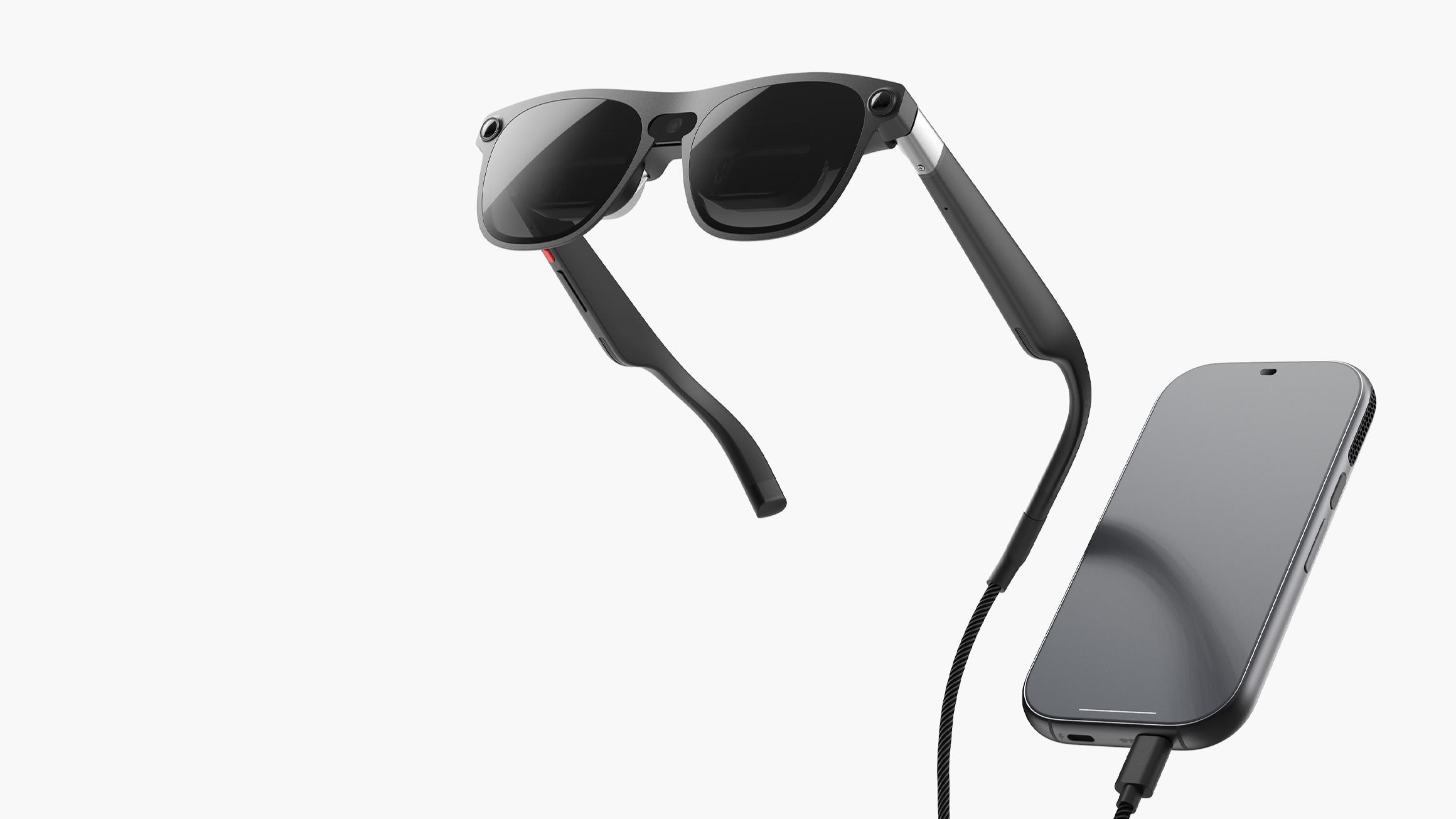
The most striking aspect is its internal component layout. To lighten the frame, the processor and battery have been moved to an external unit that fits in your pocket and connects via a cable. The glasses themselves weigh less than 95 grams, while the module, similar in size to a smartphone, incorporates the Snapdragon Reality Elite platform and also serves as a touch surface for navigating the interface.
Optical design and components
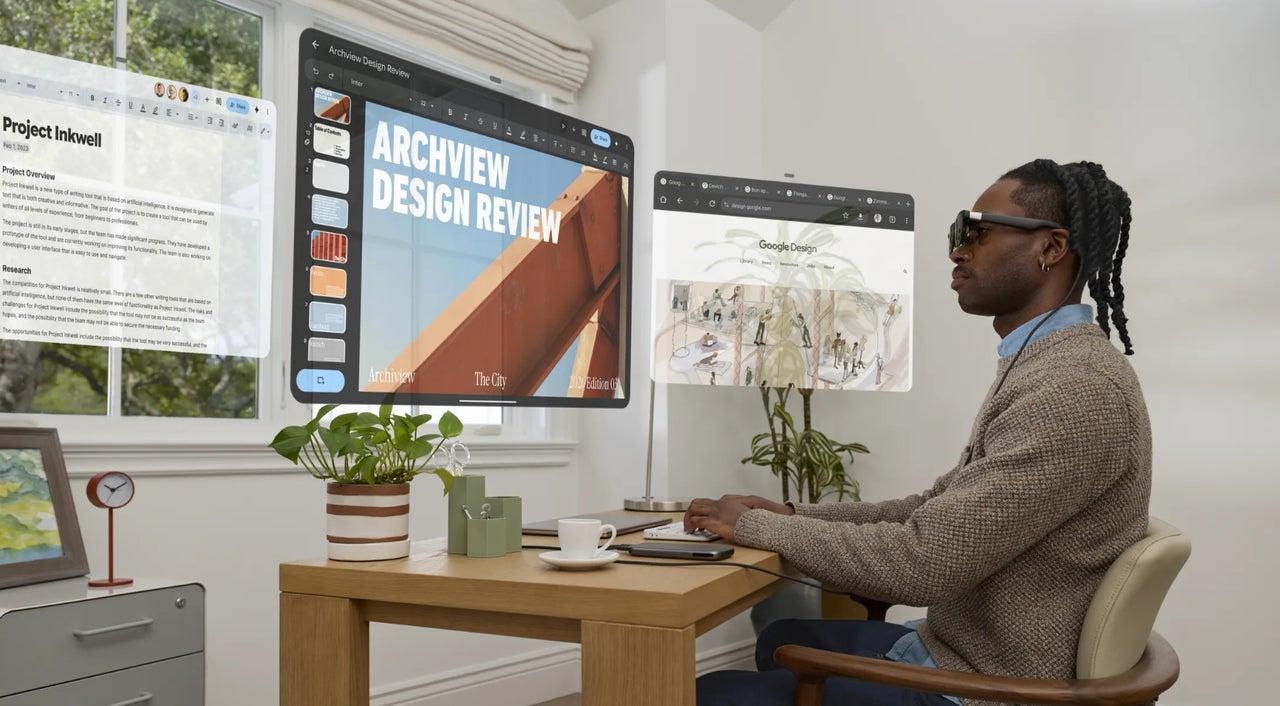
The lenses maintain a 70-degree diagonal field of view and use Sony Micro-OLED panels with 1200p resolution and a refresh rate of up to 120 Hz. This combination aims to deliver crisp text and smooth video without sacrificing visibility of the room, the street, or your desk. The system is completed with audio developed in collaboration with Bose and voice control, so the device isn't solely reliant on gestures or the external module's touchpad.
The split architecture has a clear drawback: it's not a completely wireless device . The frame needs to maintain a physical connection with the computing unit, which houses the memory, storage, and battery. This dependency allows for reduced weight on the nose and ears, but it necessitates carrying an additional accessory and reminds us that the complete experience doesn't end with the goggles. The design prioritizes visibility and comfort over the autonomy of a standalone headset.
The external module also functions as a touchpad and connection hub , with USB-C ports and wireless connectivity for accessories. The glasses can electronically adjust the lens transparency, allowing the user to darken the environment to watch a movie or regain direct vision of the space when they need to interact. This blend of virtual screen and real world is the foundation of the concept, although the final result depends on the quality of the optics and the overall comfort.
Android XR, Gemini and practical uses
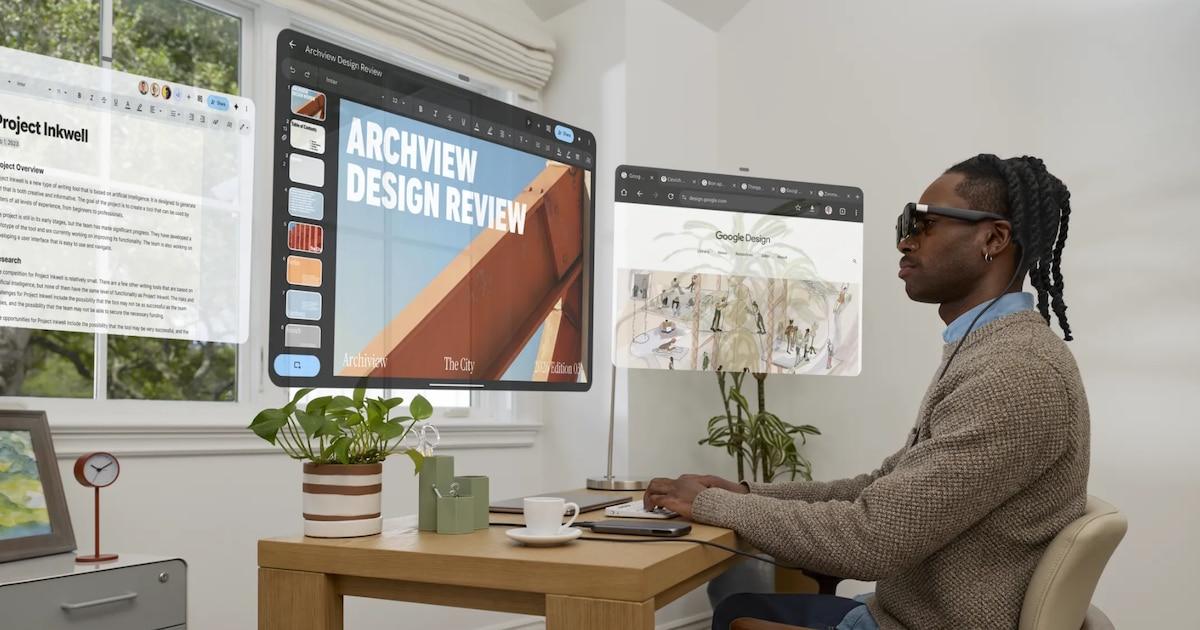
By incorporating full Android XR, Aura goes beyond simply mirroring a computer screen. It offers access to Google Play and over 150 extended reality experiences, allowing users to place multiple windows around themselves, resize them, and pin them in place. With a Bluetooth keyboard and mouse, you can set up a kind of private office on a train, in a café, or in a waiting room, without the content being visible to those nearby.
The Wired Mirroring feature lets you connect a compatible laptop or handheld console via USB-C and view its image as another virtual window. No additional software installation is required on the connected device, and the screen can coexist with any open applications on your Android XR. This is particularly useful for working on documents on the go or playing games running on another device while using the headset as a large, private monitor.
Gemini appears as an integrated assistant within the system , capable of interpreting the physical environment and digital windows. It can answer questions about what the user is viewing, highlight specific elements in the shared image, and help organize the workspace. This layer of artificial intelligence relies on the cameras and the visual context, so its operation is linked to the information the system is able to recognize at any given time.
In terms of entertainment, the glasses allow for a large virtual screen to be displayed for videos, compatible services, and immersive experiences. The catalog includes sports offerings, 3D content, and games such as Fallout: Factions and Project Hail Mary: Journey Among the Stars, as well as apps from Google Play. A console or computer can also be connected for gaming on a private screen, and the tracking mode reduces the window size when the user stands up so they don't lose sight of their surroundings.
Prices, bookings and arrival in Europe
Xreal sells Aura in two configurations. The version with 12GB of RAM and 256GB of storage has a regular price of $1.279 and a launch promotion of $1.099 until December. The 16GB/512GB variant costs $1.499 and is available for $1.299 during the same period. These are prices in US dollars, not euros, and the promotion is time-limited, so the final price after that period is not confirmed.
Pre-orders opened in the United States, Canada, and South Korea , with Japan joining on November 2nd. The first shipments are expected in mid-November. It has also been indicated that purchases are restricted to those 18 years of age and older. There is currently no official price in euros nor a confirmed release date for Spain.
Expansion to other markets is planned for 2027, but neither the date nor the price for Europe has been finalized. This lack of official information makes it impossible to know how much Aura will cost in Spain and when it will arrive in stores. Alongside the device, a wireless keyboard and a controller developed with GameSir, which includes a dedicated Gemini key, were also presented.
Aura represents an attempt to bring Android XR to a more portable format, with transparent lenses, a light weight, and features for both work and entertainment , but it also relies on an external unit and comes at a high price. Its success will depend on the app ecosystem proving useful, Gemini providing real value, and the experience not being hampered by the cable or the additional module. For the Spanish public, the question remains: when and at what price will it arrive?
Table of Contents